Shopify Symmetry Theme: Features, Performance, and Practical Experience
Choosing the right Shopify theme impacts far more than just the visual appearance of an online store. It determines how products are presented, how customers navigate through extensive product ranges, and which features are available without the need for additional apps or custom development.
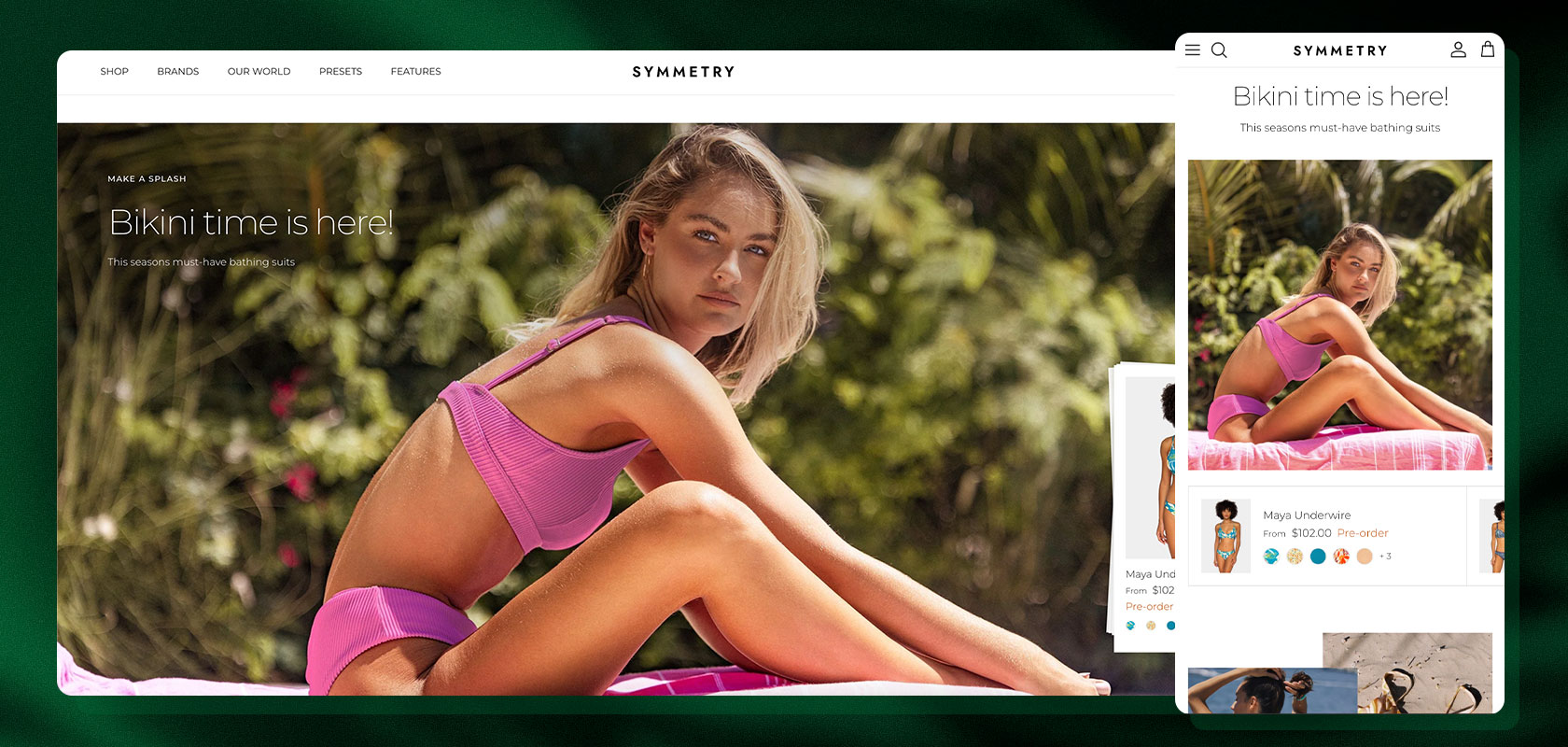
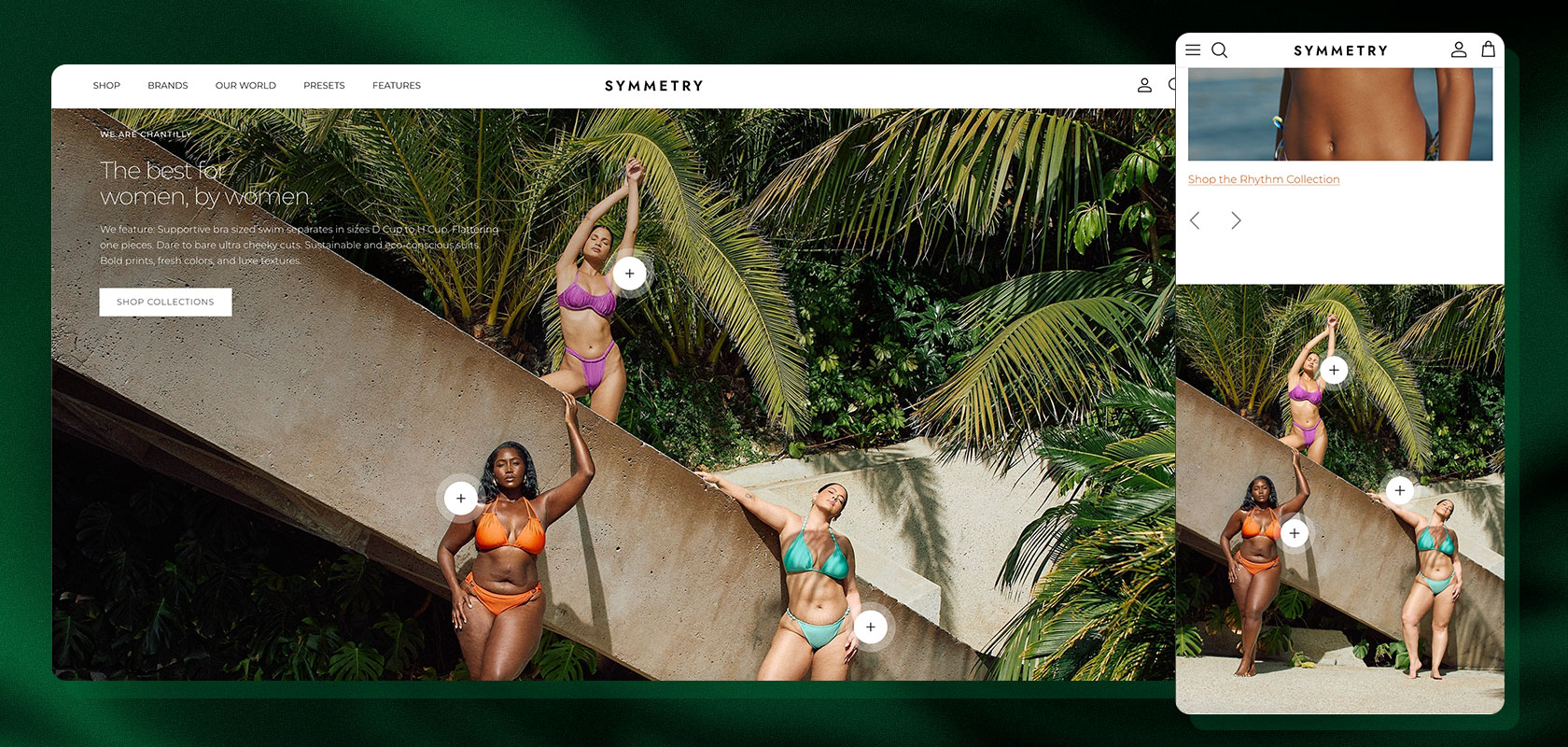
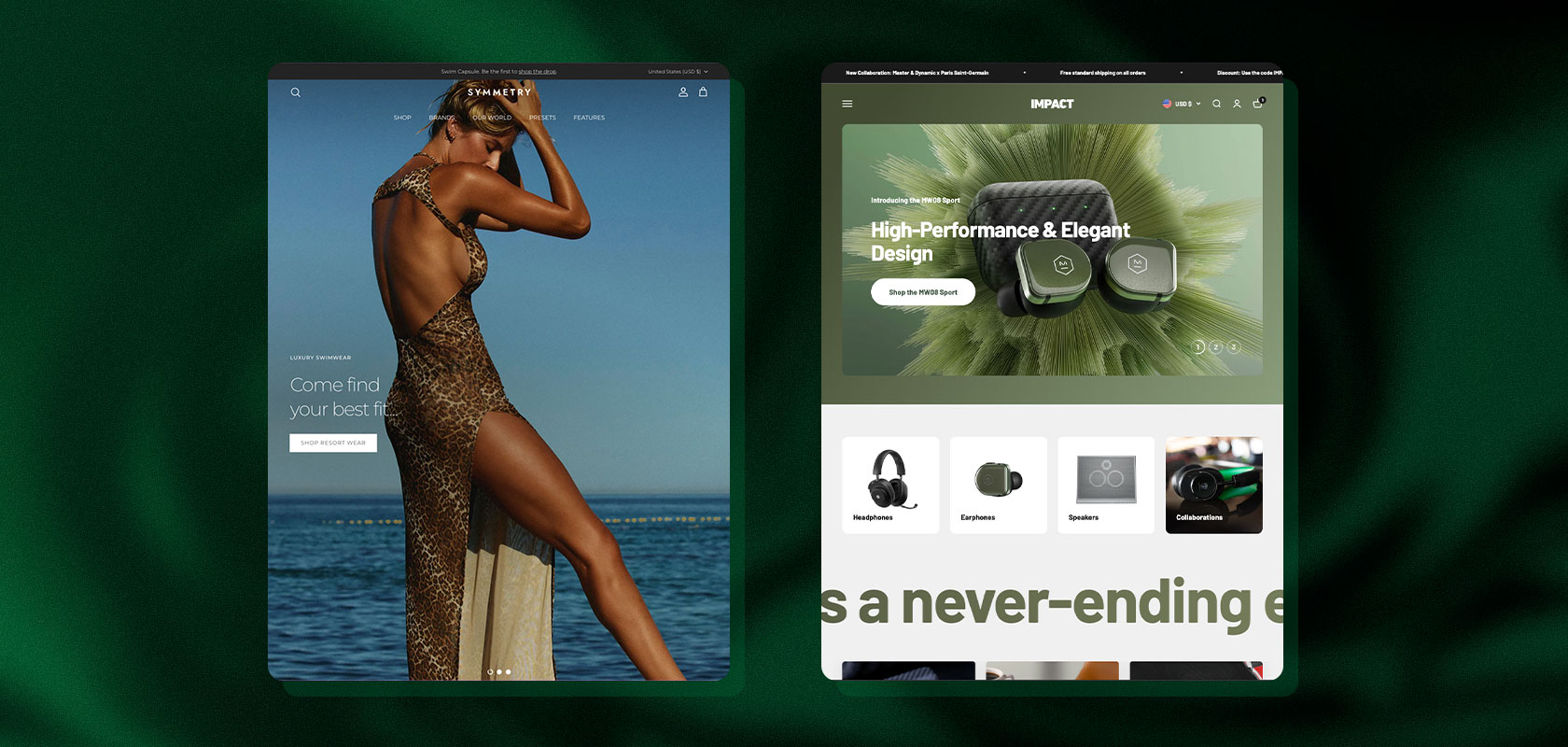
The Symmetry theme by Clean Canvas is one of the established premium themes in the Shopify Theme Store. It combines extensive customization options in the Theme Editor with numerous built-in e-commerce features. It particularly shines in stores with large product catalogs, many variants, and complex navigation structures.
But how good is Symmetry really? Which features are already built in? Where are its technical limitations, and how does the theme perform in terms of speed and search engine optimization?
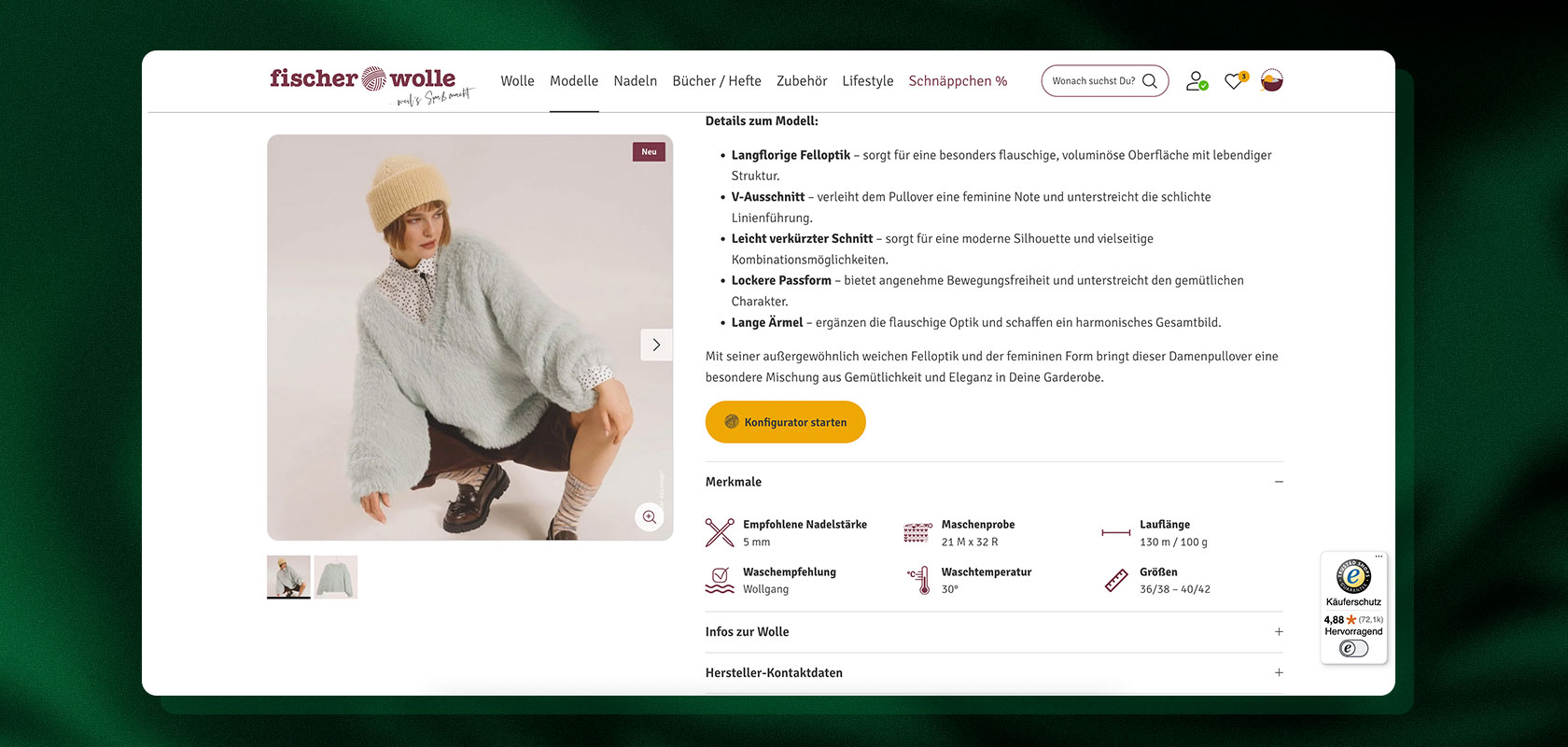
We took a closer look at Symmetry based on its features and our project experience. In addition, our developer Patrick Schneider shares insights from building an extensive Shopify Plus store for Fischer Wolle.
Would you like to tailor the Shopify Symmetry theme to your brand or extend it with custom features? Contact us – we’d be happy to help bring your ideas to life!
Symmetry by Clean Canvas: What’s Behind the Shopify Theme
Symmetry was developed by the theme developer Clean Canvas and is one of the established premium themes in the Shopify Theme Store. The provider relies on a combination of extensive customization options, integrated merchandising features, and a comparatively lean technical architecture.
The theme is not aimed exclusively at a single industry. Alongside fashion and lifestyle stores, it is also well suited for merchants in areas such as hobby, DIY, home & living, or food. Symmetry is particularly interesting for businesses whose customers need to navigate through extensive product catalogs and numerous variants.
A key advantage: Many features that require additional apps or custom development in other themes are already included in Symmetry's scope of functions.
Symmetry at a Glance
Feature
Shopify Symmetry Theme
Developer
Clean Canvas
Price
$420 USD (one-time)
Design Presets
Symmetry, Salt Yard, Beatnik, Duke, Amara
Technology
Shopify Online Store 2.0, Web Components
Reviews
94% positive across 391 reviews
App Integration
App blocks in numerous areas
Core Features
Mega menu, product filters, quick buy, lookbooks, size charts
Target Audience
B2C stores with medium to large product ranges
Symmetry offers five design presets that cover different stylistic directions. This allows the theme to be adapted to the respective brand identity right from the start.
The Five Design Presets:
Symmetry: versatile, balanced design for various industries
Salt Yard: a more classic and product-oriented presentation
Beatnik: a more expressive, lifestyle-oriented approach
Duke: a clean design with a focus on product presentation
Amara: a variant geared more toward aesthetics and visual storytelling
The price is $420 USD. This is a one-time payment for use in a single Shopify store. Merchants can test the theme in their own store first and only pay upon publishing.
What Do the Reviews in the Shopify Theme Store Say?
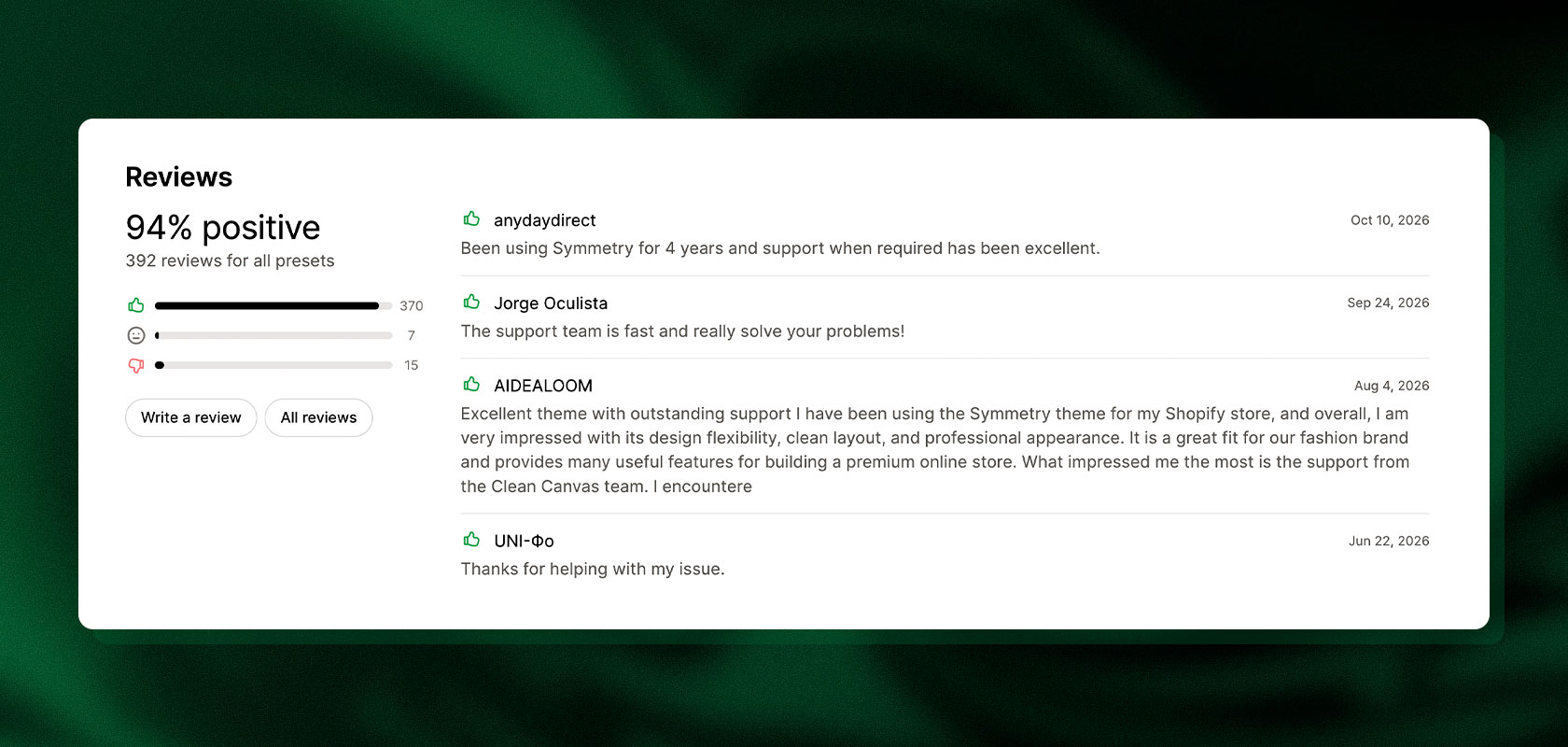
A look at the reviews shows that Symmetry is overall very well received by its users. In the Shopify Theme Store, the theme achieves a positive rating of 94 percent across a total of 391 reviews.
The breakdown:
369 positive reviews (94%)
7 neutral reviews (2%)
15 negative reviews (4%)
The scope of features is highlighted positively particularly often. Merchants appreciate the many built-in capabilities, the flexible design, and the support provided by the Clean Canvas team.
In several reviews, the customer support is also explicitly praised. Users report fast response times, helpful explanations, and hands-on assistance with technical issues.
However, there are also critical voices. Individual merchants point out, for example, that certain design parameters are not as freely customizable as expected. Usability can also be somewhat demanding at first given the sheer number of features.
This aligns with our assessment: Symmetry offers many possibilities, but it is not automatically a completely unrestricted modular system. Anyone requiring highly customized layouts or unlimited control over all design elements should examine the customization options more closely in advance.
Our take: The high positive rating speaks for strong overall merchant satisfaction. The range of features and customer support in particular are clear strengths. However, reviews are no substitute for a technical test tailored to the individual requirements of your own store.
A premium theme is a paid design template for a Shopify store. Unlike free themes, many premium options offer additional sections, design settings, and built-in e-commerce features. This often allows custom requirements to be implemented without additional apps or extensive coding.
The Most Important Features of the Symmetry Theme
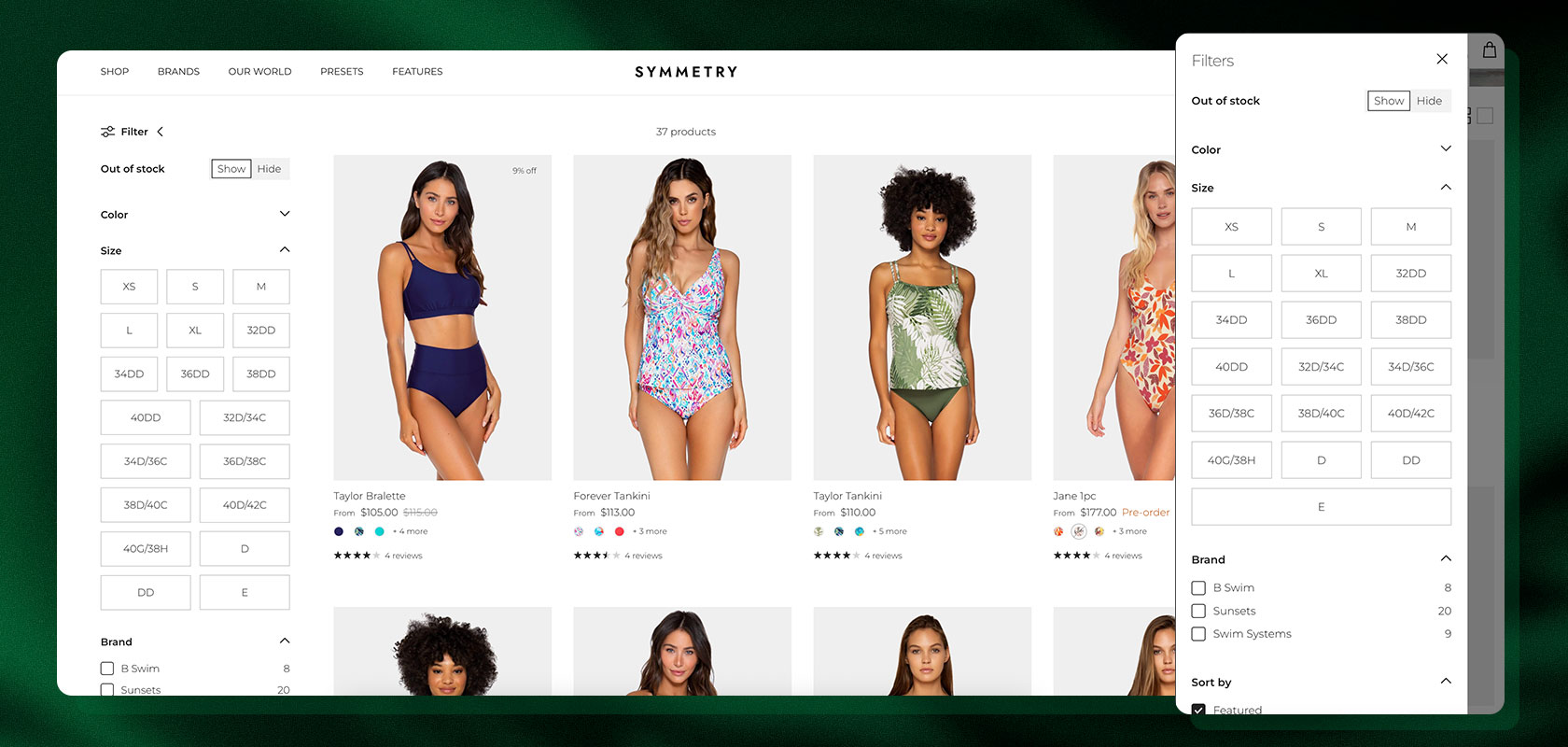
One of Symmetry's greatest strengths is its extensive range of features. The theme offers numerous ways to present products, guide customers through the store, and simplify the purchasing process.
Extensive Navigation and Powerful Product Filters
Well-thought-out navigation is crucial, especially for large product ranges. Customers need to find the right products quickly without having to click through countless categories and subpages.
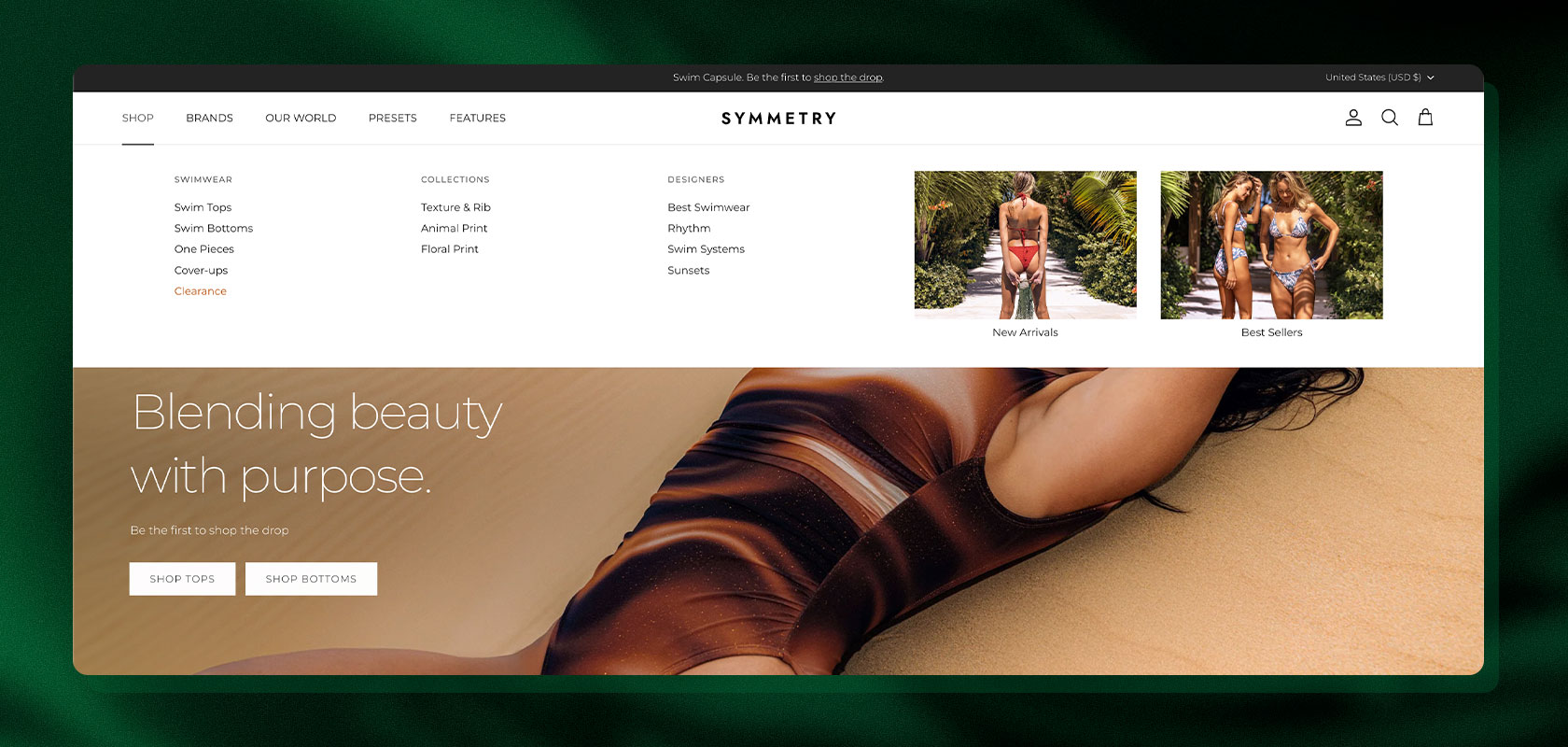
To achieve this, Symmetry offers a comprehensive mega menu that can be supplemented with promotional tiles and featured products. This allows merchants not only to display categories, but also to place specific collections, promotions, or bestsellers directly within the navigation.
The built-in search also offers additional capabilities—for example, product SKUs can be included in search queries.
Additional features include:
Advanced product filters and sorting options
Color filters and visual color swatches
Breadcrumb navigation
Sticky header
Collection navigation
Dynamic search suggestions
Quick View for products
Another advantage: filters, sorting, and navigation within product lists work without requiring a full page reload.
Especially for large assortments, this can noticeably improve orientation and the overall shopping experience.
Real-World Experience: Fischer Wolle
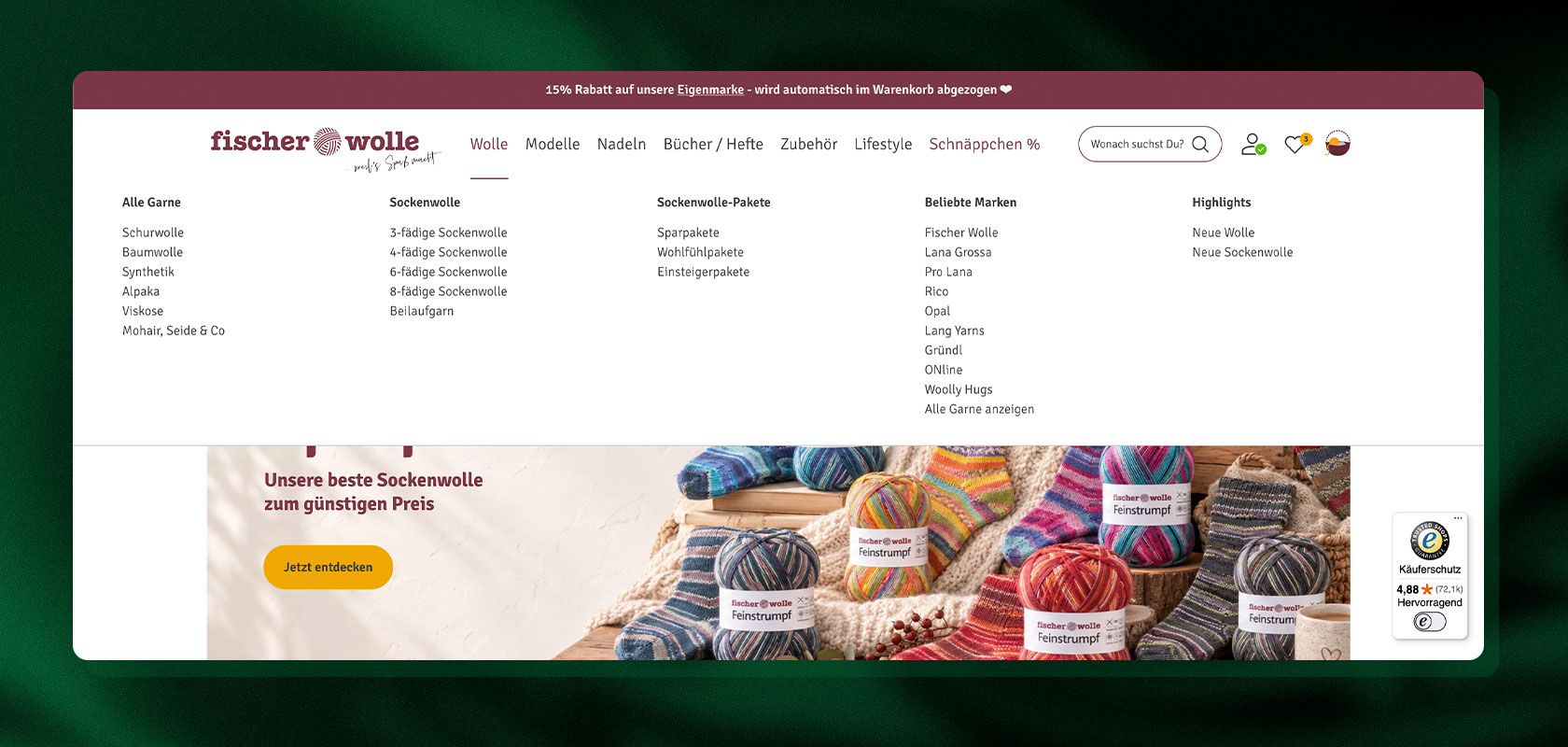
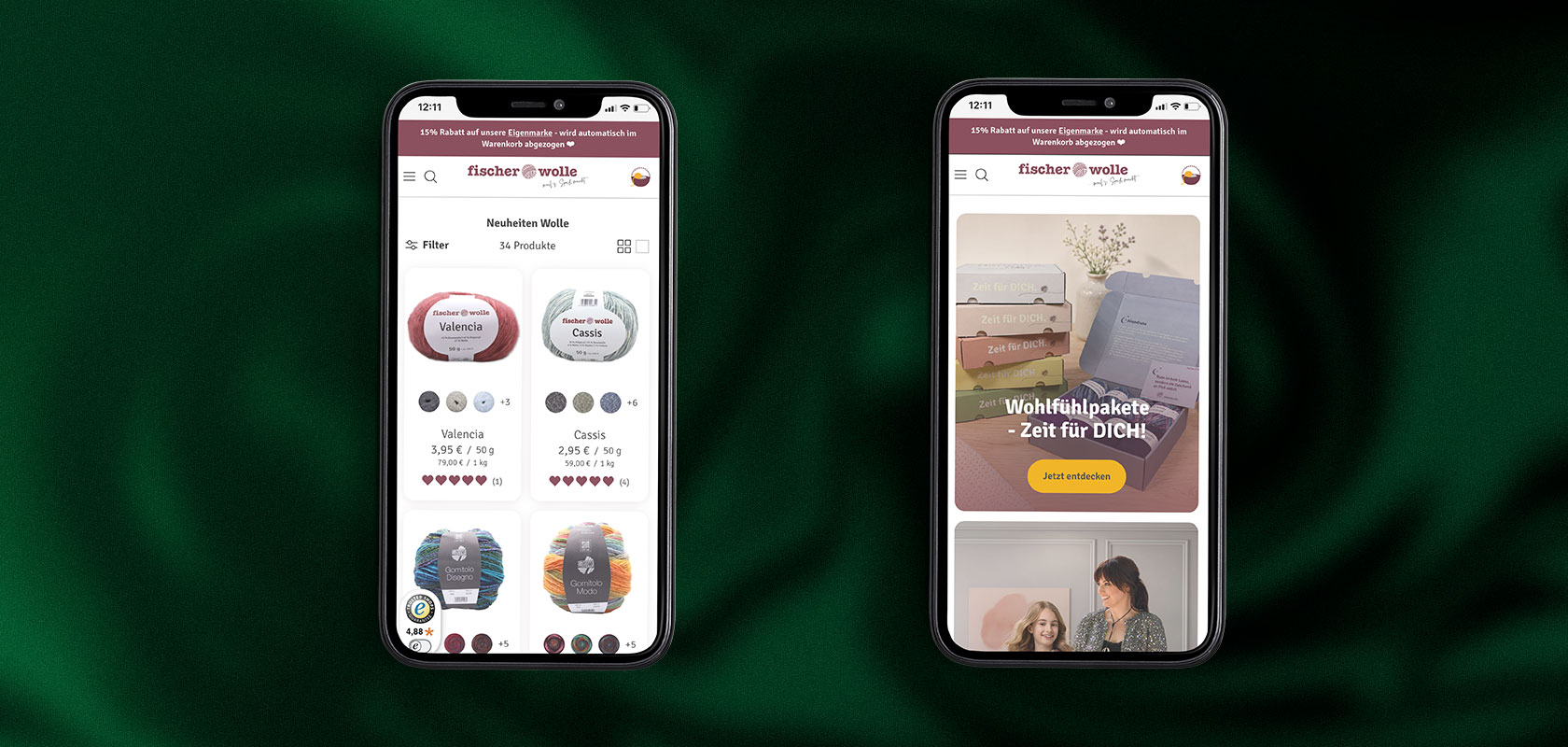
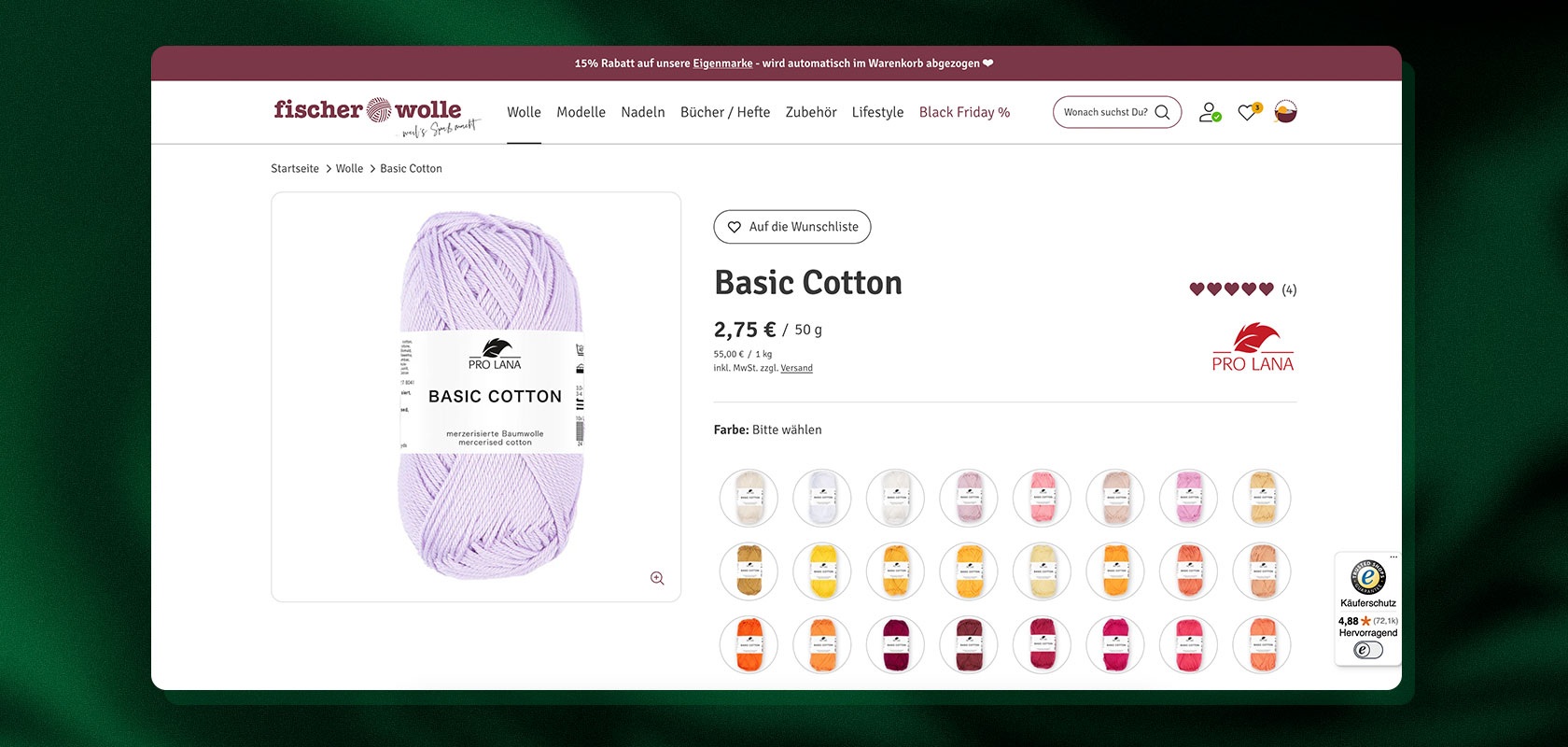
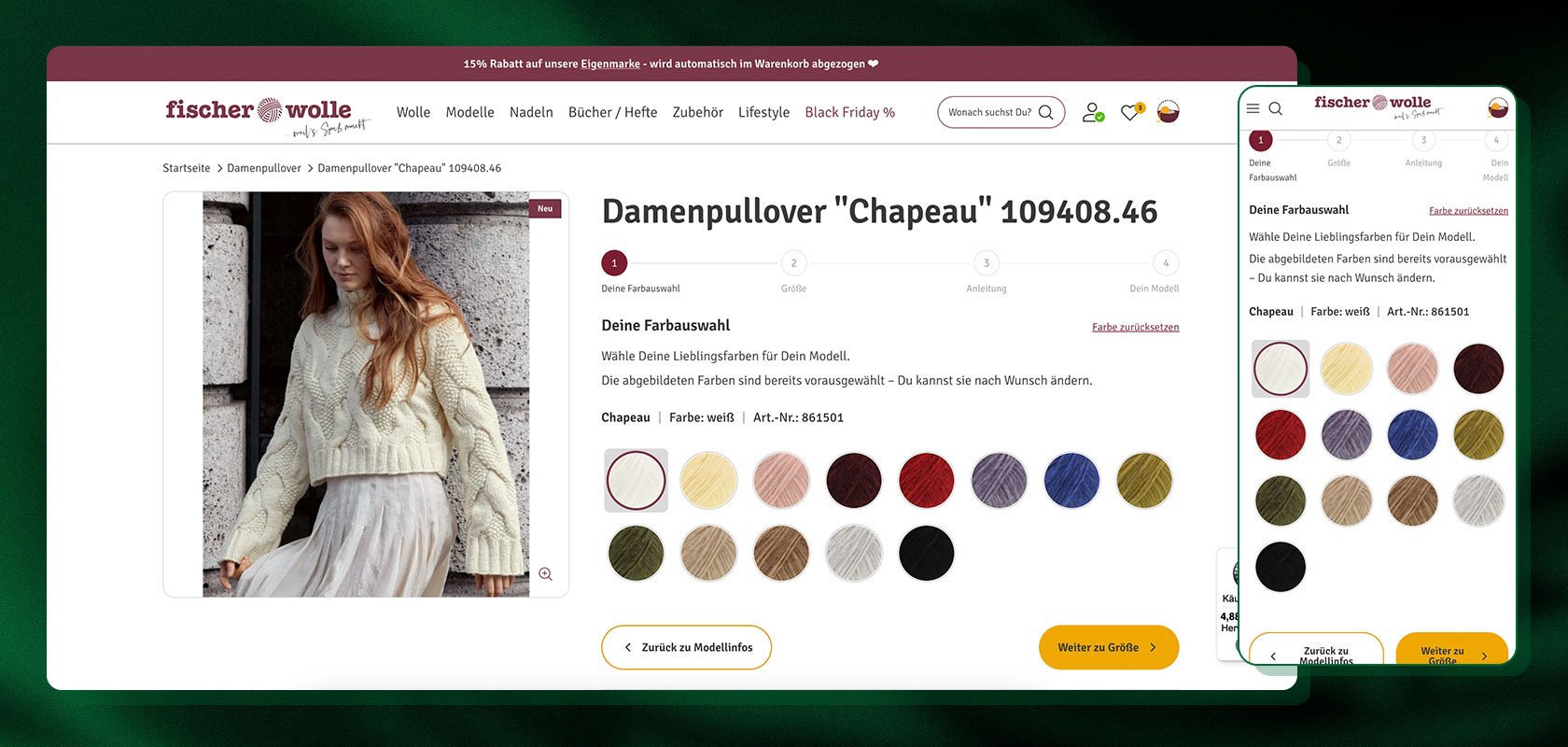
At Fischer Wolle, we used Symmetry for a store with an extensive assortment of yarns. The combination of color swatches, filters, and the mega menu proved to be a particularly suitable foundation.
Due to the large number of colors, the filter groups were collapsed by default. Longer filter areas can also be scrolled. This keeps the product overview clean and manageable even with extensive filter options.
However, there is one limitation with the search function: a setting to display only products—excluding pages or blog articles—is missing.
Merchandising and Product Presentation
Symmetry also offers numerous features for visual product presentation.
These include, among others:
Lookbooks and Shop-the-Look sections
Interactive image hotspots
Product galleries with six different layouts
Product videos and 3D models
Image zoom and image swap on hover
Product tabs and additional information areas
Color swatches and product options
Product badges and stock level indicators
The ability to integrate content from Shopify metafields directly in the Theme Editor is particularly interesting. This allows additional product information, technical details, or custom notes to be displayed without having to edit the code every time.
The product page can also be designed flexibly, with a total of 25 different block types available.
Another practical feature is the integrated size chart builder. Merchants can create size charts centrally and subsequently assign them to multiple products.
Built-In Conversion Features
Symmetry comes with numerous features that simplify the purchasing process and can create additional buying incentives.
These include:
Quick Buy and Quick View
Sticky Add-to-Cart
Slide-out Cart
Cross-selling and product recommendations
Countdown timers
Promo banners and product labels
Trust badges
Free shipping bar
Pre-orders
In-store pickup
As a result, many typical requirements of a modern online store can be covered directly with the theme's built-in features.
However, an extensive feature set does not mean that apps are no longer needed at all. Additional solutions are still required forreviews, wishlists, or loyalty programs.
At Fischer Wolle, for example, the loyalty program, wishlist, and free gifts are implemented via apps or custom extensions. Symmetry provides the appropriate integration options for these.
Reading tip: Our article on Shopify apps shows which extensions can be useful for additional store functionalities.
Advantages and Disadvantages of the Symmetry Theme
Symmetry stands out primarily through its combination of functional scope, customizability, and a comparatively lean technical foundation. Nevertheless, the theme is not equally suited for every project.
The Main Advantages
Many Features Already Built In
Mega menu, size charts, Quick Buy, Sticky Add-to-Cart, cross-selling, and lookbooks are already included. This allows merchants to save on additional apps and reduce technical overhead.
Particularly Strong Navigation for Large Product Ranges
The extensive filtering and sorting options, along with configurable search, make Symmetry attractive for stores with many products and variants.
Extensive Customization Options in the Theme Editor
Many settings can be configured directly within the Shopify Theme Editor. This reduces reliance on developers for day-to-day adjustments.
Strong Capabilities for Product Presentation
With lookbooks, hotspots, product galleries, and Shop-the-Look features, products can be presented in a visually appealing way.
Modern Technical Architecture
Symmetry is based on Web Components and operates without jQuery or any additional JavaScript framework. This allows custom extensions to be built on a modern technical foundation.
Good App Integration
App blocks can be embedded in many areas. This ensures the theme remains extensible even as additional requirements arise.
International Capabilities
Shopify Markets, multilingual support, Combined Listings (Shopify Plus), subscriptions, and local pickup provide a solid foundation for internationally oriented stores. However, the required languages and respective features should be verified within the specific store setup.
The Main Disadvantages and Limitations
Despite its extensive range of features, Symmetry is not the optimal choice for every Shopify project. Additional development is particularly necessary for highly customized requirements or complex business models.
Limited Flexibility in Page Structure
Although Symmetry offers numerous sections and customization options, it does not provide a completely free page builder with nestable Theme Blocks across all areas.
Symmetry uses the new Theme Blocks architecture only selectively (e.g., for size charts), rather than for freely nestable layouts.
Anyone looking to build highly individualized landing pages or complex content structures without code should take this limitation into account right from the theme selection stage.
Limitations with Variants and Product Galleries
One particular characteristic of Symmetry concerns the grouping of product images. By default, this is handled primarily via a single variant, such as color.
At Fischer Wolle, this was not sufficient: knitting needles, for example, sometimes differ by needle size or length. Grouping solely by color would therefore not have worked.
To solve this, custom logic was developed that takes both the variant image and the main image into account. As long as no variant has been selected yet, the gallery displays only the main image. This keeps the product presentation clean and uncluttered.
Further Customizations
Additional development was also required for other specifications:
Promotional tiles in the product grid: A native feature for placing such promotional elements within a collection overview is missing. To address this, a custom "Stopper" block was developed.
Shopify Functions and bundles: For certain bundle configurations, the cart does not automatically display the components as individual line items. For the Fischer Wolle configurator, the display logic was extended accordingly.
Discount codes: Shopify provides the discount code itself, but no freely definable descriptive text for it. Therefore, a theme setting was added that allows merchants to store custom text per discount code.
Legal product information: Manufacturer details in accordance with GPSR and information regarding the lowest price of the last 30 days are not automatically included in the theme. These requirements were solved using metaobjects and a custom app, respectively.
Quick Insight: Shopify Metafields and Metaobjects
Metafields allow additional information to be stored for products, variants, collections, or other Shopify resources. This includes, for example, material specifications, technical properties, or care instructions. Metaobjects make it possible to create reusable content structures, such as for size charts, product details, or brand information. Both features help to manage product data in a structured manner and display it purposefully within the theme.
No Native B2B Support
A major disadvantage: Symmetry does not include complete native B2B functionality. In particular, tiered pricing and quantity rules are not integrated by default. For stores with extensive B2B requirements, the built-in feature set is therefore insufficient. Even though Shopify Plus provides the corresponding B2B capabilities, the frontend presentation must be aligned with the theme and supplemented with custom extensions where necessary.
Reading tip: In our article on Shopify B2B, you can find out which native features Shopify offers for business-to-business commerce and where custom adaptations become necessary.
Symmetry, Dawn, Prestige, or Impact: Which Theme Fits Your Store?
Choosing a Shopify theme should always be based on your individual requirements. Symmetry, Dawn, Prestige, and Impact follow different approaches and each place emphasis on different areas.
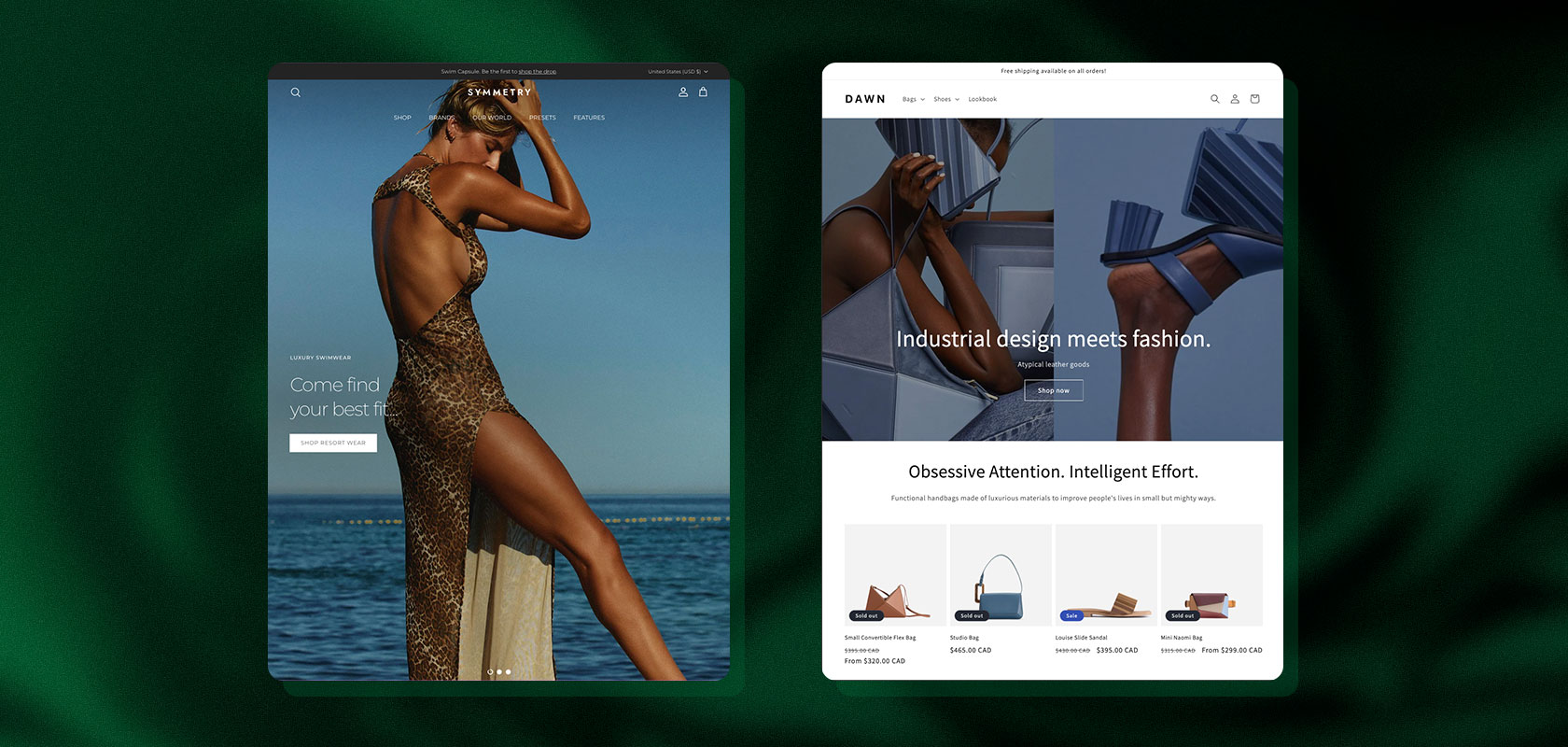
Symmetry vs. Dawn
Dawn is a free Shopify theme that offers a deliberately lean technical foundation. It is particularly well suited for stores with a simple product range or those planning extensive custom development anyway.
Symmetry, on the other hand, comes with significantly more features out of the box. Promo tiles in the mega menu, lookbooks, comprehensive size charts, and additional merchandising functions are already integrated.
Technically, the two themes are more similar than their differing feature sets might initially suggest. Both rely on Web Components and operate without an additional framework.
One difference lies in the color system, among other things: Dawn uses Shopify's native color schemes, while Symmetry brings its own, slightly less flexible system.
Reading tip: We also took a closer look at Shopify's Dawn theme. You can read more about it in our article.
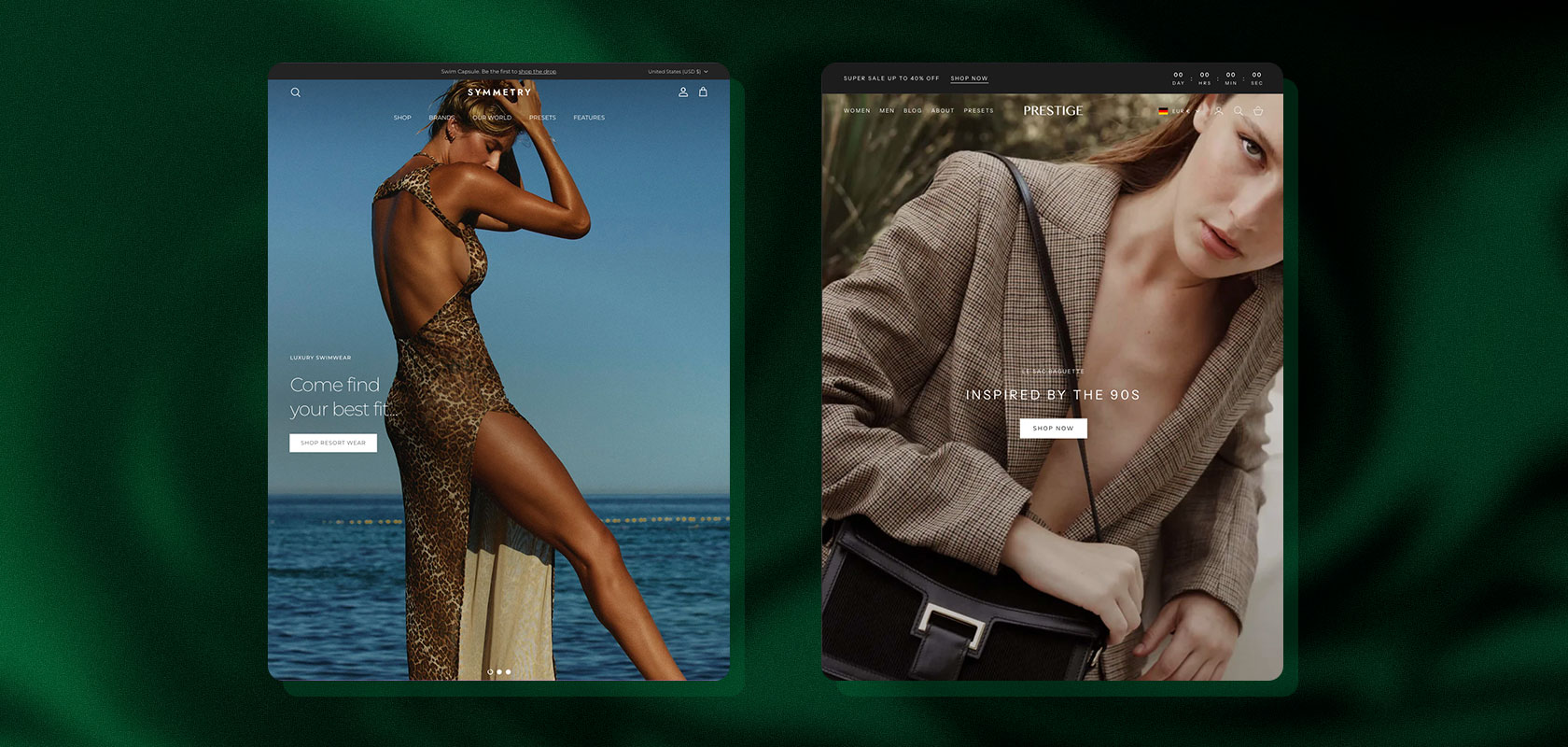
Symmetry vs. Prestige
The Prestige theme by Maestrooo is more heavily geared toward high-end brand presentation and visual storytelling.
It is particularly well suited for premium brands looking to showcase their products with high-quality imagery, animations, and a more minimalist aesthetic.
Symmetry, by contrast, is more functional and designed more strongly around navigating extensive product assortments.
Reading tip: Interested in Shopify's Prestige theme? Read all about its features and real-world experiences here.
Symmetry vs. Impact
Impact pursues a more striking design approach with large-scale visual elements, dynamic sections, and extensive merchandising capabilities.
While Impact is particularly interesting for brands with large catalogs and an expressive brand presence, Symmetry comes across as visually somewhat more classic and functional.
Direct Comparison
Criterion
Dawn
Symmetry
Prestige
Impact
Price
Free
$420
$400
$400
Navigation
Solid
Very extensive
Good
Very extensive
Product Filters
Yes
Very extensive
Yes
Yes
Merchandising
Basic
Extensive
Strong
Very extensive
Lookbooks / Hotspots
Limited
Yes
Yes
Yes
Design Approach
Minimalist
Classic-functional
Premium / Editorial
Striking / Dynamic
Customizations
Very good
Good
Good
Good
B2B
Additional implementation
No native tiered pricing
Native tiered pricing (Shopify Plus)
Native tiered pricing (Shopify Plus)
Our Assessment
Dawn is suitable for stores looking for a free, lean, and individually extensible foundation.
Symmetry is worthwhile for B2C stores with large assortments, many variants, and high demands on navigation and product filtering.
Prestige is ideal for premium brands where design, visual language, and brand presentation take center stage.
Impact fits brands that want to combine a striking design with extensive merchandising and conversion features.
None of these themes is fundamentally better than the others. What matters most is how well the respective theme architecture aligns with the specific requirements of the store.
Symmetry from a Developer's Perspective: Architecture and Customizability
In addition to its range of features, a theme's technical architecture is particularly crucial. It influences how easily a store can be extended, how maintainable custom developments remain, and how complex future theme updates will be.
We asked our developer Patrick Schneider about his experiences with Symmetry.
Modern Architecture with Web Components
Symmetry is based on Web Components, a native browser standard for developing reusable components. As a result, the theme requires neither jQuery nor an additional JavaScript framework.
A well-thought-out approach is also evident when switching variants: instead of reloading the entire page, the theme updates only the affected area.
For custom extensions, this provides a solid foundation. Custom components can be added without necessarily having to interfere deeply with the existing theme architecture.
However, not every area is structured with equal modularity. The logic for the product gallery, product cards, and buy form resides partially in a larger central file. Changes to these areas should therefore be implemented with particular care.
Keeping Custom Developments Updatable
At Fischer Wolle, a conscious effort was made to avoid modifying the theme's original files whenever possible.
Instead, all custom-developed files carry the suffix "-latori". This allows proprietary features to be cleanly separated from the original theme architecture.
This offers a key advantage: new versions of the original theme can be rolled out much more easily without having to reconstruct all custom adjustments from scratch.
Patrick Schneider
Developer at Latori
"Symmetry is built on a pleasantly lean technical foundation. The theme uses Web Components and gets by without an additional framework. This allows us to cleanly add custom features without having to dig deep into the existing architecture for every single adjustment."
Where Developers Still Need to Step In
Even with a feature-rich premium theme like Symmetry, not every project requirement can be covered by the built-in settings.
The Fischer Wolle project demonstrates that custom product configurations, complex cart structures, and specialized merchandising requirements, in particular, can necessitate additional development.
What matters here is not only whether a feature is technically feasible to implement, but also how maintainable the solution remains over the long term.
"When making custom adjustments, we make sure to leave the theme's original files untouched whenever possible. This preserves the separation between theme features and our own extensions, making future updates much easier to plan."
Patrick Schneider, Developer at Latori
Performance, SEO, GEO, and AEO: How Future-Proof Is Symmetry?
An extensive feature set is an advantage, though it can also bring technical challenges. What matters, therefore, is how a theme loads its resources, how content is structured, and how effectively search engines and AI systems can capture a store's information.
Performance and Core Web Vitals
Symmetry offers several sensible performance approaches:
The first image loads immediately.
Additional images are lazy-loaded only as needed.
Sliders are initialized only when they enter the viewport.
The theme operates without jQuery or an additional JavaScript framework.
Nevertheless, there is room for optimization.
The central CSS file is relatively large and is loaded across all pages. In addition, certain theme settings can negatively impact loading times, particularly on mobile devices.
These include, for example:
Preloading all product gallery images
Using the highest image quality setting for all images
Extensive animations and visual effects
Additional apps and tracking scripts
Especially with large product galleries, you should carefully verify which images actually need to be loaded immediately.
Our recommendation: Do not test Symmetry solely based on its demo store. What matters is performance with real products, extensive product galleries, active apps, and the actual tracking solutions in use.
In doing so, particular attention should be paid to Core Web Vitals:
Metric
What Is Measured?
Good Score
LCP
Loading time of the largest visible content element
≤ 2.5 seconds
INP
Responsiveness to user interactions
≤ 200 ms
CLS
Visual stability of the layout
≤ 0.1
However, a slow Shopify store is not automatically caused by the theme. In practice, apps, external scripts, tracking, and unoptimized images can have a significantly greater impact.
Reading tip: How to test your website speed with Shopify.
SEO Check: How Well Is Symmetry Optimized for Search Engines?
From an SEO perspective, Symmetry offers a solid technical foundation. In particular, its extensive navigation and filtering capabilities can have a positive impact on user guidance.
However, a distinction should be made between the built-in theme features and actual SEO optimization. A theme alone does not guarantee good rankings. What matters most is how the available capabilities are utilized and technically implemented.
Filters, Collection URLs, and Indexation Control
The extensive filtering options are an advantage for user guidance. From an SEO perspective, however, filter URLs must be handled with care.
Every combination of color, size, material, or other product attributes can generate additional URL variants. If these are indexed without control, numerous similar or nearly identical pages can emerge. This can strain crawling resources and dilute relevance signals across multiple URLs.
Therefore, evaluate which filter combinations possess independent search potential and should actually appear in search results.
For relevant combinations, creating a dedicated, optimized category page can be worthwhile. Other filter variants should be integrated into a clear indexing strategy. This also requires taking canonical tags, internal linking, and crawl management into account.
Product Information and Metafields
The ability to integrate metafields directly into product pages is a clear advantage.
This allows merchants to present additional product information in a structured way. Use this option, for example, for materials, dimensions, technical specifications, usage instructions, or manufacturer details.
It is important that this information is not merely stored technically, but is actually visible and presented comprehensibly for users.
Structured product information improves the content completeness of product pages and creates a strong foundation for search engines and AI systems.
Structured Data and Schema.org
Verify whether relevant structured data is properly implemented. This includes, in particular:
Product for product information
BreadcrumbList for navigation structure
Organization for company information
Article for editorial content
The structured data must match the visible content on the respective page. In particular, product prices, availability, and reviews should be output accurately and kept up to date.
Do not rely exclusively on the theme's default settings here. Apps and custom adjustments can also add to or duplicate structured data.
Headings and Content Structure
With the various sections and product blocks, content can be designed flexibly. Pay attention to a logical HTML heading hierarchy when doing so.
A visually large heading is not automatically an H1. Every page should have a single, unambiguous main heading. Subheadings should structure the content logically and not be used purely for visual styling purposes.
A clear content structure is especially important for extensive product and category pages.
Product Images and Image SEO
Symmetry offers extensive product galleries, videos, and 3D models. For image search, descriptive file names, appropriate alt texts, and optimized image sizes are essential.
Especially with large product assortments, image information should be maintained systematically. Alt texts should meaningfully describe the image rather than being artificially stuffed with keywords.
Mobile Optimization and Loading Times
Symmetry is built with a responsive design. Nevertheless, its display on smartphones should be checked separately.
In particular, extensive product filters, large galleries, and additional scripts can affect the mobile user experience. Therefore, test the actual pages using PageSpeed Insights and review Core Web Vitals based on real user data, provided sufficient data is available.
A Shopify theme can establish strong technical prerequisites for these metrics. However, whether a store achieves the recommended thresholds also depends on additional factors—including image sizes, apps, tracking scripts, and custom modifications.
GEO and AEO: Is Symmetry Also Suitable for AI Search?
Alongside traditional search engine optimization, Generative Engine Optimization (GEO) and Answer Engine Optimization (AEO) are becoming increasingly important.
While SEO focuses on visibility in search engines, AEO is about answering specific questions as precisely as possible. GEO aims to ensure that brands and their content are recognized and cited as relevant sources by AI systems such as ChatGPT, Gemini, or Perplexity.
Here too, Symmetry provides a solid technical foundation. However, what matters most is how the available features are utilized.
For better visibility in AI search, we recommend:
Unambiguous product information: Describe products with concrete attributes, materials, areas of application, and technical specifications.
Structured content: Use metafields and metaobjects to consistently provide additional information.
Question-oriented content: Supplement product and category pages with relevant FAQs, usage instructions, and clear explanations.
Semantic structuring: Use a logical heading hierarchy and meaningful text sections.
Structured data: Verify that Product, Breadcrumb, and any other relevant Schema.org markups are properly implemented.
Consistent brand information: Ensure clear and contradiction-free information regarding the brand, assortment, products, and services.
Especially for large assortments, combining structured product data with well-prepared content can create real added value.
That said, a theme alone does not guarantee that a store will be cited in AI-generated answers. What ultimately counts is the quality, comprehensibility, and trustworthiness of the content, as well as the digital authority of the brand.
Linda Kasner
SEO Expert at Latori
"Like most modern Shopify themes, Symmetry provides a solid technical foundation for SEO and GEO. However, whether a store achieves visibility in search engines and AI systems does not depend on the theme alone. What ultimately matters is the interplay of high-quality, relevant content, a clear page and information architecture, meaningful internal linking, and technically sound, well-structured product data. A good theme creates the necessary prerequisites—actual visibility comes from a holistic optimization of the store."
Latori Expert Tip: Do not treat SEO, GEO, and AEO as downstream measures. You should already consider heading structures, product data, internal linking, and technical indexability when setting up the theme. Retroactive corrections can be significantly more complex.
Reading tip: A strong technical foundation is crucial for the organic visibility of your Shopify store. In our article on Technical SEO for Shopify, you can learn which technical factors you should optimize—from crawling and indexing to loading times and structured data.
Who Is the Symmetry Theme Suitable For?
Symmetry is particularly interesting for B2C companies that offer an extensive assortment with numerous product variants and want to provide their customers with convenient navigation.
Symmetry Is Particularly Suitable For:
Fashion and apparel: Extensive color and size filters as well as size charts simplify the product search.
Hobby and DIY: Many products and variants can be organized using filters, product options, and structured product information.
Home and lifestyle: Lookbooks, hotspots, and product galleries enable an appealing product presentation.
Large product catalogs: Mega menus, filters, and sorting options support clear, well-structured navigation.
Internationally oriented B2C stores: Shopify Markets and multilingual features provide a solid foundation for international sales.
When Is Symmetry Less Suitable?
The theme is less recommended for businesses that require a highly flexible page builder with extensive, nested theme blocks.
Symmetry also reaches its limits with complex B2B business models. Custom price lists, tiered pricing, and quantity rules are not natively supported by the theme.
Furthermore, anyone planning a highly customized store with specialized configurators, complex product logic, or extensive shopping cart extensions should factor in the necessary development effort early on.
Case Study: Fischer Wolle – Magento Migration to Shopify Plus
Our project with Fischer Wolle demonstrates just how versatile Symmetry can be.
Together with the client, we migrated a Magento store featuring an extensive assortment of yarn, accessories, and various brands to Shopify Plus.
The requirements were certainly demanding:
an extensive product catalog with numerous colors and variants
powerful product navigation with filters and swatches
customized product presentations and additional gallery information
a custom configurator for knitting patterns
an international store setup for Germany and Switzerland supporting both Euros and Swiss Francs
A particular challenge was the configurator for knitting patterns. Customers can use it to combine yarn, accessories, and matching instructions. Via a Shopify Cart Transform Function, the selected components are merged into a bundle.
Symmetry served as the functional foundation, which was then supplemented by custom developments.
Conclusion: Is the Shopify Symmetry Theme the Right Choice?
The Shopify Symmetry theme impresses with a successful combination of extensive e-commerce features, high customizability, and a comparatively lean technical architecture.
Its strengths in navigation, product filtering, and merchandising in particular make it an attractive solution for B2C stores with large assortments and numerous product variants.
Reviews in the Shopify Theme Store also confirm this overall positive impression: 94 percent of the 391 reviews are positive. Merchants especially appreciate the range of features and the support provided by Clean Canvas.
From a developer's perspective, Symmetry also provides a solid foundation. Web Components, the avoidance of additional frameworks, and the ability to implement custom extensions separately from the original theme speak for a well-maintainable technical base.
However, Symmetry is not a completely universal theme. Very customized page layouts, complex product configurations, and B2B requirements call for additional development work. Performance must also be tested and optimized within the specific store setup.
Our assessment: Symmetry is an excellent choice for merchants who want to use many features directly out of the box without sacrificing a modern technical foundation. By contrast, those who need highly flexible content design, distinct premium brand staging, or extensive native B2B functionality should also consider Dawn, Prestige, Impact, or custom theme development.
Ultimately, it is not the sheer number of built-in features that determines the right theme, but how well it aligns with your online store's requirements, processes, and growth goals.
Would you like to find out which Shopify theme best fits your business model, or are you planning a migration to Shopify Plus? Get in touch with us for a non-binding consultation. We will support you with selection, technical implementation, and custom optimization of your Shopify store.
Frequently Asked Questions About the Shopify Symmetry Theme
How much does the Shopify Symmetry theme cost?
The Symmetry theme costs $420 USD. This is a one-time payment for use in a single Shopify store. Merchants can test the theme in their own store before purchasing.
Is Symmetry a good Shopify theme?
Yes. Symmetry offers a comprehensive feature set, a modern technical architecture, and numerous customization options. It is particularly interesting for B2C stores with large assortments and many variants. In the Shopify Theme Store, 94 percent of the 391 reviews are positive.
Which stores is the Symmetry theme suitable for?
The theme is particularly well suited for fashion, hobby, DIY, home, and lifestyle stores with extensive product catalogs. Its strengths lie in navigation, filtering, and product presentation.
Is Symmetry suitable for Shopify Plus?
Yes. Symmetry can also be used with Shopify Plus and supports features such as Shopify Markets and Combined Listings. Specific enterprise requirements may require additional custom development.
Is Symmetry suitable for B2B stores?
Symmetry does not offer complete native B2B support. In particular, tiered pricing and quantity rules are not integrated by default. Complex B2B projects therefore require an individual technical assessment.
Is the Symmetry theme SEO-friendly?
Yes. Symmetry provides a strong technical foundation with a responsive design, robust navigation features, and the ability to integrate structured product information. However, good rankings also depend on site architecture, internal linking, content quality, indexation control, and technical performance.
Is Symmetry fast?
Symmetry relies on a comparatively lean architecture and various mechanisms for on-demand loading of images and components. However, actual loading times also depend on images, apps, tracking scripts, and custom modifications.
What are the alternatives to the Symmetry theme?
Potential alternatives include Dawn, Prestige, and Impact. Dawn offers a free and lean foundation, Prestige is particularly well suited for premium brands, and Impact is ideal for stores with a bold design and extensive merchandising requirements.