
The market for medical technology and healthcare products is undergoing a profound transformation. For decades, sales were strictly analog: fixed-term framework agreements with purchasing associations, in-person sales visits to hospitals, and distribution through pharmacies and medical supply stores dominated the landscape. But the expectations of buyers, medical specialists, and—above all—patients have fundamentally changed.
Today, modern medical technology companies face a dual challenge: on the one hand, they must digitize their complex B2B supply chains, and on the other, they must build trust in the direct-to-consumer (D2C) segment to market products that require explanation to end users in a way that is both understandable and legally compliant. Shopify Plus has established itself as a powerful and reliable platform for these complex requirements.
In this guide, you’ll learn how medical device manufacturers and retailers overcome regulatory hurdles, integrate with complex system landscapes, and establish scalable e-commerce models using Shopify—illustrated through best practices from leading industry players such as Resmed and Bego.
Table of contents
- The Digital Transformation in Healthcare E-Commerce
- The 4 Biggest Challenges for Medical Device Stores
- Why Shopify Plus Is the Ideal Platform for Medical Technology
- Real-World Examples: Resmed, Raumedic, and Bego on Shopify
- Core Technical Features for Healthcare Online Stores
- GEO & AEO: Search Engine Visibility in the AI Era
- Checklist: Standard Store vs. Medical Technology Store
- Conclusion: Future-Proof E-Commerce in Medical Technology
Do you have questions about Shopify, or are you planning a project with Shopify or Shopify Plus? We would be happy to support you. Simply get in touch with us with no obligation!
The Digital Transformation in Healthcare E-Commerce
Whether it’s ventilators for sleep therapy, high-precision polymer components for catheter systems, or dental implants: The medical technology industry has traditionally been consultation-intensive and process-driven. At the same time, procurement professionals in the clinical setting now expect the same level of convenience they’re accustomed to from personal online shopping—from intuitive catalogs and self-service reorders to transparent delivery times.

At the same time, more and more medtech manufacturers are entering the D2C market. Patients are increasingly taking charge of their own preventive care and treatment support. For manufacturers, this means they must no longer limit their communication to trained medical professionals but must also guide laypeople through their product lineup in a targeted manner—all while complying with the German Law on the Advertising of Medicines (HWG) and labeling requirements.
Quick Insight: Direct-to-Consumer (D2C) in Medical Technology
Direct sales to end customers enable healthcare brands to eliminate margins in the distribution chain and build direct customer relationships. However, this requires a storefront that translates highly complex medical indications into understandable terms while guiding patients to the right solution through targeted questionnaires and configurators.
The 4 Biggest Challenges for Medical Device Stores
Anyone planning to launch an online store for medical devices will quickly realize that standard solutions designed for fashion or lifestyle products are not up to the industry’s requirements. Four key areas require special attention:
1. Strict Regulations & Documentation Requirements
Medical devices in the European Union are subject to the Medical Device Regulation (MDR). This means: All product data, CE markings, warnings, and instructions for use (IFU) must be up to date and available in the required national languages. Important for online sales: According to Implementing Regulation (EU) 2021/2226, electronic instructions for use (eIFU) are only permitted for products intended for professional users. If products are also sold to patients or other laypeople, the instructions for use must still be included in paper form. A download option in the online store is then a useful supplement, but not a substitute. If this information is missing or outdated, legal consequences may result.
Quick Insight: The Medical Device Regulation (MDR) in E-Commerce
The EU MDR requires complete traceability and standardized UDI (Unique Device Identification) codes. In e-commerce, this necessitates a flexible data architecture that maintains metadata on approvals, revision statuses, and safety data sheets directly within the product master data and automatically displays it on the front end.
2. Hygiene Products and Modified Cancellation Policies

Many medical devices—from inhalation masks and ventilator tubing to sterile wound dressings—are classic hygiene and health care products. As soon as the protective seal is removed after delivery, the consumer’s statutory 14-day right of withdrawal expires for reasons of health protection and hygiene (Section 312g(2)(3) of the German Civil Code (BGB)). For this exclusion to be legally valid, retailers must inform their customers transparently and verifiably about it during the ordering process—ideally via a clear, mandatory checkbox at checkout.
Additional requirements arise from the statutory cancellation button, which online stores have been required to provide since June 2026. This gives consumers the right to electronically cancel online purchases directly within the store via a permanently visible, clearly labeled button in a two-step process and to immediately receive confirmation of receipt on a durable medium (e.g., via email).
In the medical e-commerce sector, this creates a delicate balance: If a patient adds both a medical device that is typically eligible for return and sealed consumables to a shopping cart, the online store must clearly distinguish between the two—both technically and in its communications. Shopify Plus allows you to manage both the legally compliant notices displayed before checkout (via Checkout Extensibility) and the subsequent customer account and returns workflows in such a way that customers are transparently informed about the exclusion of unsealed hygiene products—which minimizes legal risks and reduces the burden on customer support.
3. Hybrid Target Audiences (B2B & B2C)
Many providers supply both commercial partners (hospitals, rehabilitation centers, dental labs, specialty retailers) and private individuals. The requirements of these two segments could hardly be more different:
B2B: Custom pricing agreements, net prices, approval workflows for employees, EDI interfaces, and purchase on account with payment terms
B2C: Gross prices, common consumer payment methods (PayPal, Klarna, credit card), prescription-based processing, and building emotional trust.
Reading tip: Want to serve both B2B and B2C customers through Shopify? In our article, you’ll learn how to set up a high-performance B2B store with Shopify and what opportunities Shopify Plus’s native B2B features offer you.
4. Sensitive Data and Information Security
According to the GDPR, health-related data falls under the categories of data requiring special protection (Art. 9 GDPR). When a prescription is uploaded or a health questionnaire is filled out in the online store, the strictest data protection and encryption standards apply.
Why Shopify Plus Is the Ideal Platform for Medical Technology
Shopify has long since evolved from a pure D2C platform into a modern enterprise commerce system. Shopify Plus, in particular, offers medical technology companies significant strategic advantages:
High reliability: Shopify provides a scalable, hosted infrastructure that remains resilient even with high traffic volumes and significant fluctuations in demand.
B2B on Shopify: Business customers and end consumers can be served through a shared store infrastructure. Individual company accounts, customer-specific price lists, and role-based access control make it possible to accommodate different requirements without necessarily having to operate two separate store systems. Basic B2B features have been available in all plans starting with Basic since April 2026. Customized price lists per company and advanced payment options remain exclusive to Shopify Plus.
Checkout Extensibility: The modern checkout architecture enables custom extensions and validations directly within the payment process. For example, so-called Checkout UI Extensions allow for the integration of additional information and confirmation elements. This is particularly useful for medical devices that require explanation, when specific details or confirmations are necessary during the ordering process.
API-First & Headless Capability: Shopify can be integrated into existing ERP, PIM, and CRM systems via GraphQL and REST APIs. This allows, for example, product information, inventory, orders, and customer data to be synchronized between the various systems.
Reading tip: To learn about the customization options available with Shopify Checkout Extensibility and how to tailor your checkout to your business's needs, check out our article on Shopify Checkout Extensibility.
Real-World Examples: Resmed, Raumedic, and Bego on Shopify
Renowned pioneers who rely on Shopify and professional implementation demonstrate what successful digital transformation in medical technology looks like in practice:
Resmed Case Study: Global Healthcare Processes on Shopify Plus
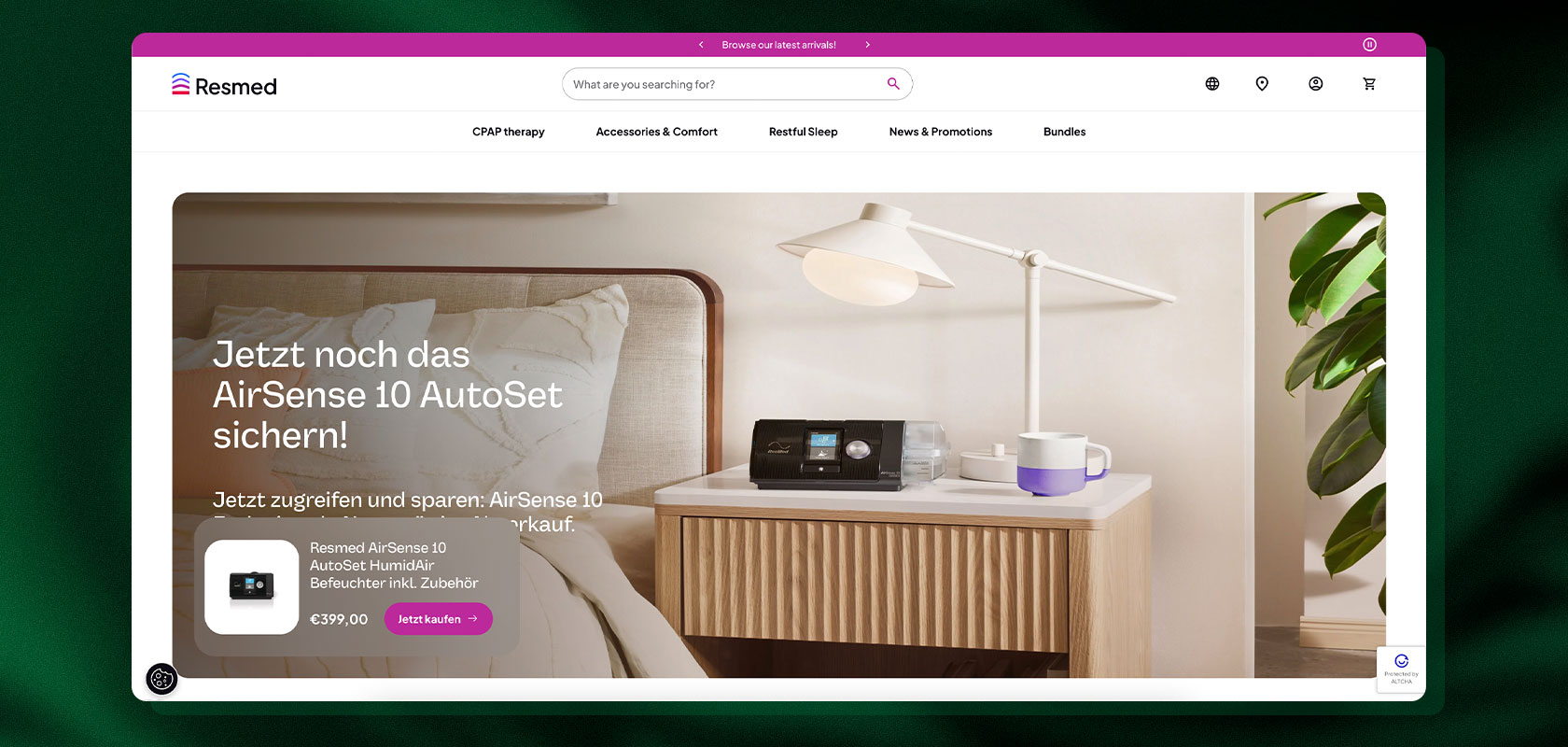
Resmed is a global leader in digital health, specializing in sleep apnea and chronic respiratory diseases. The company’s solutions are used in over 140 countries.
Background: To drive international expansion and consolidate complex processes in its B2B and B2C businesses onto a single platform, ResMed decided to migrate from Shopware to Shopify Plus.
The technological solution:
ERP Integration: A deep integration with Microsoft Business Central 14 was implemented to synchronize inventory, orders, and customer data.
Custom Checkout: A customized checkout area was developed that complies with the strict regulatory requirements for medical respiratory therapy devices.
Custom Return Process: A customized return process was implemented to ensure legally compliant handling of hygiene products (CPAP masks and tubing).
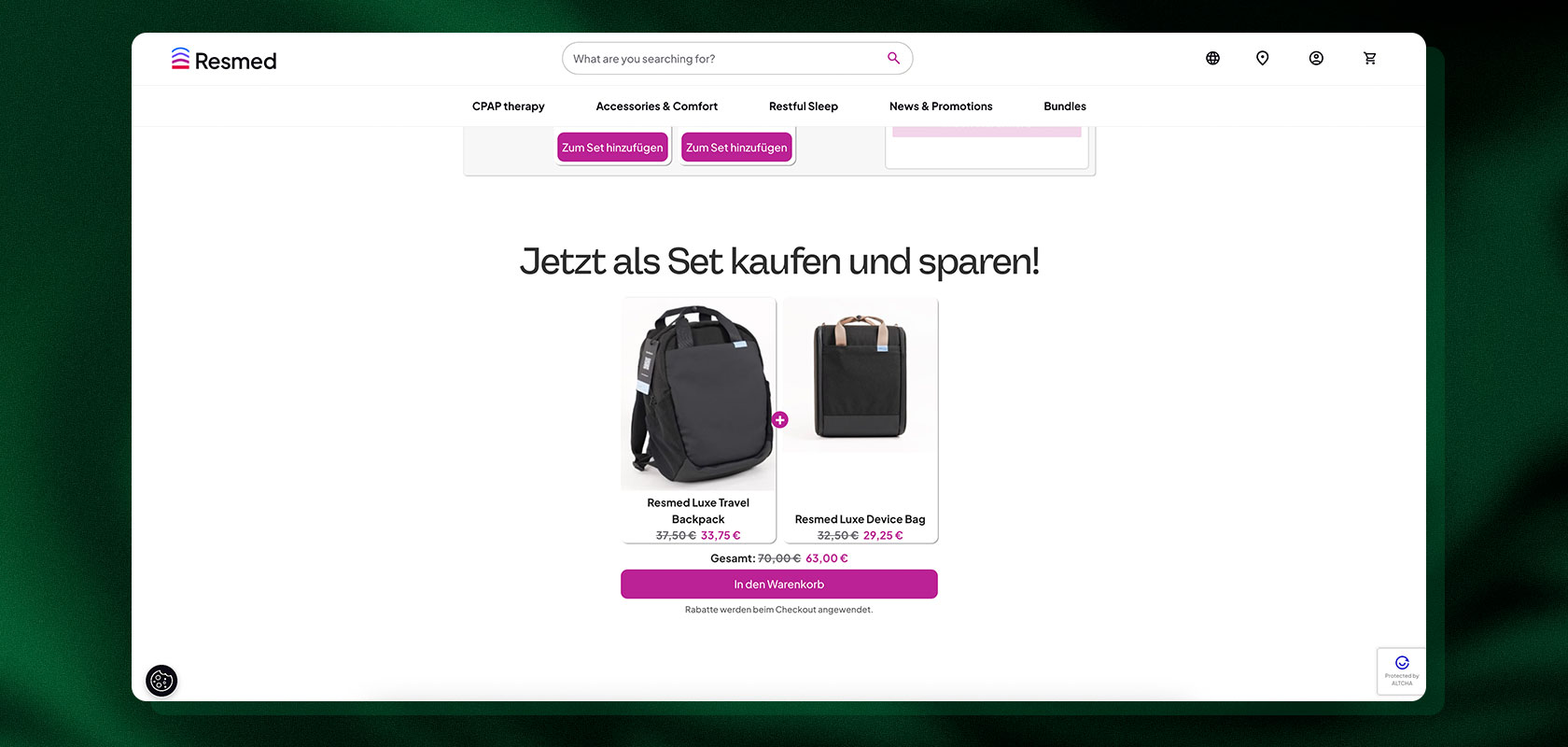
Product Bundles & Download Center: Smart bundle offers for accessories, as well as a secure area for manuals, clinical guidelines, and firmware updates, were set up.
Key Metrics of the Resmed Migration at a Glance
| Metric | Result (First 4 Months) | Impact |
|---|---|---|
| Conversion Rate | +70.8% | Significantly simplified ordering process for patients and practices |
| Revenue | +40.8% | Scaling via the newly established B2B and D2C setup |
| Average Order Value (AOV) | +52.5% | Higher cart value through targeted mask and filter bundles |
| Checkout Abandonment Rate | −9.2% | Streamlined, trustworthy checkout process without media disruptions |
Reading tip: You can find all the technical details and lessons learned from Resmed's migration to Shopify Plus in Latori's full case study.
Raumedic: Precision and Reliability for Polymer Solutions
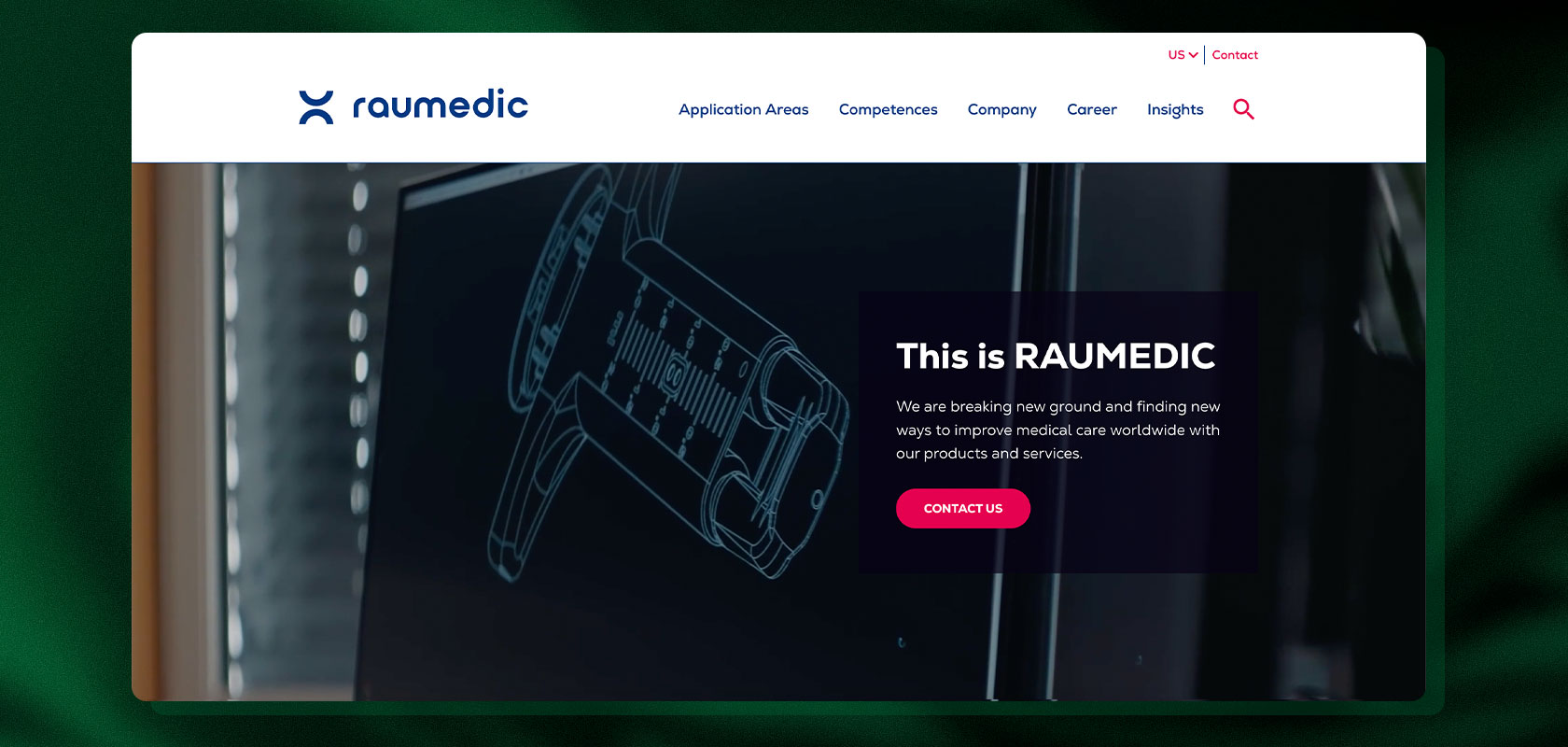
As a globally active development partner and manufacturer of tubing, catheters, and injection-molded parts for the medical technology and pharmaceutical industries, Raumedic stands for uncompromising material purity and traceability. In e-commerce, highly specialized B2B functionalities are particularly important here: The digital provision of technical data sheets, cleanroom certificates, and customized manufacturing specifications requires a precise system architecture that meets complex industry requirements.
Core Technical Features for Healthcare Online Stores
To set up a medical shop on Shopify in a future-proof manner, the following technical components should be considered from the very beginning:
1. ERP-supported batch and serial number tracking
Medical devices must be fully traceable. From goods receipt to delivery to the customer, it must be documented which customer received which batch so that immediate action can be taken in the event of a product recall.
Quick Insight: Batch and Lot Tracking via ERP Middleware
Shopify manages inventory at the variant level. Using middleware solutions or interface connectors, specific batch numbers (lots) are assigned and synchronized in the ERP system (e.g., SAP, Business Central) during the pick-and-pack process. The information is automatically recorded on the packing slip and in the customer history.
2. Restricted Download Areas for Healthcare Professionals
Not all content should be freely accessible. Certain clinical studies, training videos for surgical instruments, or software updates for medical devices require verification as a healthcare professional (e.g., DocCheck login). Through the new customer accounts on Shopify Plus, an external identity provider (OpenID Connect) can be integrated so that content is released only after verification as a healthcare professional, for example.
3. Prescription Upload and Questionnaire Logic
For medical devices eligible for reimbursement, customers must be able to upload their health insurance or private prescription, as well as supplementary care questionnaires, directly during the ordering process. Special Shopify apps or custom-developed apps ensure that these sensitive documents are stored in encrypted form and immediately forwarded to the appropriate specialists for review.
It is essential to accurately reflect the regulatory framework for medical device provision within the ordering and ERP workflows: While an uploaded photo or scan facilitates rapid preliminary review and order creation, it does not replace the physical original prescription required by health insurance plans—which must be submitted in its original form for final billing. Furthermore, medical devices may only be billed to statutory health insurance providers by authorized service providers with a corresponding contract with the insurance provider. Therefore, the Shopify checkout and the integrated inventory management system must incorporate specific payment and status logic that authorizes shipment only after the original prescription has been received and coverage has been confirmed.
At the same time, retailers should adapt their system architecture in anticipation of electronic prescriptions (e-prescriptions), which are scheduled to be implemented for medical devices starting in mid-2027 (planned for July 1, 2027). An important point to note here: Paper printouts with QR codes are not permitted for medical device prescriptions. Instead of simply uploading files, direct digital interfaces to the telematics infrastructure (TI) will be required in the future to retrieve electronic prescriptions in a legally compliant manner and without media discontinuity during the ordering process.
Reading tip: Complex processes, such as recipe uploads and mandatory queries, should not come at the expense of user-friendliness. To learn how to holistically improve the customer journey, checkout processes, and conversion rate in your store, check out our article “Tips for Optimizing Your Online Store.”
GEO & AEO: Search Engine Visibility in the AI Era
The way users search for medical products and solutions is changing rapidly. In addition to traditional Google searches, AI-powered response systems such as ChatGPT, Perplexity, and Google AI Overviews are gaining prominence. Users no longer search exclusively for specific products; instead, they ask specific questions about areas of application, product features, functions, or possible alternatives.
For operators of medical device stores, this development opens up new opportunities but also presents unique challenges. Especially when it comes to medical topics, users expect reliable, fact-based information. That is why the quality of the content, the authors’ expertise, and the trustworthiness of the information provided play a central role. This can also be described using the E-E-A-T principle (Experience, Expertise, Authoritativeness, Trustworthiness).
This is where two optimization approaches come into play: Answer Engine Optimization (AEO) and Generative Engine Optimization (GEO). While AEO aims to format content so that it can serve as direct answers to specific user questions, GEO seeks to establish a brand and its content as a trusted source of information within generative AI systems. Ideally, the content will be incorporated into AI-generated answers, cited as a source, or taken into account for product recommendations.
How can you optimize a medical device store for AEO and GEO?
For medical technology companies, this means, first and foremost, aligning product information and editorial content more closely with the actual information needs of their target audiences. In addition to traditional product descriptions, you should therefore also include frequently asked questions and supplementary information.
Possible measures include:
Technically sound product descriptions: Supplement product pages with technical specifications, areas of application, usage instructions, and relevant safety precautions. Avoid vague marketing claims and focus on clear, verifiable information.
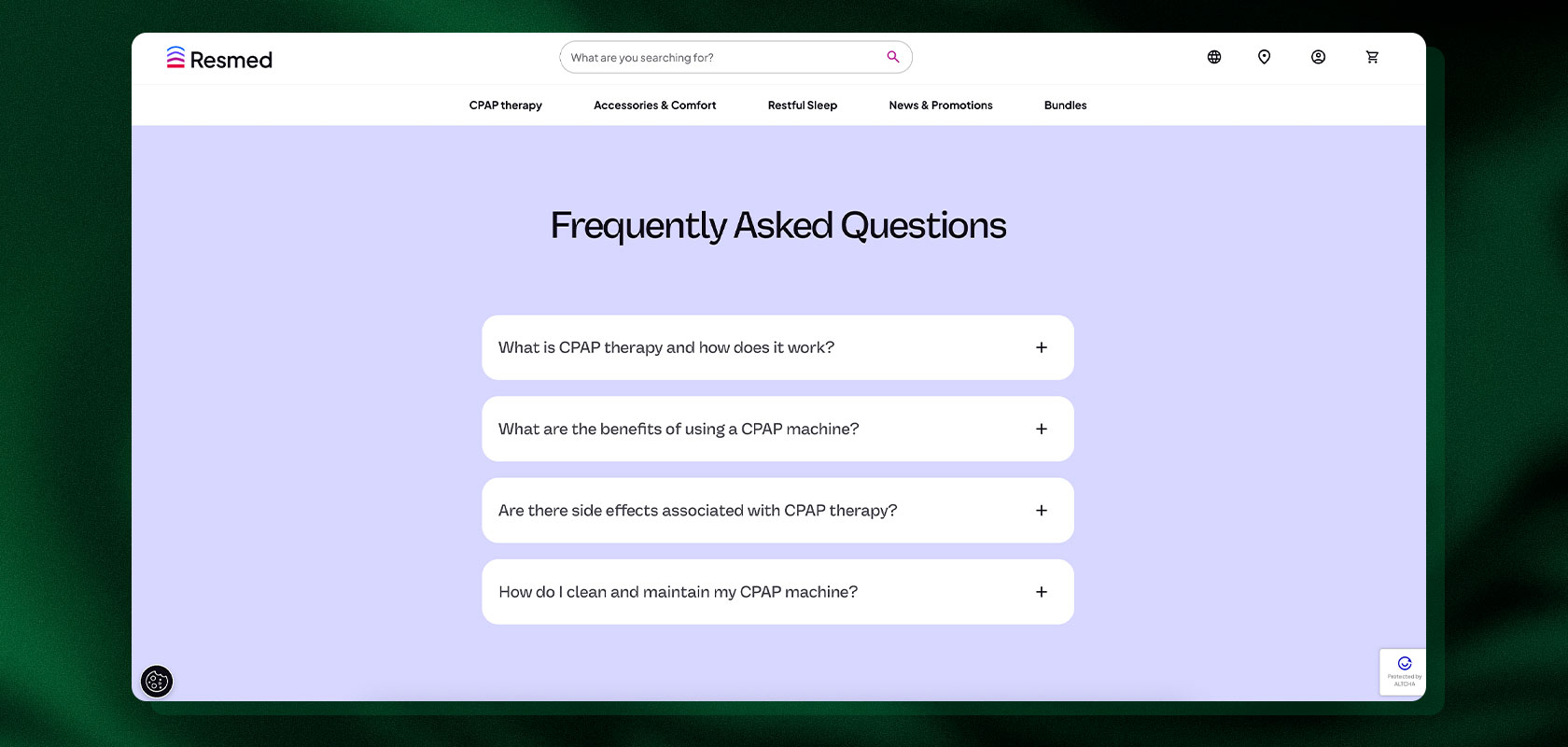
Structured FAQ sections: Answer common questions about the features, compatibility, use, and maintenance of your products. Formulate the answers as specifically and clearly as possible.
Verifiable sources and expert knowledge: Identify expert authors and cite relevant studies, manufacturer information, or official documentation, provided they are relevant to the statement in question.
Structured product data: Use structured data to provide search engines with clearer information about products, manufacturers, and features. Clearly defined metadata fields and consistent data maintenance are also helpful.
Thematically linked content: Link product pages to relevant guides, instructions, and background articles. This helps establish a thematic connection between individual products and your technical expertise.
It is particularly important that the information be up-to-date. Medical devices can change in terms of their technical specifications, approvals, or instructions for use. Outdated information can not only undermine the trust of potential buyers but also lead to incorrect product information. Therefore, you should review your content regularly and systematically integrate updates into your editorial and data maintenance processes.
The technical structure of your online store also plays a role. A clear heading hierarchy, meaningful internal links, well-structured product data, and appropriate Schema.org markup make it easier for search engines to categorize your website’s content. Structured data can, for example, supplement information about products and organizations. However, it does not guarantee that content will appear in AI-generated responses.
Reading tip: Check out our article to learn how to optimize your Shopify store for AI-powered search systems and what role SEO, AEO, and GEO play in this process.
Checklist: Standard Store vs. Medical Technology Store
The following overview summarizes the specific feature extensions required for a legally compliant and high-performing healthcare store on Shopify Plus:
| Function / Requirement | Standard E-Commerce (B2C) | Medical Technology E-Commerce (Shopify Plus) |
|---|---|---|
| Product Data & Documents | Description, images, variants | MDR metadata, UDI codes, multilingual IFU downloads (for laypersons, in addition to paper IFUs) |
| Checkout Logic | Standard 1-page checkout | Custom checkout with hygiene withdrawal exclusion & verifications |
| Prescription Handling | Not required | Secure prescription upload with document encryption |
| Buyer Segmentation | Unified storefront | Separate catalogs & terms for B2B (practices/clinics) and D2C |
| Inventory Management | Basic inventory tracking | Real-time ERP sync with batch and serial number tracking |
| Trust Building | Customer reviews | Clinical studies, CE certificates, expert author profiles (E-E-A-T) |
Conclusion: Future-Proof E-Commerce in Medical Technology
The digital distribution of medical devices presents companies with unique challenges. Regulatory requirements such as the MDR, sensitive health data, complex B2B structures, and specific product requirements make it clear that a conventional online store often fails to meet the industry’s needs.
With Shopify Plus, medical technology companies have access to a flexible and scalable e-commerce platform that supports both B2B and D2C business models. Through custom checkout extensions, structured product data, ERP integrations, and secure customer areas, even complex sales processes can be digitally mapped. Case studies from Resmed, Raumedic, and Bego demonstrate just how varied such solutions can be in the medical technology sector.
The key factor here is not merely the choice of e-commerce platform, but the interplay of technology, interfaces, data management, and regulatory requirements. A well-designed system architecture lays the foundation for streamlining processes, reaching new target audiences, and expanding digital sales over the long term.
Are you planning to launch a Shopify store for medical devices, or do you want to modernize your existing e-commerce infrastructure? Latori can assist you with the design, technical implementation, and integration of complex Shopify and Shopify Plus projects. Contact us for a no-obligation consultation.
Frequently Asked Questions about Shopify for Medical Devices
Is Shopify compliant with the European General Data Protection Regulation (GDPR)?
Shopify provides the foundation for GDPR-compliant operations. For medical technology merchants processing particularly sensitive health data, we recommend using dedicated European servers for interfaces and apps, alongside a precise configuration of cookie and consent management.
How can hygiene products be legally excluded from the right of withdrawal?
By law, the right of withdrawal expires for sealed hygiene products once the seal has been broken. Merchants must clearly inform customers of this before concluding the contract. An additional notice or confirmation checkbox can be integrated into the checkout (via Checkout Extensibility) to ensure greater transparency and documentation.
Can Shopify accommodate B2B terms for hospitals and medical supply stores?
Yes. Using the integrated "B2B on Shopify" functionality, merchants can assign individual price lists, minimum order quantities, volume pricing, and specific payment methods (e.g., net 30 payment terms) per corporate customer. B2B customers simply log in and automatically see their customized terms.
Which ERP systems can be integrated with Shopify?
Thanks to modern REST and GraphQL APIs, Shopify can be connected to all common ERP systems—including Microsoft Dynamics 365 Business Central, SAP S/4HANA, Haufe X360, or weclapp. Synchronization covers inventory levels, orders, master data, and batch numbers.
How does Shopify support compliance with MDR requirements?
Using Metafields, a wide range of structured additional data can be maintained for each product in Shopify—such as UDI-DI numbers, risk classes, or download links for declarations of conformity. This data can be displayed on the frontend in an update-safe manner.
