)
Online food retail has become much more professional in recent years. Consumers now routinely order snacks, delicacies, beverages, and dietary supplements online—often directly from the manufacturer. This raises a strategic question for food brands: does it make sense to have their own online store, or are marketplaces and retail partners sufficient?
A popular solution is a shop on Shopify. The platform provides the technical infrastructure for direct sales and enables manufacturers to sell their products independently of intermediaries. However, not every food business automatically benefits from this model.
The short answer: A Shopify food shop is particularly worthwhile for food brands with their own positioning, regular product demand, and direct customer contact. The model is less suitable for interchangeable merchandise without a brand profile or without its own shipping structure.
Table of contents
- What is a Shopify food shop and who benefits from it?
- What makes Shopify the right platform for food stores?
- Legal requirements for Shopify Food Shops (DE / EU)
- Shopify setup: step-by-step guide for food brands
- UX & Conversion: How food products build trust online
- Efficient fulfillment and cold chain management for food shops
- Marketing & growth for Shopify food stores
- The best Shopify apps for food and beverage
- Costs & common mistakes with Shopify food shops
- Food shops in practice: How Latori customers do it
- Conclusion
We are happy to help you with any questions you may have about Shopify or Shopify Plus! Simply get in touch with us and we will discuss your project.
What is a Shopify food shop and who benefits from it?
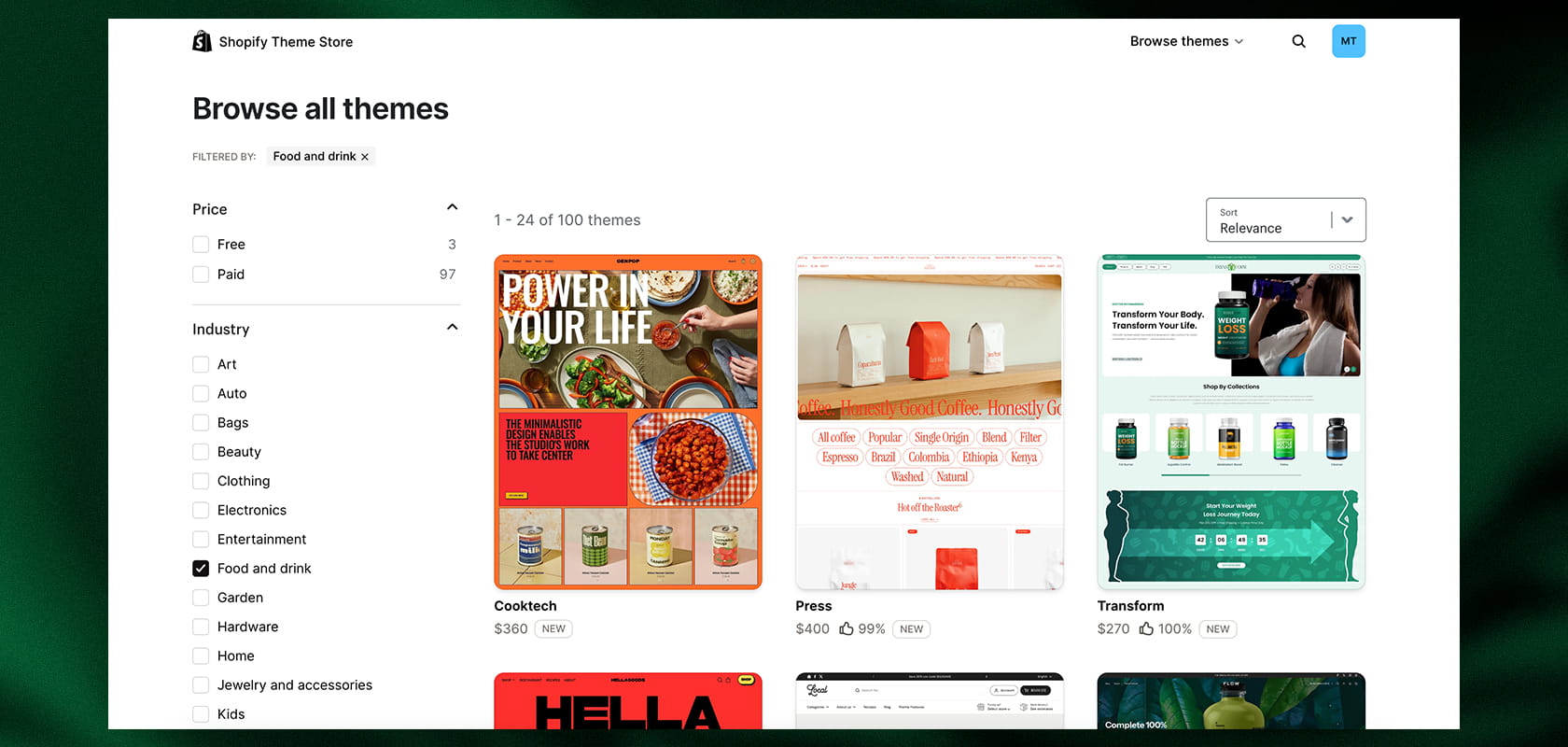
Shopify is a cloud-based e-commerce platform that allows companies without their own server infrastructure to operate a professional online store. Hosting, security updates, and system maintenance are integrated. A Shopify Food Shop is therefore a standalone online store through which food or beverages are sold directly to end customers—under your own brand and pricing.
Unlike marketplaces such as Amazon, with Shopify you do not operate a sales stand within a third-party platform, but rather an independent website. You have complete control over the design, content, customer data, and marketing. Marketplaces offer reach, but generate strong price comparisons. Having your own shop requires active marketing, but enables long-term brand building and higher margins.
Compared to brick-and-mortar retail, there are no store rents, sales areas, or walk-in customers. Instead, you take care of shipping, customer service, and digital visibility.
Suitable target groups
A Shopify store for food is particularly suitable for:
Startups with a clear brand strategy
Manufacturers and producers
Direct-to-consumer brands (D2C)
Suppliers of specialty or niche products
Companies with subscription models
The model is less suitable for pure merchandise without its own brand identity or for businesses without a shipping structure.
What makes Shopify the right platform for food stores?
Shopify offers solid technical scalability. From a small range to a more extensive product portfolio, the store can be developed across various expansion stages. For growing food brands, this means that a platform change is usually not necessary, even if an upgrade within the system may be advisable in the event of strong growth.
A key advantage is the flexibility of product presentation. Food products are information-intensive. In addition to images and descriptions, ingredient lists, nutritional values, allergens, origin, and storage instructions play a central role. Shopify allows this information to be presented in a structured way and supplemented with additional content such as manufacturing processes or brand stories.
Typical functional strengths include:
Variant management for sizes and flavors
Integration of subscriptions
Connection to shipping and logistics systems
Extensibility through specialized apps
This extensibility is particularly relevant in the food sector, as legal and logistical requirements are more complex than in many other product categories.
From snacks to fresh produce: food products on Shopify
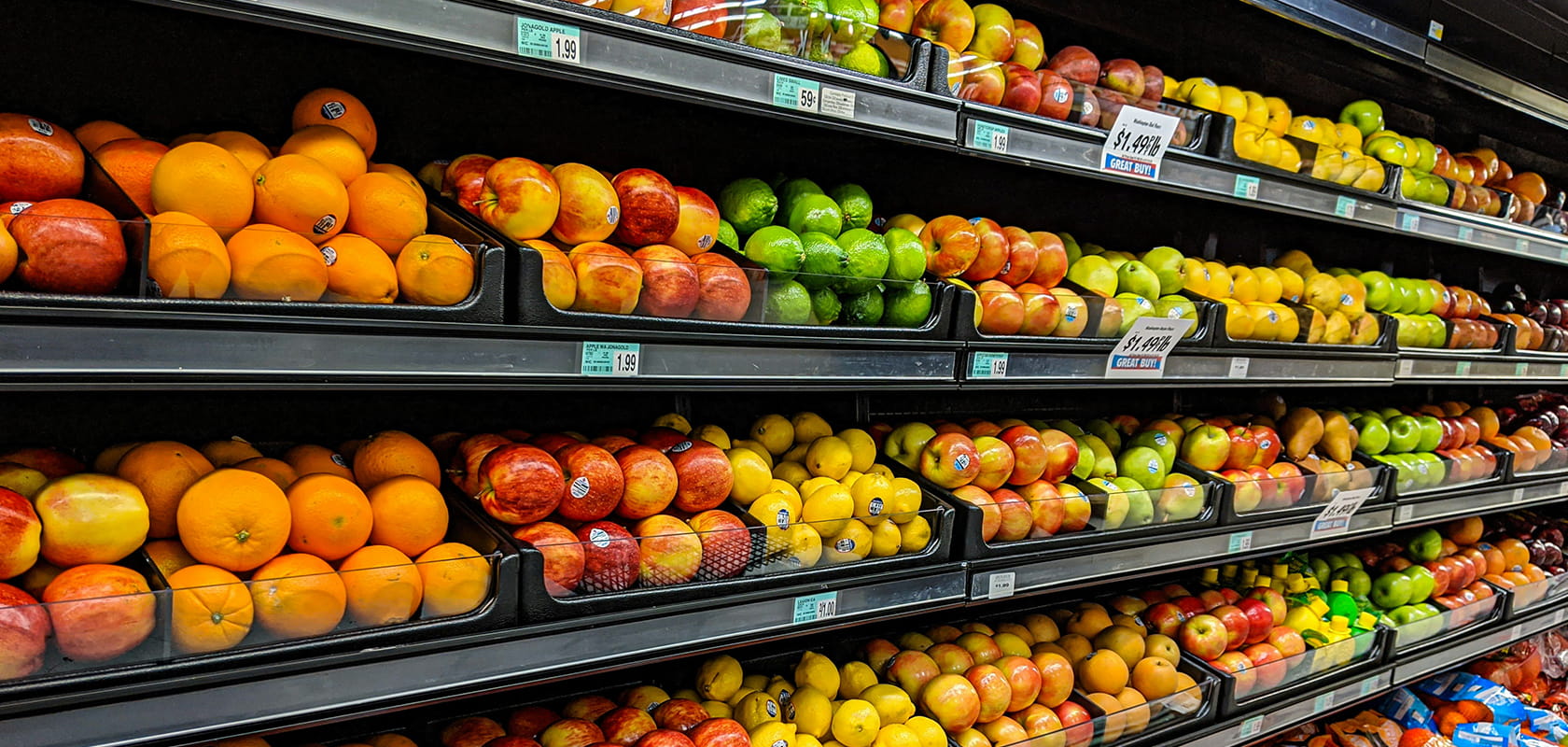
In principle, all marketable food products can be sold online, provided that legal requirements are met and logistical requirements are fulfilled.
Non-perishable products are particularly well suited. These include snacks, delicacies, spices, coffee, tea, and dietary supplements. They are less sensitive to temperature and pose lower shipping risks.
Fresh or refrigerated foods are more complex. Here, delivery times, packaging, and temperature control must be precisely coordinated. Refrigerated packaging, express shipping, or regional delivery models are possible solutions, but they increase the cost structure.
Recurring business models play an important role. Consumer products with regular demand are suitable for subscriptions, such as:
Coffee
Protein and supplement products
Snack boxes
Beverages
Reading tip: Subscription commerce: How to implement subscription models with Shopify.
Legal requirements for Shopify Food Shops (DE / EU)

The online sale of food is subject to strict legal requirements. Among other things, the Food Information Regulation is decisive, which regulates in detail what information must be made available to consumers before the conclusion of a contract.
Mandatory information includes the list of ingredients, allergen labeling, nutritional information, net quantity, and the base price per unit of measurement. This information must already be visible on the product page.
The right of withdrawal requires special attention. It may be restricted for perishable food. However, the conditions must be formulated in a transparent and legally compliant manner.
Regardless of the platform, you are responsible for product safety, hygiene, traceability, and, if applicable, an HACCP concept. The technical solution does not exempt you from food law obligations.
What is an HACCP concept?
A HACCP concept (Hazard Analysis and Critical Control Points) is a legally prescribed hygiene system for ensuring food safety. The aim is to systematically identify, evaluate, and control potential health risks not only in the finished product, but also during the ongoing process. Biological, chemical, and physical hazards are taken into account, such as bacterial contamination, cleaning agent residues, or foreign objects.
At the heart of the HACCP system is the definition of critical control points (e.g., cooling temperatures), for which clear limits, monitoring procedures, and documented measures in case of deviations are specified. An HACCP concept is mandatory for all businesses that produce, process, or store food. Even small manufacturers and direct-to-consumer brands need an appropriate system. A pure online shop without its own production facilities usually requires a simplified hygiene concept, but remains responsible for compliance with food law requirements.
Reading tip: EU Packaging Regulation: What you need to bear in mind when packaging your goods.
Shopify setup: step-by-step guide for food brands
Setting up a food store follows a structured process. First, create a Shopify account, select a pricing plan, and connect the domain. Next, integrate legally compliant texts such as the imprint, privacy policy, and terms and conditions.
The next step is to choose a design. A clear, product-centered theme is crucial in the food sector, as product images and content descriptions require sufficient space.
You should take particular care when creating products. In addition to the price and description, ingredients, variants, tax classes, and metadata must be entered correctly. Errors in this area have both legal and operational implications.
Finally, payment methods, VAT rates, and shipping zones are configured. Transparent delivery times and clearly communicated shipping costs increase the likelihood of a purchase.
Reading tip: We show you how to choose the right Shopify theme for your store.
UX & Conversion: How food products build trust online
Food products are trust-based products. Customers cannot smell or taste them before purchasing. That is why the product page plays a central role.
High-quality images, detailed photos, and clear information about the origin replace the sensory experience. A transparent presentation of the manufacturing process or the raw materials used further strengthens trust.
Important elements of trust are:
Transparent content information
Certifications or quality seals
Clear contact options
Since many purchases are made on mobile devices, the checkout process should be simple and clear. Long loading times or confusing product pages have a direct impact on the conversion rate.
Efficient fulfillment and cold chain management for food shops
Logistics is a key success factor in food commerce. While non-perishable products can usually be shipped without any problems using standard parcel services, fresh goods require special solutions.
Refrigerated shipping requires suitable packaging systems. Insulation materials, ice packs, or time-critical delivery have a significant impact on the cost structure. Delivery times must be communicated realistically to avoid quality losses.
In addition to shipping, warehousing plays an important role. Clean inventory management prevents overstocking and ensures that best-before dates are not exceeded. Digital inventory monitoring systems are recommended here.
Marketing & growth for Shopify food stores
Having your own online shop does not automatically lead to visibility. Without targeted measures, even a technically well-designed shop will remain invisible to potential customers. Search engine optimization is therefore a central component of any food e-commerce strategy. Product pages should not only be attractively designed, but also consistently geared towards specific search queries. This includes precise product names, meaningful descriptions, and cleanly structured data so that search engines can correctly capture and classify content.
In addition, social media channels can be used effectively, especially for products with a strong visual impact or manufacturing processes that require explanation. The key here is not to be present on as many platforms as possible, but to select the right channels. Collaborations with content creators whose content is suitable can create additional reach, provided that the target group, product, and brand positioning are actually a good fit.
In the long term, however, a food store becomes economically relevant primarily through repeat purchases. In the food sector in particular, it is not one-off purchases but long-term customer relationships that determine profitability. Proven tools for promoting repeat purchases are:
Email marketing with regular, relevant content
Personalized offers based on previous purchases
Well-thought-out bundle strategies to increase shopping cart value
Subscription models for regularly consumed products
Regular customers ensure predictable sales, stabilize production and warehousing processes, and reduce dependence on costly new customer acquisition.
Reading tip: Shopify Bundles: Increase sales with strategic product bundles.
The best Shopify apps for food and beverage
The right Shopify apps are crucial for efficiency, legal compliance, and growth in food e-commerce. We provide an overview of the best solutions for food and beverage brands.
Shopify Subscriptions

Shopify Subscriptions is the official solution developed by Shopify for recurring orders within a Shopify store. The app allows you to offer products as subscriptions without having to rely on external third-party providers. It is directly integrated into the Shopify ecosystem and uses the existing checkout structure.
Pricing:
Free
Klaviyo

Klaviyo is an e-commerce marketing platform that primarily functions as an email and SMS marketing tool for online stores—and is particularly popular with merchants who want to professionalize their Shopify store. The Klaviyo app for Shopify can be installed directly from the Shopify App Store and connects your store to the Klaviyo marketing ecosystem.
Pricing:
Free: Free
SMS: $15/month
Email: $20/month
reviews.io

reviews.io is a review and rating platform specifically designed to collect and display authentic customer feedback. The app integrates directly with Shopify and automates the sending of review requests after a purchase. Customers can leave written reviews as well as star ratings and images.
Pricing:
Free: Free
LAUNCH: $19/month
LAUNCH PLUS: $45/month
Yotpo

Yotpo is a comprehensive customer engagement platform that uses reviews as one of several building blocks to strengthen trust and customer loyalty. In addition to product reviews and images, Yotpo offers modules for loyalty programs, user-generated content (UGC), and email marketing automation.
Pricing:
Free: Free
Starter: $15/month
Pro: $119/month
Easyship

Easyship is a shipping and fulfillment platform designed specifically to simplify and centralize e-commerce shipping processes. The app connects directly to Shopify and offers a wide range of logistics tools, from selecting suitable carriers to automatically generating shipping labels.
Pricing:
Free: Free
Plus: $29/month
Premium: $69/month
Enterprise: $99/month
Costs & common mistakes with Shopify food shops
The economic structure of a Shopify Food Shop consists of fixed and variable cost components. Fixed expenses primarily include the monthly shop fee and, depending on the Shopify plan selected, paid themes or additional apps. These items are predictable and usually only change as the range of functions grows.
On the other hand, costs that depend directly on order volume remain variable. These include payment fees, shipping costs, packaging materials, and the marketing budget. In the food sector in particular, temperature-controlled deliveries or special packaging solutions can also have a significant impact on margins. A realistic calculation should therefore take into account not only the product price, but also logistics, return risks, and potential write-offs.
In practice, economic problems rarely arise from the platform itself, but rather from operational oversights. Common mistakes include:
incomplete or incorrect mandatory information
underestimated refrigeration and shipping costs
poor-quality product images
overloaded or complicated checkout processes
lack of planning for inventory and shelf life
Shopify is particularly useful if you want to build an independent brand, maintain direct customer contact, and focus on recurring sales.
Food shops in practice: How Latori customers do it
AMC
Since 1963, AMC has been synonymous with high-quality stainless steel cookware and innovative cooking systems, and is internationally successful in direct sales. The brand is not a food shop in the traditional sense. However, it sells its pots and cooking systems primarily through visually appealing food preparation.
The AMC shop shows that food products can also be sold in a completely different way: Sales are handled by consultants who give interested parties the opportunity to experience the cooking systems in person. To this end, a consultant search function has been integrated into the online shop. Complemented by a clear UX, high-quality design, and a shop for useful materials such as cookbooks, AMC demonstrates how a strong cooking brand can be future-proofed with Shopify.
Migros Shop
Migros is one of Switzerland's largest retail companies and combines its expertise in the area of gourmet foods under the Delica brand. The Migros Shop makes Swiss specialties such as chocolate, rösti, raclette, fondue, and coffee available online to customers in Germany and Austria.
For the German and Austrian markets, Migros Shop is leading the way with a modern food store that intelligently combines functionality and shopping experience. An integrated loyalty program rewards every purchase with points and creates strong incentives for repeat orders. In the “Save products” category, items with a short shelf life are bundled together for greater sustainability and attractive offers. A clearly structured mega menu and convenient filter options, such as by brand or characteristics such as “vegan,” enable quick and intuitive product searches. Volume discounts provide additional purchasing incentives, while a transparent cooling surcharge is automatically calculated in the shopping cart for products that require refrigeration.
The result is a powerful online shop that optimally combines convenience, transparency, and sales-promoting mechanisms.
CoffeeB
CoffeeB stands for sustainable coffee enjoyment with innovative coffee balls instead of conventional capsules – a product that requires explanation and can be experienced in the online shop. An eye-catching header video illustrates the concept of coffee balls directly on the home page, while large images and clear graphics convey the advantages and functionality in an understandable way.
Clear, concise navigation ensures intuitive user guidance and quickly leads both end customers and business customers to their destination. The “CoffeeB for Businesses” section also offers a dedicated B2B option that is specifically tailored to the needs of corporate customers.
On the product detail pages, additional meta fields provide comprehensive information such as intensity, recommended cup size, and other product details—transparent, structured, and easy to understand. The shopping experience is complemented by practical features such as digital machine registration and an automated free coffee gift with the purchase of a machine. The result is a well-thought-out brand experience that consistently combines innovation, sustainability, and user-friendliness. A true pioneer in food shops!
Conclusion
A Shopify Food Shop is not purely a technical decision, but rather a strategic one. Those who sell food directly to end customers take on responsibility for branding, communication, logistics, and legal compliance—but in return gain control over margins, customer data, and repeat purchases.
Especially for brands with clear positioning, products that require explanation, or recurring demand, having your own shop offers long-term advantages over marketplaces. However, this requires realistic calculations, clean legal implementation, and a professionally planned shipping process.
Shopify provides the infrastructure—economic success comes from clear brand management, operational precision, and sustainable customer loyalty.
We would be happy to help you set up your food shop with Shopify! Simply get in touch and we can discuss your project.
Frequently asked questions about Shopify stores for food brands
Is Shopify permitted for selling food?
Yes. Shopify provides the technical infrastructure. Compliance with all food regulations is your responsibility.
What foods can be sold online?
All marketable foods can be sold online, provided that labeling, hygiene, and product safety are guaranteed.
What are the costs of a Shopify food store?
The costs depend on the selected Shopify plan, as well as app usage, shipping volume, and marketing strategy. In addition to the platform fee, logistics and packaging should be calculated realistically.
Do I need special permits or concepts such as HACCP?
If you produce or process food, an HACCP concept is usually required. You must also be registered with the relevant food control authority.
