)
The e-commerce sector is facing a massive regulatory change. Anyone who thought that registering with the German LUCID register meant that packaging compliance was taken care of now needs to rethink. The new EU Packaging Regulation (PPWR) replaces the outdated EU Packaging Directive 94/62/EC and establishes rules that apply immediately throughout Europe.
For you as a Shopify merchant, this means that the requirements for logistics and product data are increasing dramatically. Anyone who misses the August 2026 deadline risks not only heavy fines in the high six-figure range, but also de facto delisting from platforms such as Amazon if proof of compliance is lacking.
To ensure that your business remains operational, we have analyzed the new legislation.
What you will learn in this guide:
The regulatory breakthrough: Why the PPWR replaces numerous national interpretations and special regulations with a uniform EU law.
The 50% rule: How to comply with the new limits for empty space in shipping cartons.
Marketplace “gatekeepers”: Why your compliance data must now be ready for platform API interfaces.
Table of contents
Would you like to optimize your Shopify or Shopify Plus store and need professional support? We're happy to help! Simply contact us and we'll discuss your requirements.
Chemical safety: How to navigate the PFAS ban from 2026.

The most important points in brief: Unlike a mere draft directive, the PPWR is a regulation that will apply directly in all member states as an EU regulation from August 2026. National transitional or interpretative leeway will be largely restricted. A key point is the new efficiency requirement, which puts an end to unused space in packages by stipulating a maximum empty space ratio of 50% for shipping and transport packaging. In addition, the regulation ushers in an era of data-driven compliance, in which digital disposal information becomes mandatory. Among other things, the regulation provides for digital solutions such as QR codes, the specific design of which is currently being specified in implementing acts. The air is also getting thinner for retailers on third-party platforms, as marketplaces such as Amazon and eBay will be more closely involved in market surveillance in the future and will be obliged to check the compliance of their retailers.
In the following article, we will go through everything that is now important for you step by step.
What is the EU Packaging Regulation (PPWR)?

The PPWR (Packaging Regulation) is a legislative breakthrough in European law and will be rolled out as a new regulation in all EU member states in 2026.
Its primary goal is to create a harmonized market with uniform standards for recycling and waste prevention. It replaces the old Directive 94/62/EC, which left member states with a lot of room for interpretation, leading to the now familiar (and costly) differences in labeling requirements and registrations.
The comparison: Status quo vs. PPWR 2026
| EU Directive 94/62/EC | PPWR (from 2026) | |
|---|---|---|
| Legal Force | Indirect (via national laws) | Direct (identical across the EU) |
| Labeling | Diverse national requirements (Triman, Green Dot, etc.) | Uniform EU disposal symbols |
| Focus | Disposal & recovery quotas | Recyclable design, recycled content & waste prevention |
Deadline: The countdown is on. The most important provisions of the EU Packaging Regulation 2026 will come into force on August 12. As things stand at present, sales and transition periods are very limited or have been completely eliminated in some cases.
Significant changes and obligations for companies
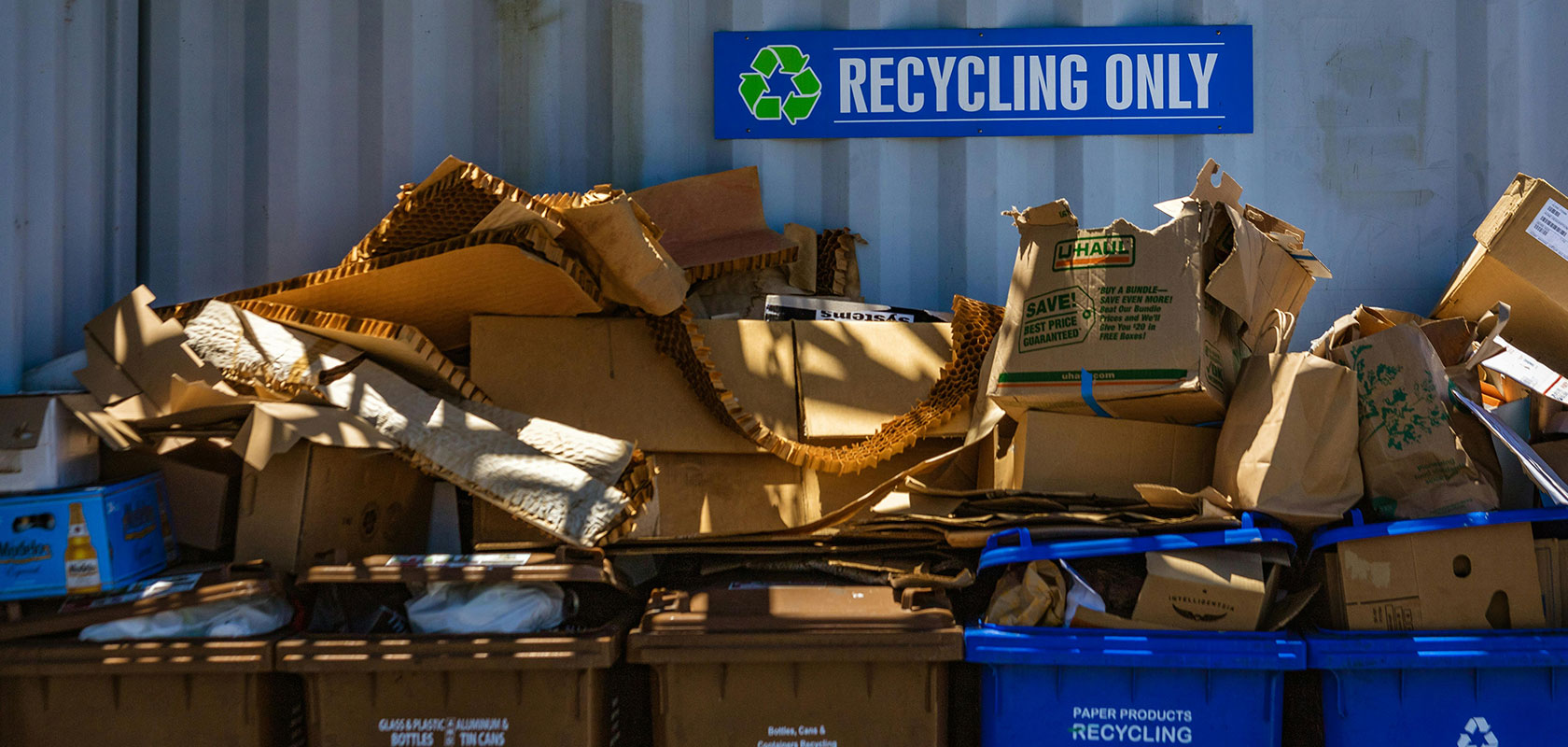
While previous regulations often remained vague, the new ordinance focuses on measurable quotas and digital transparency. For you as a retailer, this means that every piece of packaging that leaves your warehouse must meet stricter efficiency and material requirements in the future. We will go into more detail below.
Article 24: The end of “air logistics”
One of the PPWR's sharpest swords is the limitation of empty space. In the future, shipping cartons in e-commerce may have a maximum of 50% empty space. For retailers, this means moving away from standard cartons and toward “right-sizing.”
Expert insight: We have seen in customer projects that optimizing cardboard packaging not only ensures compliance, but can also reduce shipping costs by up to 15% due to lower volume weight. A technical audit of your packaging setup is therefore a solid business case.
Design for recycling & smart labeling
The PPWR transforms packaging from mere waste into a “data-bearing economic asset” through two key requirements:
1. Recyclability performance classes: In the future, packaging will be classified into classes A to E. Based on the principle of “eco-modulation,” Extended Producer Responsibility (EPR) fees will be linked to these classes. More environmentally harmful packaging designs will thus incur significantly higher costs when they are first placed on the market.
Recycling performance classes according to the new EU Packaging Regulation
| Class | Recyclability (by weight) | Operational & Legal Impacts |
|---|---|---|
| Class A | ≥ 95% | Optimal Compliance: High-quality recyclate; lowest possible EPR fees (licensing fees). |
| Class B | ≥ 80% | Standard Compliance: Minimal impurities; classified under standard fee rates. |
| Class C | ≥ 70% | Minimum Requirement: The absolute lower limit for market access starting in 2030. |
| Class D | < 70% | Prospective Market Exclusion: Expected ban on placing these products on the market as of Jan 2030. |
| Class E | Non-recyclable | Immediate Liability: Significant restrictions to potential sales bans; highest regulatory risks. |
2. The QR code requirement: The regulation provides for the gradual introduction of digital labeling solutions such as QR codes as soon as the technical implementation standards have been finalized (expected from 2027). These “smart labels” provide consumers with harmonized disposal instructions across the EU and replace the current confusion of national recycling symbols with uniform digital communication.
Reading tip: Better packaging and more: 7 tips for sustainability in your online shop.
Scope of application: Is your company affected?
If you sell products within the European Union, the answer is yes. The previous Packaging Ordinance in Germany (VerpackG) was merely a preview of what is now becoming standard at the continental level. The PPWR differentiates very precisely between the various roles in the supply chain, but places an obligation on everyone who places packaging on the market.
The roles of economic operators
Responsibility lies primarily with the so-called distributor. This is usually the manufacturer or brand that first makes the product available on the EU market. But be careful: importers and pure distributors are also in the spotlight.
Important for international distributors: Anyone who has their company headquarters outside the EU but delivers to the Union must appoint an authorized representative. This representative acts as the legal contact for the authorities and is liable for compliance with the requirements.
Digital thumbscrews: Marketplace liability
For Shopify merchants who also scale via channels such as Amazon, eBay, or Kaufland, the air is getting thinner. The PPWR introduces an automated control obligation for platform operators.
This means that marketplaces are legally obliged to fully validate their merchants' compliance data (such as their registration in the Packaging Ordinance and LUCID numbers). In practice, this is done via API interfaces to the national registers. If proof is missing or a certificate has expired, there is no longer a manual verification process. In practice, it can be assumed that missing or invalid compliance certificates will lead to automated suspensions or delistings, as manual verification processes are hardly realistic given the large number of retailers. Your shop will simply become invisible on the platform until the database has been cleaned up.
Sectoral bans: The “black list” (Annex V)
Some packaging formats will be completely banned from the market by the PPWR because they are classified as avoidable waste. Annex V of the regulation contains the so-called “black list.” Among other things, this affects:
Single-use miniatures: Mini hotel cosmetics (shampoo bottles, etc.) made of plastic below a certain fill quantity.
Fruit and vegetable packaging: Plastic packaging for quantities under 1.5 kg (unless there is a demonstrable risk of spoilage).
Catering portions: Individual packaging for sauces, sugar, or coffee cream, provided they are intended for consumption.
If your product range includes items in these formats, you will need to fundamentally change your packaging strategy or product design by August 2026 to avoid sales bans.
Risks and opportunities for businesses
In modern e-commerce, compliance is no longer a “nice-to-have” but a business-critical prerequisite for any scaling. Those who ignore the European Packaging Regulation PPWR are gambling with the very existence of their digital business model. But where there is regulatory pressure, there are also significant competitive advantages for early adopters.
The risks: When compliance becomes a showstopper
The consequences of violating the new regulation are draconian and aim to directly punish inefficiency in the market.
Financial penalties: Fines for failure to register or incorrect material declarations can amount to up to €200,000 – per violation.
Operational bans: What many retailers underestimate is the speed of enforcement. The harmonized legal situation allows authorities to impose Europe-wide sales bans.
Product recalls: If your transport packaging does not comply with the new EU Packaging Regulation (e.g., exceeding the void space ratio), in extreme cases, official measures such as sales bans or recall orders may follow. Such unplanned costs can not only ruin your quarterly results, but also the trust of B2B partners and end customers.
Supplementary regulation from 2026: PFAS in food packaging
In parallel with the PPWR, further EU-wide requirements will come into force from August 2026, including restrictions on PFAS in food contact materials. Even though these regulations are not originally part of the PPWR, they directly affect many retailers. Retailers must pay particular attention to the chemical composition of their packaging in the food & home sector, but also in cosmetics. From August 2026, there will be a strict ban on PFAS (“forever chemicals”) in food packaging that comes into direct contact with the product. Since PFAS are often used for grease- and water-repellent coatings, chemical testing of the entire supply chain is now essential. As a distributor, you are liable for compliance – “we didn't know” is not an acceptable excuse in the eyes of the law.
The opportunities: Efficiency as a marketing tool
Those who take a proactive approach to the changeover can turn regulatory burdens into strategic advantages
Cost reduction through material minimization: An optimized packaging strategy not only lowers disposal fees, but also reduces your postage and storage costs through right-sizing.
Advantage in listings: Large retailers and marketplaces increasingly favor partners who have done their compliance homework. Certification according to high recycling performance classes can be the decisive door opener for new sales channels.
Brand authority: Sustainability is a decisive purchasing factor in the D2C sector. Companies that communicate transparently about their registration in the Packaging Ordinance and their recyclable designs strengthen customer loyalty.
Implementation tips: How to get your business ready
August 12, 2026 may seem a long way off, but the transition of supply chains, packaging designs, and IT processes requires lead time. We recommend that our customers adopt a proactive roadmap to avoid panic in the middle of the year and ensure a smooth transition from the old EU Packaging Directive 94/62/EC to the new regulation.
Step 1: The Comprehensive Packaging Audit
Analyze your entire product range—not just your bestsellers.
Empty space check: Measure the ratio of product volume to carton size. Where are you above the critical 50% mark?
Material inventory: Record the composition of each packaging component. This is the basis for later classification into recycling performance classes (A-E).
Step 2: Active supplier management & data depth

The PPWR shifts the burden of proof. In future, you must be able to provide complete technical documentation.
Data retrieval: Request binding certificates from your manufacturers regarding the recycled content (PCR content) and PFAS-free status.
Contract adjustment: Update your supplier contracts. Ensure that compliance with PPWR standards is a guaranteed feature of the packaging materials supplied.
Step 3: Digital update & design integration
The introduction of QR codes and harmonized EU disposal symbols is not purely a graphic task, but a logistical one.

Smart labeling: Consider how you can integrate QR codes into your branding in such a way that they do not detract from the aesthetics of your unboxing experience, but still meet the legal requirements for readability.
Dynamic data: Consider creating landing pages that display the correct regional disposal instructions depending on the country of delivery—a technical advantage that we often solve using Shopify meta fields.
Reading tip: How to use Shopify in Germany in a legally compliant manner.
Conclusion
The European Packaging Regulation PPWR is undoubtedly one of the most complex regulatory projects for online retail this decade. It marks the end of the trial and error era in shipping. But for professionally positioned Shopify merchants, this upheaval presents an opportunity: Through operational excellence, material efficiency, and transparent sustainability, you can currently set yourself apart from the competition and, in the best case scenario, even save costs in the long term.
While other merchants will be struggling with delistings and fines in August 2026, you will have already optimized your processes and reduced your costs through right-sizing. Compliance thus becomes a measurable competitive advantage.
Would you like to learn how to optimize your logistics processes in Shopify for the new regulation? Let's take a look at your strategy together.
Frequently asked questions about the EU Packaging Regulation (PPWR)
Does the PPWR also apply to small online shops?
The PPWR Regulation applies to anyone who places packaging on the EU market, regardless of the size of their business. Only micro-enterprises are subject to very limited exceptions for certain reusable quotas.
Is my German LUCID registration sufficient?
No. Although the rules are being harmonized, you must still register in every EU country to which you deliver. From August 2026, you will also be required to appoint an authorized representative in each country if you do not have your own branch there.
When will QR codes on cartons become mandatory?
The PPWR will apply from August 12, 2026. However, the obligation to use harmonized QR codes will be introduced gradually (expected from 2027/2028) once the EU has finalized the exact technical design standards.
What will happen to my old stock?
There is a sell-off period. Packaging that was legally placed on the market before August 12, 2026, may generally continue to be used until stocks are exhausted. The new rules apply to all packaging manufactured or imported after this date.
How do I integrate the new QR codes into Shopify?
Store disposal instructions in Shopify meta fields. This data can be printed directly on delivery notes or shipping labels as dynamic QR codes using apps such as Order Printer.
Are there Shopify apps for the PPWR?
Yes. Apps such as EPR Insights automate the collection of material data and weights for your environmental reports. This saves time and minimizes errors when transferring data to national registries.
