)
Anyone looking to grow in enterprise e-commerce quickly realizes that traditional merchandising is increasingly reaching its limits when dealing with thousands of SKUs. As the product catalog continues to grow, manually maintaining product lists and search results becomes an inefficient bottleneck. This is precisely where AI-powered product placement becomes the next major step forward.
This article takes a detailed look at how modern AI merchandising works. We explain the roles played by the Shopify ecosystem, first-party data, and a clean product data structure—including in-depth metadata—and how merchants can set up their Shopify product placement to be AI-ready.
Quick Insight: What is AI merchandising?
AI merchandising refers to the use of artificial intelligence to automatically sort, prioritize, and display products in a personalized way based on user behavior, product data, and business objectives.
Table of contents
- Why AI Is Transforming Merchandising in Enterprise Commerce
- AI Merchandising in the Shopify Ecosystem: What’s Already Possible Today
- How AI Merchandising Works in Practice
- First-Party Data as the Foundation for Intelligent Product Placement
- Here's How AI Scales Merchandising Across Thousands of Products
- Product Data and Metadata as a Key to Success: The Right Structure for AI
- People and AI: Why Enterprise Retailers Are Adopting a Hybrid Approach
- Measuring Success: Which KPIs Really Matter
- The Biggest Mistakes in AI Merchandising and How Companies Can Avoid Them
- Conclusion
Do you need help with your online store on Shopify or Shopify Plus? We'd be happy to help! Just get in touch with us, and we'll discuss your project.
Why AI Is Transforming Merchandising in Enterprise Commerce

The challenge posed by large product catalogs is enormous: thousands of SKUs can hardly be managed efficiently by hand. While merchandising teams used to spend a lot of time sorting categories via drag-and-drop, today’s shoppers demand highly personalized and dynamic storefronts.
We are witnessing a shift from static product lists to adaptive layouts. Customer expectations and search behavior are changing rapidly—terms are typed into the search bar in natural language, and the results must be relevant immediately. In this environment, speed, personalization, and data quality are the decisive competitive advantages. Modern AI-powered product merchandising tools analyze millions of data points to display the most relevant products for each user in milliseconds.
Reading tip: Learn about Shopify's AI features and discover how you can use them for your online store.
AI Merchandising in the Shopify Ecosystem: What’s Already Possible Today
In recent years, Shopify has continuously expanded its AI ecosystem. While the initial focus was on the automated creation of product descriptions and marketing content, intelligent search functions, product recommendations, and other AI-powered features now enhance the shopping experience. As a result, Shopify is gradually evolving into a platform where AI not only creates content but also supports product search and selection. With the introduction of Semantic Search in the Shopify Search & Discovery app, Shopify has enhanced product search with context-aware search mechanisms, laying the groundwork for more relevant search results.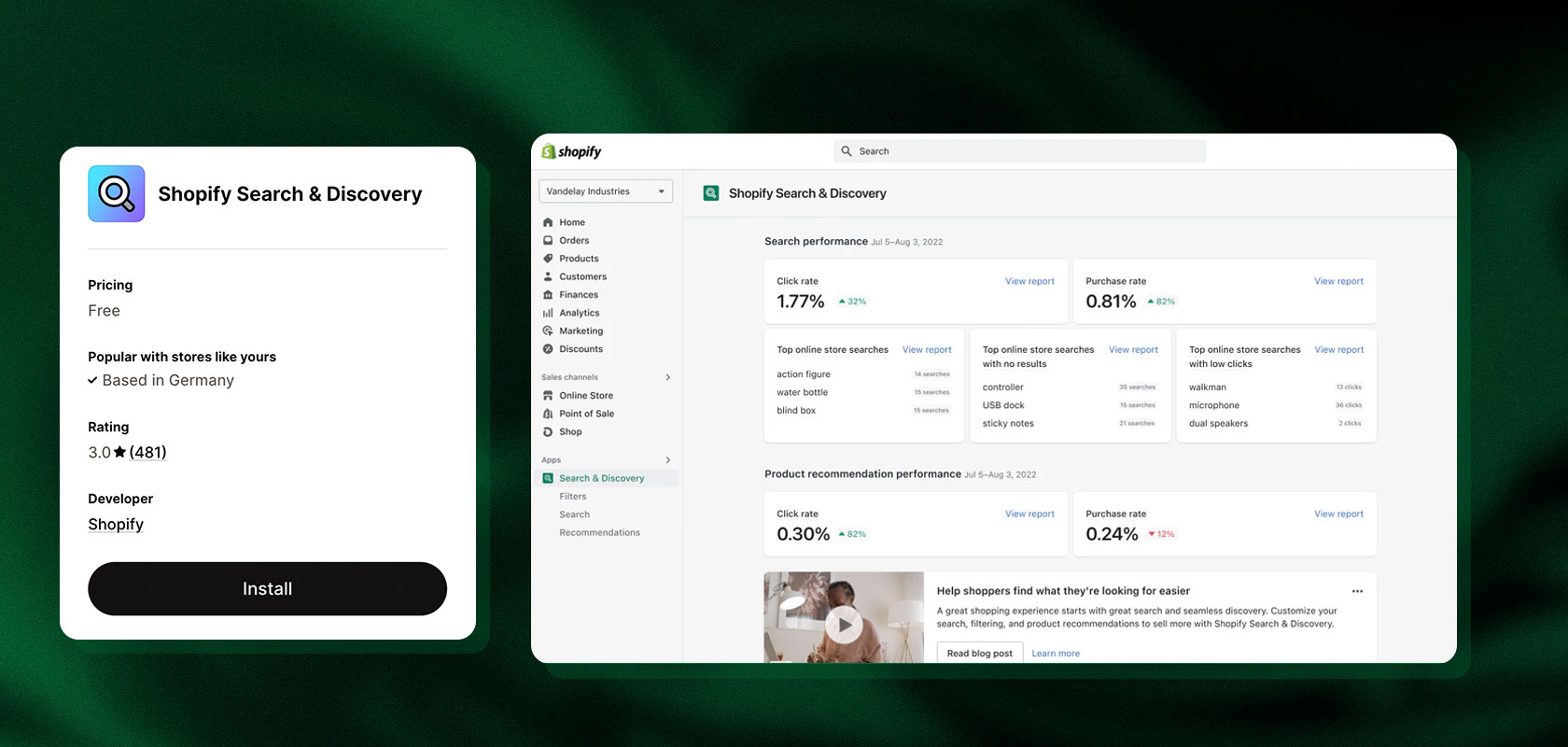
Automated product placement, in-depth search results, and dynamic product recommendations are now standard features of modern shopping experiences right within Shopify. For many merchants, the native AI and commerce features in the Shopify ecosystem already cover a large portion of their smart merchandising needs. However, for highly complex enterprise scenarios—such as international product catalogs, custom ranking logic, or highly specialized personalization strategies—external solutions like Nosto or other specialized merchandising platforms can still be a valuable addition.
The terms “AI merchandising” and “native AI merchandising” often come up in the context of modern commerce platforms. Although the two are frequently used interchangeably, they describe different approaches. The following overview highlights the key differences at a glance.
Quick Insight: What is Shopify Magic?
Shopify Magic is Shopify’s AI suite, which helps merchants create product descriptions, emails, and other content, among other things. In addition, Shopify is continuously expanding its AI ecosystem—for example, through smart search features, product recommendations, and assistance features that enhance the in-store shopping experience.
AI Merchandising vs. Native AI Merchandising: What’s the Difference?
While AI merchandising uses artificial intelligence to optimize individual processes such as search, product recommendations, or rankings, native AI merchandising takes a more comprehensive approach: AI forms the central decision-making logic of the entire system. The following overview highlights the key differences.
| Feature | AI Merchandising | Native AI Merchandising |
|---|---|---|
| Core Principle | AI supplements existing merchandising processes. | AI forms the foundation of the entire merchandising system. |
| Control | A combination of manual business rules and AI. | AI automatically handles the majority of operational optimization. |
| Personalization | Based on target groups or user segments. | Individualized product delivery for every single visitor in real time. |
| Optimization | Enhances isolated features such as search or recommendations. | Continually optimizes the entire end-to-end shopping experience. |
| Data Foundation | Product data and selected user signals. | Comprehensive first-party data, product data, and real-time signals flow in continuously. |
| Role of the Merchandiser | Defines manual rules and marketing campaigns. | Defines high-level goals and guardrails; the AI handles the operational optimization. |
| Level of Automation | Medium | High |
Hint: The term “Native AI Merchandising” has not yet been uniformly defined and is used differently depending on the provider. It generally refers to an approach in which AI not only supports individual functions but also forms the core decision-making logic for product selection, prioritization, and personalization.
Reading tip: Looking for the right personalization solution? Check out our comparison to see how Nosto and trbo differ.
How AI Merchandising Works in Practice
AI merchandising does not rank products according to a fixed order, but rather continuously adjusts their placement based on user behavior and business objectives. To do this, the AI processes a multitude of signals in fractions of a second and combines them with structured product data. The process can be explained in five consecutive steps.
1. User interactions provide the initial signals
Every interaction in the online store provides the AI with valuable information. Search queries, clicks on products, filters used, or shopping cart actions help to better understand a visitor’s current purchase intent. These signals form the basis for a personalized product selection.
2. The AI interprets the search intent
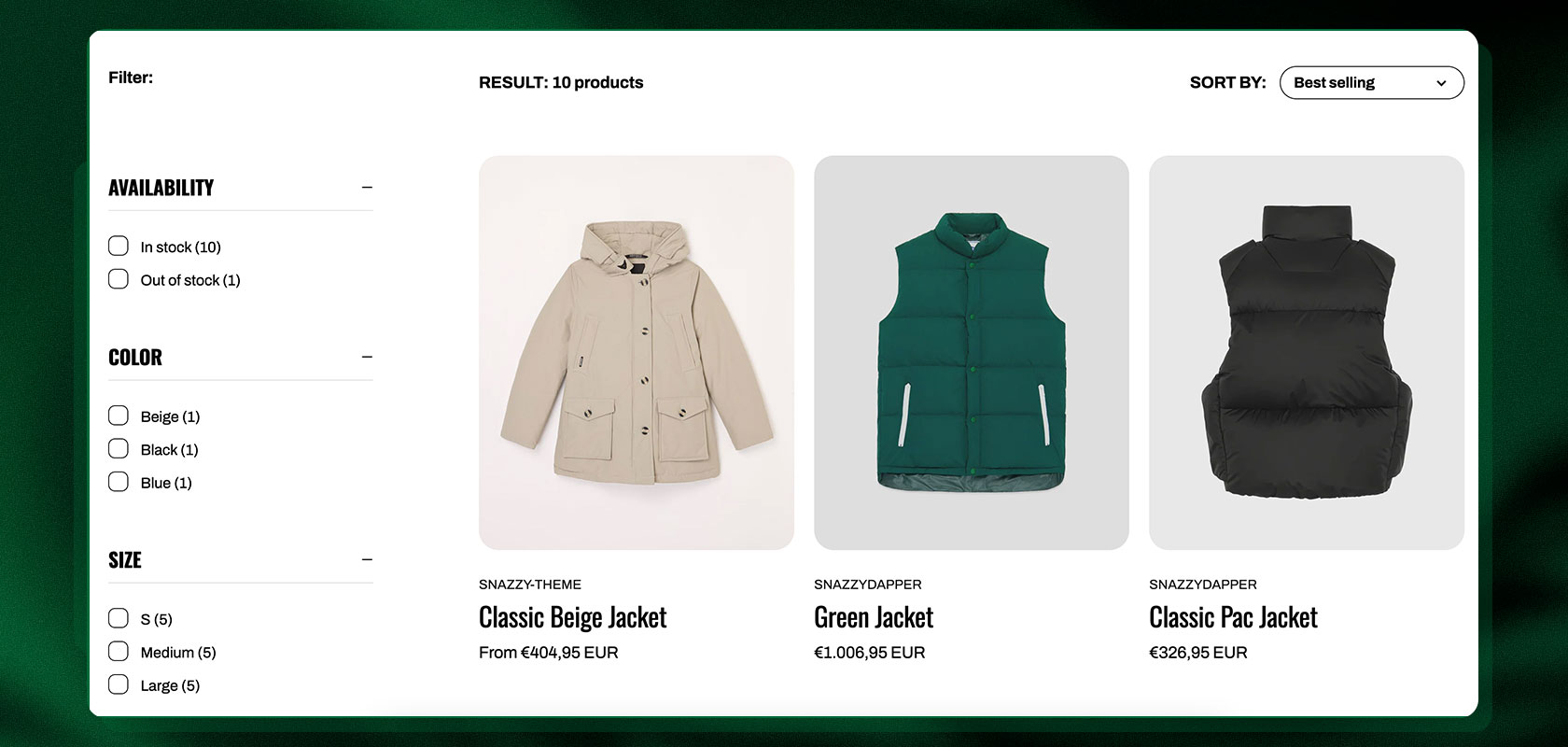
In the next step, the AI not only analyzes individual search terms but also attempts to identify the actual intent behind a search query. Modern search technologies take into account synonyms, product attributes, and the overall context of the query. For example, a search for “lightweight rain jacket for mountain hikes” can find suitable products even if this exact phrase does not appear in the product description.
3. Product data and business rules are factored into the evaluation
The AI then matches the search intent with the available product data. In addition to characteristics such as material, color, or size, it also takes business requirements into account, such as preferred brands, margin targets, inventory levels, or seasonal campaigns. This results in a product selection that is relevant to both the user and the company.
4. Products are dynamically prioritized and displayed
Based on this information, the AI calculates the order of the products in real time. Instead of a static category view, each visitor receives a product selection tailored to their interests. At the same time, products with limited availability or lower relevance can automatically be displayed further down the list.

5. New data continuously improves results
Every additional interaction provides further insights. When a user clicks on specific products, applies different filters, or completes a purchase, this information is incorporated into the optimization process. As a result, merchandising continuously evolves and can respond to changes in user behavior or the product lineup.
Important: The exact weighting of individual signals varies depending on the technology used. Shopify does not publish the underlying ranking algorithms in detail. Generally, however, modern AI-powered merchandising systems are based on a combination of user behavior, structured product data, and company-specific business rules.
First-Party Data as the Foundation for Intelligent Product Placement
In the post-cookie era, first-party data is becoming the most valuable resource for every online store. Without reliable tracking data from third-party sources, AI must learn from users’ direct interactions on the platform itself.
However, without high-quality first-party data, even the most powerful AI model cannot generate relevant product recommendations or product rankings. This data forms the foundation for understanding user interests and continuously optimizing search results and product placements.
But what exactly are the signals that AI uses? The models analyze click behavior, search queries, filter usage, purchase data, and even return data. Based on this, algorithms can identify patterns. Vector embeddings make it possible to generate highly relevant product recommendations in real time, even for anonymous visitors. If a user clicks on two different pairs of running shoes, the AI immediately classifies this “intent” and dynamically adapts the subsequent category pages.
Quick Insight: What is first-party data?
First-party data is information that a company collects directly from its own customers or target audiences with their consent (e.g., purchase history, clicks in its own online store, email interactions).
Here's How AI Scales Merchandising Across Thousands of Products
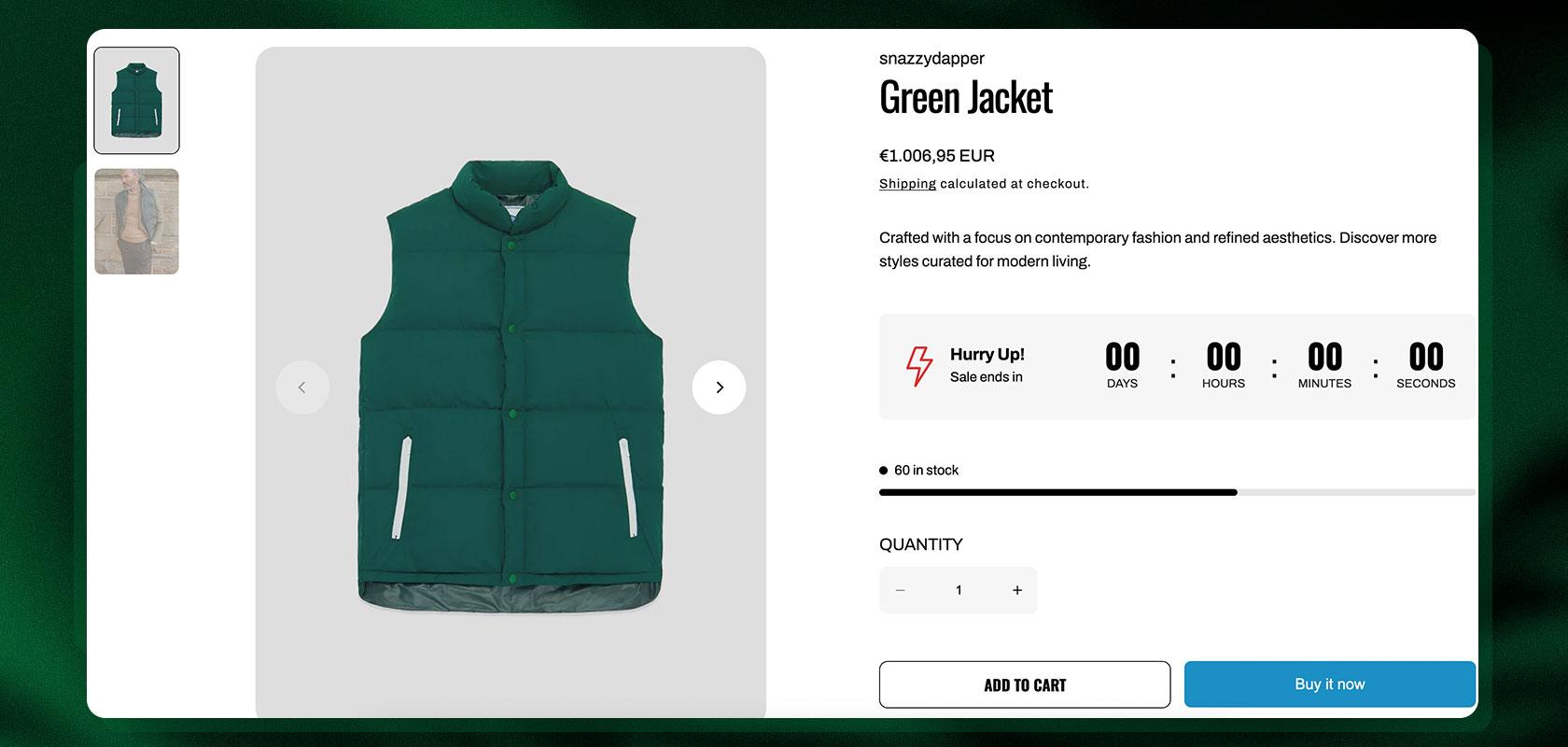
If you have to manually identify when a product is becoming a “hidden champion,” you’re often already lagging behind demand. AI merchandising tools scale these processes by fully automating the prioritization and continuous optimization of large product assortments.
Bestsellers, hidden champions, and overstocked products are intelligently managed without the need to manually edit a single product listing. The AI weighs factors such as conversion rate, inventory velocity, current margin, and seasonal trends to recalculate the order of products on category and search pages in milliseconds. This prevents sold-out or low-converting products from blocking valuable visibility.
Quick Insight: How does AI determine the order of products?
AI uses complex algorithms that take various factors (known as features) into account, including personal user preferences, global sales trends, profitability, availability, and semantic relevance to the search query.
Product Data and Metadata as a Key to Success: The Right Structure for AI
Even the most advanced AI fails when faced with poor-quality data. High-quality product data and detailed metadata are often more important than the AI algorithm itself. AI must understand an item’s attributes precisely in order to semantically link it to the user’s search intent. In this context, metadata provides the necessary context so that algorithms can semantically classify products and link them to user intent.
Quick Insight: What are metafields and metaobjects?
Metafields allow Shopify merchants to add custom data fields to products (e.g., care instructions). Metaobjects take this a step further and allow the creation of complex, linkable data structures (e.g., designer profiles) that can be used system-wide.
This is where Shopify’s Metafields, Metaobjects, and standardized taxonomies come into play. Merchants must maintain detailed and structured product information—from colors and materials to cuts and technical specifications. Only when these attributes exist as machine-readable data points can AI match a complex search query like “waterproof jacket for fall hiking” to a hardshell jacket in a fraction of a second—even if the exact phrase doesn’t appear in the actual product description. Metadata thus bridges the gap between human language and database logic.
Reading tip: Discover the possibilities of Shopify Meta Objects and learn how to manage content more flexibly.
People and AI: Why Enterprise Retailers Are Adopting a Hybrid Approach
Will automation replace the team? No, AI merchandising does not replace strategic merchandisers; rather, it significantly changes their responsibilities. The focus shifts from manual sorting to strategic control via so-called business rules.
Retailers use these rules to set guidelines for the AI. Should high-margin private-label brands be promoted during a specific week? Is there a seasonal sale to clear out remaining inventory? The AI handles the granular execution at the user level, while the team sets the strategic parameters (the “rules”). This transparency and control remain crucial for long-term success.
Reading tip: Discover the latest Shopify Editions and get an overview of all the important updates.
Measuring Success: Which KPIs Really Matter

To validate the true value of merchandising automation, clear metrics are needed. Instead of looking solely at traffic, the focus shifts to efficiency metrics.
Key metrics include the conversion rate (CVR), the search-to-cart rate, and, in particular, revenue per visitor (RPV). According to recent industry studies in enterprise e-commerce, optimizing RPV through AI-driven merchandising can lead to average revenue increases of 31%. Through continuous A/B testing, rule-based product placements can be compared against AI-driven layouts. In the long term, the positive effects are evident not only in immediate revenue but also in customer lifetime value (CLV) through personalized experiences.
Quick Insight: What is Revenue per Visitor (RPV)?
Revenue per Visitor (RPV) is calculated by dividing total revenue by the number of website visitors. This metric combines the conversion rate and average order value into a meaningful KPI.
The Biggest Mistakes in AI Merchandising and How Companies Can Avoid Them
The failure of AI projects in e-commerce can usually be traced back to the “garbage in, garbage out” principle. A flawed data foundation—whether due to inconsistent, incomplete, or missing product and metadata—drastically limits the performance of any AI. Gaps in product taxonomy cause filter functions to fail and product recommendations to lose relevance; without well-maintained metadata, the AI is essentially operating blindly.
Additional hurdles include a lack of patience during the algorithms’ learning processes and the absence of objective performance metrics, such as neutral A/B tests. For sustainable success in AI merchandising, it is therefore essential to treat data hygiene as a top priority and to intensify collaboration between IT, marketing, and merchandising departments in order to break down existing data silos.
Conclusion
AI-powered merchandising is increasingly becoming a key component of modern enterprise commerce strategies. Especially with large product catalogs, artificial intelligence offers the ability to dynamically optimize product recommendations, personalize user experiences, and scale merchandising processes more efficiently.
However, the key to success lies not solely in the AI technology itself. AI can only reach its full potential when supported by high-quality product data, structured metadata, a clean data architecture, and clearly defined business rules. Companies that lay this foundation enable smarter search results, more relevant product recommendations, and continuous optimization of the customer journey.
In doing so, AI does not change the merchandiser’s role—it expands it: Instead of manually curating products, teams are increasingly focusing on strategic guidelines, goals, and parameters, while AI handles operational optimization.
For Shopify and Shopify Plus merchants, this means that those who prepare their product data, systems, and processes for AI-powered merchandising early on lay the foundation for scalable, personalized, and future-proof shopping experiences.
If you'd like to prepare your Shopify or Shopify Plus store for these new features, we'd be happy to help you get started! Just get in touch with us, and we'll discuss your needs.
Frequently Asked Questions about AI Merchandising
What is AI Merchandising?
AI merchandising utilizes artificial intelligence to automatically sort and display products based on relevance, user behavior, and business objectives. Instead of relying on static product lists, the AI continuously analyzes signals such as clicks, search queries, purchases, or inventory levels and adjusts product placements dynamically. Especially for large product catalogs, AI merchandising improves personalization and significantly reduces manual maintenance efforts.
How does AI merchandising work within the Shopify ecosystem?
AI merchandising within the Shopify ecosystem leverages product data, first-party data, and AI-powered features to automatically display products with higher relevance. Search results, product recommendations, and product lists can be optimized based on user behavior, purchase history, or stock availability. The prerequisite for this is structured product data and a clean data foundation.
Do I need Shopify Plus for AI-powered merchandising?
Not necessarily. Many AI-powered features are already available throughout the Shopify ecosystem, though the exact range of functions can vary depending on your plan. Shopify Plus offers additional enterprise features and more customization options, but it is not a requirement for AI-powered merchandising in every use case. Which features are available depends entirely on the specific Shopify features and apps you use.
Do I need expensive third-party apps for AI merchandising?
Not completely. Shopify is continuously expanding its AI and commerce ecosystem with native features (such as Shopify Magic and Semantic Search), meaning many merchants are less dependent on external merchandising solutions. However, for highly complex enterprise requirements—such as custom ranking logics, international assortments, or specialized search functionalities—third-party solutions can still be a valuable addition.
Which product data and metadata are particularly important for AI merchandising?
Structured product data and metadata are crucial for AI-powered merchandising. These include, among other things, categories, product types, variants, colors, materials, sizes, metafields, metaobjects, and other standardized attributes and technical specifications. A consistent taxonomy improves the relevance of product recommendations and search results and forms the basis for precise AI decisions.
What happens if product data and metadata are incomplete?
Incomplete product data degrades the quality of AI-powered merchandising. If crucial information like product attributes, metadata, categories, or metafields is missing, the AI cannot fully understand, categorize, or personalize product displays. Following the principle of "garbage in, garbage out," the more complete and structured the data foundation is, the more accurately the AI will perform.
Does AI merchandising replace the existing merchandising team?
No, AI merchandising does not replace merchandisers; rather, it shifts their responsibilities. Instead of manually sorting products, teams define strategic parameters such as campaign priorities, margin targets, or bestseller rules. The AI then handles the automated and personalized execution of these guidelines across large product catalogs for individual users.
How does AI merchandising handle data privacy and GDPR?
AI merchandising can be used in a fully GDPR-compliant manner, provided that personal data is processed lawfully and consent requirements are met. Within the Shopify environment, personalized product recommendations frequently rely on first-party data generated directly within your own store. A correctly configured cookie and consent management system, alongside compliance with current data protection regulations, is a prerequisite.
