)
Shopify has released its latest Editions. Unlike usual, this time they’re the Shopify Spring Editions. Shopify typically releases updates twice a year—in the summer and winter—but it now seems likely that the Editions will be released at shorter intervals in the future.
With the Spring Editions 2026, Shopify is certainly reaching the next milestone in its AI strategy. While the Winter Editions primarily laid the groundwork for Agentic Commerce, Shopify is now demonstrating how artificial intelligence is set to transform the entire retail landscape—from product management and marketing to checkout, all the way to sales facilitated directly through AI assistants like ChatGPT.
In addition to numerous improvements for merchants and developers, the focus is primarily on features that reduce the daily workload while simultaneously opening up new sales opportunities. These include structured product data for AI shopping, significantly more flexible product management, new B2B features, smarter Sidekick updates, and improvements to checkout, the Shop App, and brick-and-mortar retail.
In this post, we’ll walk you through the key new features of Shopify Editions Spring 2026 and explain the benefits they offer for your Shopify store.
Table of contents
- Shopify Catalog and Agentic Commerce: Products Are Becoming AI-Enabled
- Sidekick is evolving into a smart business assistant
- Product management becomes significantly more flexible
- Marketing, Shop App, and Customer Accounts
- Checkout, Discounts, and Brick-and-Mortar Retail
- More Features for B2B Merchants
- New Opportunities for Developers
- What Should Shopify Merchants Do Now?
- Conclusion: Shopify Is Evolving into the Platform for AI-Powered Commerce
- A Look Back: Shopify Winter Editions 2026
Would you like to implement your online store with Shopify or Shopify Plus? We would be happy to support you! Simply get in touch with us and we'll talk about your project.
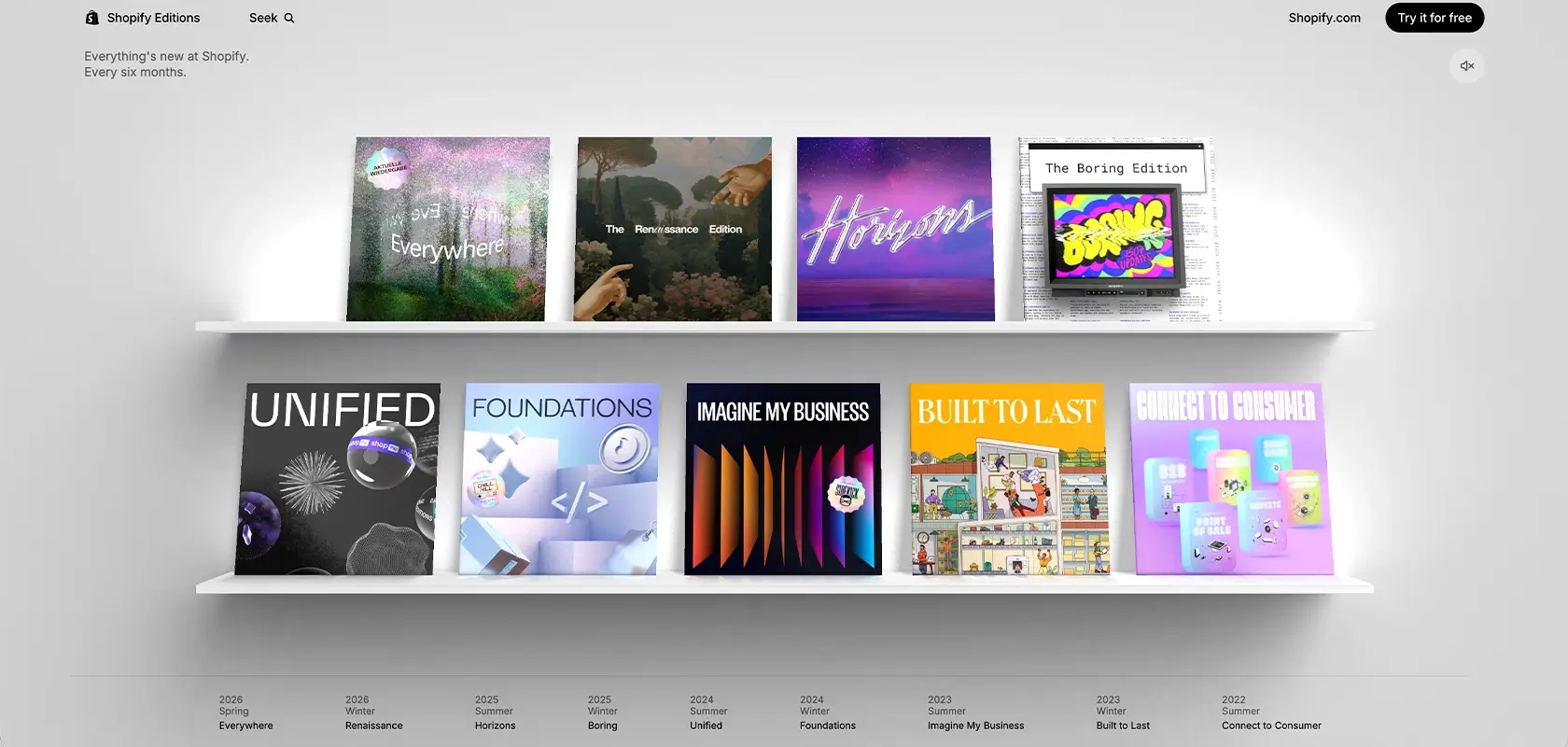
Quick Insight: What are Shopify Editions?
Mit den Shopify Editions veröffentlicht Shopify (normalerweise) zweimal jährlich eine Sammlung aller wichtigen Neuerungen der Plattform. Händler, Entwickler und Agenturen erhalten einen Überblick über neue Funktionen, Verbesserungen und Zukunftspläne. Die Spring Editions 2026 stehen dabei ganz im Zeichen von künstlicher Intelligenz und Automatisierung. Shopify integriert KI inzwischen nicht mehr nur in einzelne Werkzeuge, sondern entwickelt die gesamte Commerce-Plattform konsequent weiter.
Shopify Catalog and Agentic Commerce: Products Are Becoming AI-Enabled
One of the key themes of the Spring Editions is the continued expansion of Agentic Commerce. More and more customers are using AI assistants to search for products, compare them, and make purchasing decisions. This is exactly where Shopify comes in.
Shopify automatically structures and standardizes product information for AI channels. Merchants also receive recommendations on which product details should be added to improve discoverability. Shopify handles the formatting so that products can be more easily understood by AI systems and included in AI shopping results—for example, in ChatGPT.
This creates an entirely new sales channel. In the future, customers will no longer necessarily have to visit a traditional online store; instead, they’ll be able to discover and purchase products directly within a conversation with an AI.
Mohamed Hamid, a front-end developer at Latori, sees this as an important step for the future of e-commerce:
“I find the structured preparation of product data for AI assistants via the Shopify Catalog particularly exciting. More and more shoppers are using AI to find and compare products instead of searching through countless websites. Shopify makes it much easier for merchants to make their products visible to these new search and recommendation systems. This increases reach and opens up new sales opportunities.”
The Spring Editions make it clear that the traditional online store will be just one of many sales channels in the future.
In line with this, Shopify is providing new insights into the success of AI-powered retail. With the Agentic Storefront Dashboard, merchants gain an overview of how their products perform in AI shopping experiences and which AI channels are driving sales. In addition, AI Search Insights provide valuable information on which products customers are searching for via AI and where product data can be optimized for better visibility.
Reading tip: Agentic Commerce Guide: How to Prepare Your Shopify Store for Agentic Commerce.
Sidekick is evolving into a smart business assistant

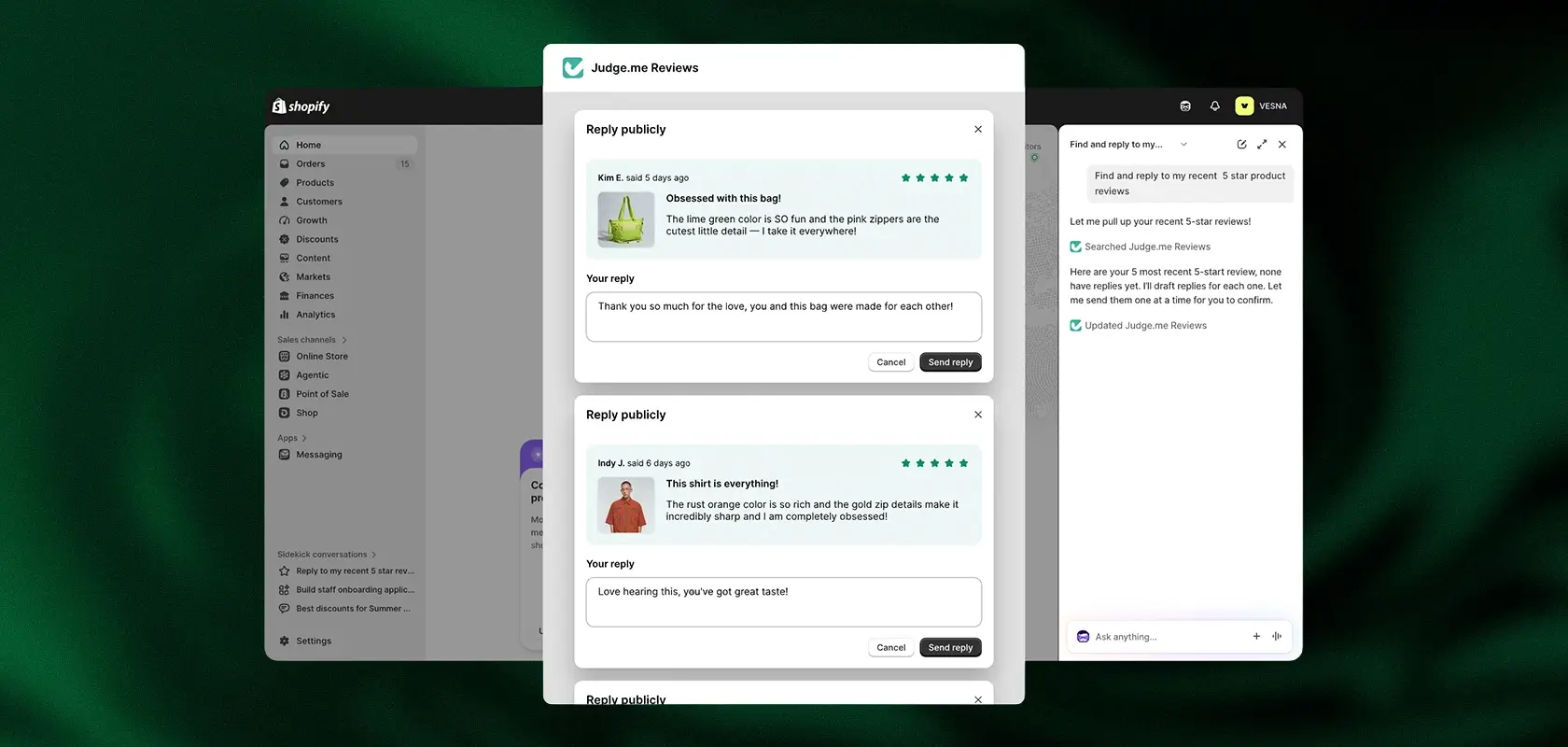
Sidekick is also receiving one of its biggest updates since its launch with the Spring Editions. Going forward, the AI assistant will no longer just help merchants with questions about the Shopify admin—it will take on significantly more complex tasks.
One particularly useful feature is the ability to manage multiple Sidekick conversations at the same time. Tasks even continue to run after the chat has been closed. If Sidekick needs additional information, the AI suggests appropriate response options, thereby significantly speeding up collaboration.
Alessio Marotta, an intern at Latori, highlights this very improvement:
“I’m particularly excited that Sidekick can now manage multiple chats at the same time and continues to process tasks even after the chat has been closed. In addition, when tasks are unclear, Sidekick provides specific options, which makes it much faster to clarify requirements.”
Reading tip: Shopify AI: Here's what Sidekick and Shopify Magic can do.
In addition, Shopify is integrating Sidekick more deeply into the overall ecosystem, making it easier to access data and automations.
For Giulia Marie Mich, team lead and project manager at Latori, that is precisely one of the biggest highlights of the Spring Editions:
“The new Sidekick updates are a real step forward. In particular, the integration with apps like Klaviyo and Judge.me, as well as the ability to run multiple tasks simultaneously, make day-to-day work significantly more efficient. My personal highlight, however, is the ability to create test events for Shopify Flow. Merchants can finally test their automations reliably, instead of having to rely on trial and error.”
Sidekick is thus increasingly evolving into an intelligent assistant that actively supports merchants in their daily decision-making.
Another new feature is Sidekick Pulse: Going forward, the AI assistant will proactively start each session with personalized recommendations, important developments in the store, and concrete suggestions for action. This gives merchants an overview of relevant opportunities and optimization potential the moment they open the Shopify Admin.
In addition, Sidekick will be even more deeply integrated into everyday mobile workflows. The assistant will also be available in the Shopify mobile app and can even be used via the Apple Watch. This allows merchants to keep track of key metrics, notifications, and AI-powered recommendations even while on the go.
Product management becomes significantly more flexible
Shopify is also introducing numerous improvements in product management that make day-to-day operations easier, particularly for companies operating internationally and B2B retailers.
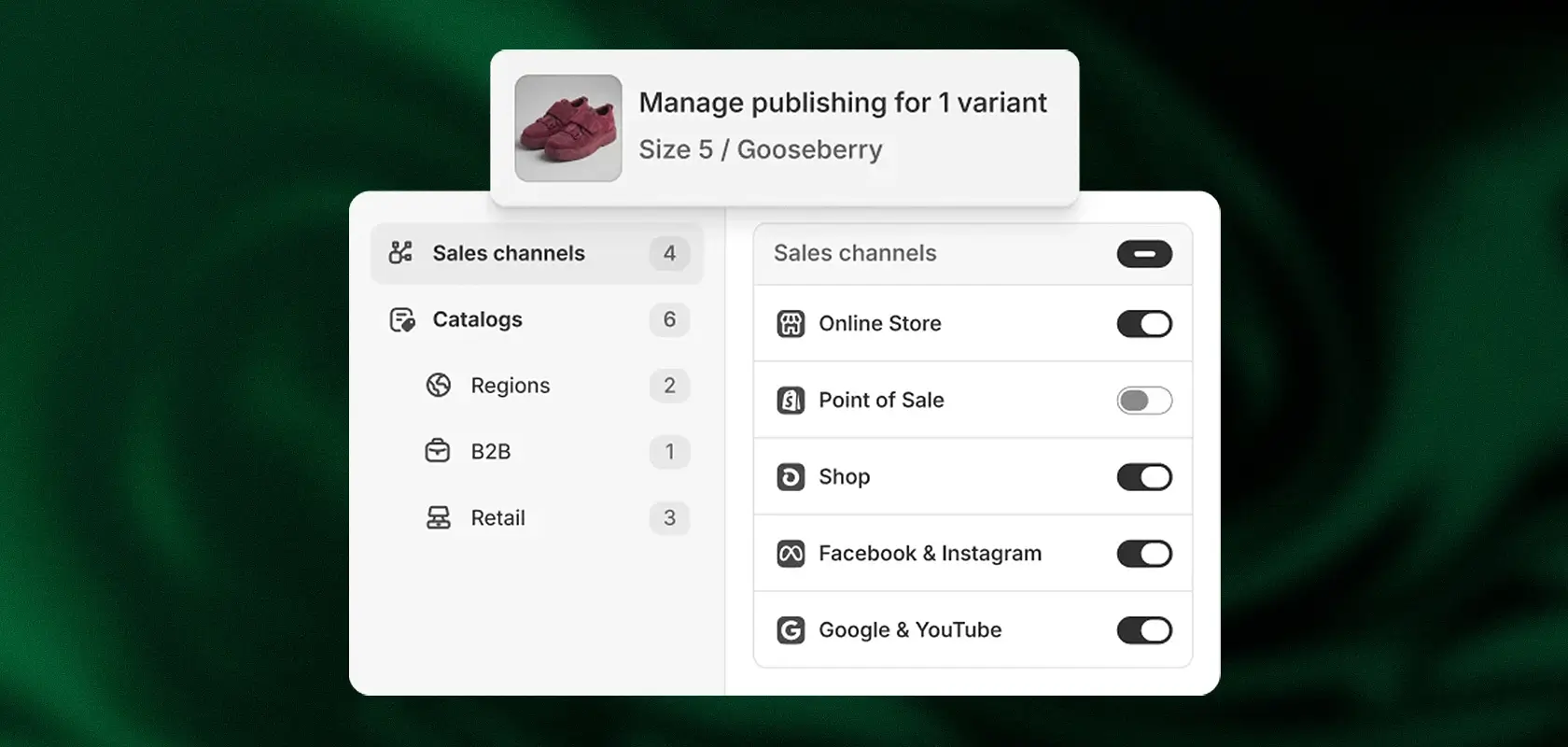
Variant-Level Publishing
One of the most frequently requested features is finally available: variant-level publishing.
Luigi Zarrelli, Technical Lead, describes the significance of this new feature as follows:
“The introduction of variant-level publishing is particularly noteworthy because it eliminates a major limitation of the catalog. Until now, complex workarounds were required to restrict access to certain markets, archive old variants without data loss, or offer bulk quantities exclusively through B2B channels. Regardless of whether the standard online store (Liquid-based themes) or a headless solution like Hydrogen was used, developers had to implement custom routing and custom checkout validation just to prevent unauthorized purchases and hide variants. Thanks to the native integration of this control into the core of Shopify, this development effort is completely eliminated, allowing merchants to focus on their global growth instead of struggling with the architecture of their own store.”
Djibril Bah, team lead and backend developer, also sees this as one of the most important features of the Spring Editions:
“With Variant-Level Publishing, merchants can finally specify directly which product variants are published on which sales channel. This is exactly the flexibility that has been missing until now.”
Product Compliance Disclosures
Legal disclosures are becoming increasingly important across many industries. That’s why Shopify is introducing Product Compliance Disclosures. Mandatory information or warnings can be added directly to the product. This information then automatically appears in the online store, within the Shop app, and even in AI shopping channels. This significantly reduces manual effort—especially for regulated products—and ensures greater legal certainty.
More Pinned Metafields
Working in the Shopify Admin is also becoming more convenient. Instead of just a few metafields, up to 50 metafields can now be pinned directly to products, customers, or orders. This makes frequently needed information visible at all times without having to open additional pages.
Marketing, Shop App, and Customer Accounts

Shopify not only improves store management but also enhances the shopping experience for customers. With rollouts, merchants can initially release new themes, checkout configurations, or customer accounts on a scheduled basis or run them as A/B tests. This allows new features to be tested in a controlled manner before they are made available to all visitors.
Shopify is also expanding theme editing capabilities on mobile devices. Merchants will now be able to make minor adjustments directly through the Shopify app and will no longer need to switch to a desktop to do so.
The Shop app is also getting new design options. Product detail pages can now be customized with additional content blocks such as videos, slideshows, media, or product collections. This allows merchants to present their products in a much more appealing way.
Customer accounts have also been improved. Users now remain logged in for up to 365 days and can continue their shopping without having to log in again. This ensures a much more convenient shopping experience, especially for repeat purchases.
Another useful new feature relates to customer service. As long as an order has not yet been shipped, customers can submit a cancellation request directly on the order status page. After delivery, returns can be initiated just as easily there. This significantly reduces the workload for customer support.
Checkout, Discounts, and Brick-and-Mortar Retail
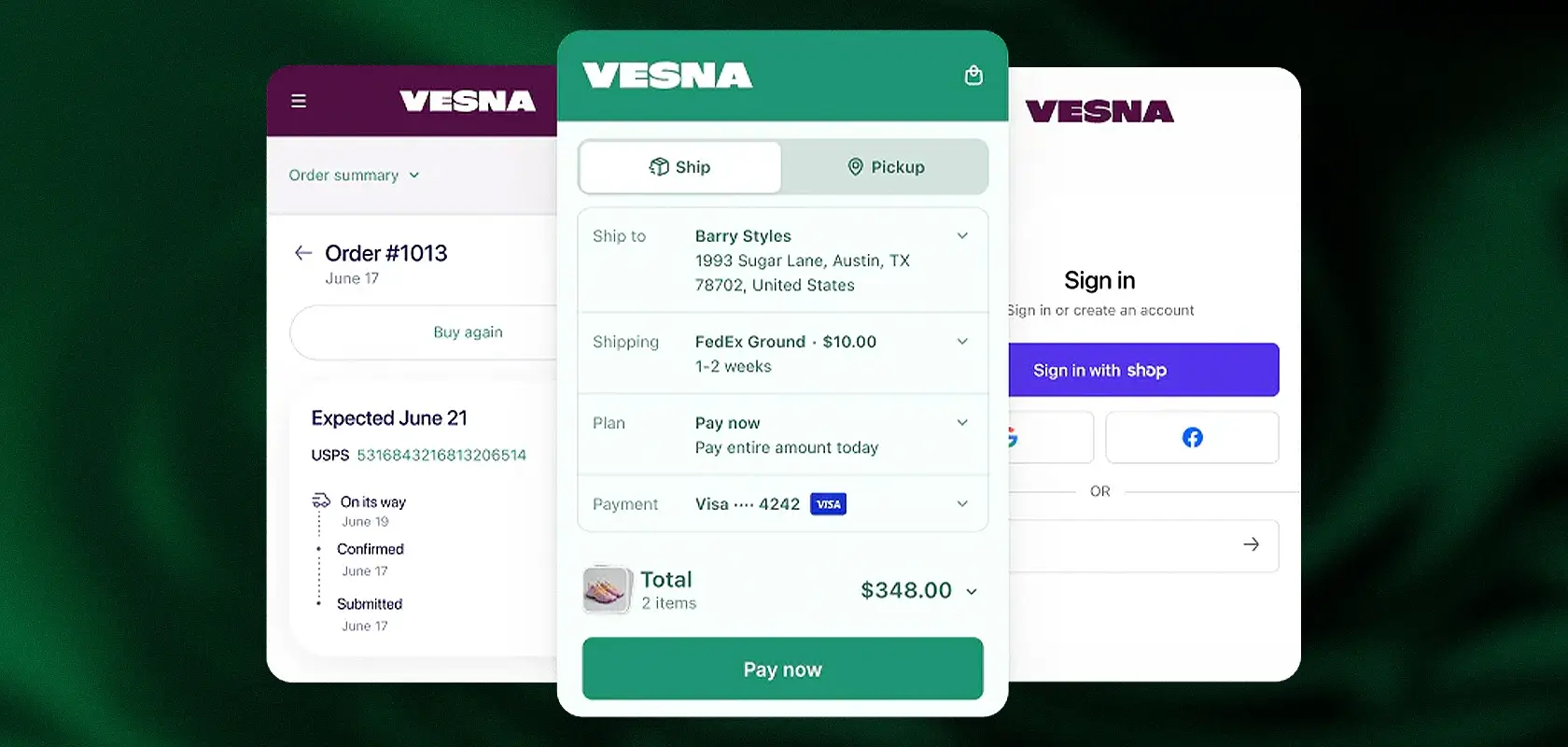
Checkout and pricing promotions have also been enhanced. Of particular interest to merchants in Europe is the new VAT ID validation feature. Shopify Tax automatically verifies VAT IDs during checkout for business customers within the EU and the United Kingdom. This allows for the early detection of incorrect information and simplifies tax-related processes.
Pricing promotions are now more flexible as well. With “Discounts by Market,” merchants can create price promotions specifically for individual countries, regions, stores, or B2B customers. This allows for much more precise control over marketing campaigns.
For brick-and-mortar retailers, Shopify is also introducing “in-store-only” discounts. Discount codes or automatic price reductions apply exclusively to physical stores and do not affect the online store. This allows local sales promotions to be planned independently of e-commerce.
More Features for B2B Merchants
Shopify is expanding access to select B2B features for additional pricing plans. The features available depend on the specific plan.
These include company profiles, volume pricing, and up to three B2B catalogs. This allows merchants to manage wholesale customers more professionally without having to budget for the additional cost of an upgrade.
Small and medium-sized businesses in particular will benefit from this, as it will be easier to manage both B2B and B2C business within a single store.
New Opportunities for Developers
Developers also benefit from numerous improvements with the Spring Editions. Of particular note is the new App Home Extension Block. This allows developers to create custom home pages for apps or Shopify Functions directly within the Shopify Admin. In many cases, this eliminates the need for externally hosted interfaces.
Sebastian Holgado, a front-end developer, aptly summarizes the benefit:
“With the new App Home Extension Block, developers can create custom home pages directly within the Shopify admin. This reduces the effort required for external hosting, saves on maintenance costs, and at the same time offers significantly more flexibility in app development.”
Agencies and developers, in particular, benefit from a simpler architecture and lower operating costs.
What Should Shopify Merchants Do Now?
The Spring Editions 2026 introduce numerous new features. However, not all of them need to be implemented immediately. It makes particular sense to first review the areas that have the greatest impact on your store:
Boost AI Visibility: Review your product data in light of the new Shopify Catalog. Well-structured product information lays the foundation for products to be better incorporated into AI-powered shopping experiences—such as those powered by ChatGPT—in the future.
Optimize workflows: Test Sidekick in your daily workflows and use the new test events in Shopify Flow to reliably verify existing automations before going live.
Refine your internationalization strategy: If you sell in multiple markets, you should evaluate variant-level publishing and discounts by market. This allows you to tailor product assortments and pricing promotions specifically for individual countries, regions, or sales channels.
Leverage B2B potential: Check the Shopify Admin to see which of the advanced B2B features are already available for your Shopify plan. Depending on your plan, you can use features such as company profiles, volume pricing, or additional B2B catalogs.
Hint: Shopify often rolls out new features gradually. As a result, some features may not yet be available to all merchants or on all Shopify plans at the time the Spring Editions are released. Please check availability directly in the Shopify Admin or in the official Shopify Release Notes.
Conclusion: Shopify Is Evolving into the Platform for AI-Powered Commerce
The Shopify Editions Spring 2026 clearly demonstrate that Shopify is consistently aligning its platform with the future of retail. Artificial intelligence is no longer just a single feature, but permeates nearly every area—from product management to marketing and analytics, all the way to the actual sale. The Shopify Catalog and Agentic Commerce, in particular, show how shopping behavior is changing. In the future, products will no longer be found exclusively in traditional online stores, but increasingly through AI assistants and intelligent search systems.
At the same time, Shopify is delivering numerous improvements for day-to-day operations: Variant-Level Publishing simplifies international product catalogs, Product Compliance Disclosures help ensure compliance with legal requirements, new B2B features expand wholesale capabilities, and Sidekick is increasingly evolving into a personal AI assistant for merchants.
The Spring Editions 2026 are thus less a collection of individual features and more a further step toward a fully AI-powered commerce platform.
If you'd like to prepare your Shopify or Shopify Plus store for these new features, we'd be happy to help you get started! Just get in touch with us, and we'll discuss your needs.
A Look Back: Shopify Winter Editions 2026

Key Highlights:
Sidekick & AI: Sidekick Pulse, AI-powered reports, workflow generation via prompts, automatic app creation, voice control, and mobile use
Agentic Commerce: Agentic Storefronts and new tools for selling products directly through AI platforms and chatbots like ChatGPT
Development & APIs: Catalog API, Checkout Kit, Dev MCP, Admin Intents API, Tangle, Binary Tests, and Shopify Functions as the successor to Shopify Scripts
B2B: Shopify Collective worldwide, ACH payments, new buyer roles, ERP and EDI integrations, and B2B-specific pricing in Horizon themes
Online Store: Enhanced Theme Editor, Shopify Rollouts for A/B testing, SymGym for AI-powered simulation of purchasing behavior, and support for up to 2,048 product variants
POS & Omnichannel: New POS Hub, optimized hardware, automatic firmware updates, and better integration of brick-and-mortar retail and marketing
Analytics & Operations: AI-powered analytics, more flexible inventory transfers, multi-location inventory for flash sales, and enhanced global shipment trackingShopify Editions is a bi-annual format by Shopify that uses landing pages, videos, and articles to showcase the latest Shopify updates and new features.
Frequently Asked Questions about Shopify Editions
What is Shopify Editions?
Shopify Editions is a bi-annual format by Shopify that uses landing pages, videos, and articles to showcase the latest Shopify updates and new features.
How often are Shopify Editions released?
Shopify Editions are typically released twice a year, once in the winter and once in the summer.
Are all features from the Shopify Spring Editions 2026 available immediately?
Not necessarily. Shopify rolls out many of its new features gradually. While some features are available immediately following the Spring Editions, others will be released over time to additional merchants, regions, or Shopify plans.
Do I need to update my Shopify store?
No. Most updates are automatically deployed by Shopify. Depending on the feature, merchants will simply need to activate or configure it.
Do I need Shopify Plus to access the new features?
That depends on the specific feature. Some updates are available to all Shopify merchants, while others remain exclusive to certain Shopify plans.
Which new features are particularly interesting for most merchants?
For many stores, Shopify Catalog, Sidekick, and Variant-Level Publishing are among the most significant updates, as they simplify daily operations and open up new possibilities for AI-driven commerce.
Do I need to adapt my theme or apps?
In most cases, no. Existing stores will continue to function as usual. However, depending on the themes, apps, or custom modifications you use, it may be worth checking whether the new features can be seamlessly integrated.
