)
Nowadays, some companies do not have enough resources to store and deliver their products themselves. In this case, outsourcing logistics and relying on a 3PL service provider is a good solution.
In the 26th Annual Third-Party Logistics Study, 73% of companies working with a 3PL service provider said it helped them optimize service and better satisfy customers. The study was conducted by well-known companies such as Infosys Consulting, Penn State University and Korn Ferry in 2022.
In the 26th Annual Third-Party Logistics Study conducted by well-known companies such as Infosys Consulting, Penn State University, and Korn Ferry in 2022, 73% of companies that work with a 3PL service provider said that it helped them optimize service and better satisfy their customers.
In this article, we take an all-round look at the topic of 3PL, distinguish it from 1PL, 2PL, 4PL and 5 PL, and tell you how to select a suitable 3PL service provider.
Table of contents
- What is fulfillment?
- 1PL, 2PL, 3PL, 4PL and 5PL: What does it mean?
- 3PL und 4PL: What are the differences?
- Services of Third Party Logistics Providers
- Advantages and disadvantages of Third Party Logistics (3PL)
- 3PL Logistics: When is it really worth it?
- 3PL companies: How to choose the right one
- Predictive Logistics: How AI is transforming 3PL from reactive to proactive
- Re-commerce & circular economy: turning returns into a source of profit
- Green fulfillment: Why your brand is responsible for your 3PL provider's carbon footprint
- Shopify Fulfillment: third-party logistics partner of Shopify
- Shopify Plus Fulfillment: Shopify Fulfillment API
- The importance of timing: The e-commerce action calendar
- Shopify Fulfillment Audit: Your 4-step checklist for excellent 3PL services
- Conclusion
Are you using Shopify or Shopify Plus and could use professional support? Then please feel free to contact us and we will be happy to assist you in word and deed.
What is fulfillment?
Before we dive deep into strategies, let's clarify the basics: What exactly is fulfillment? In the context of e-commerce, fulfillment encompasses the entire order processing process—from the moment a customer clicks “Buy” in your Shopify store to the moment the package arrives at their doorstep. This includes warehousing, picking, packing, shipping, and returns management. A professional 3PL partner takes care of these complex steps for you so that you can focus fully on your marketing and product development.
1PL, 2PL, 3PL, 4PL and 5PL: What does it mean?
The various logistics service providers are classified according to the tasks they perform within the company. The English term Party Logistics or the abbreviation PL is used for classification, with the numbers partly reflecting the services provided:
| 1PL First Party Logistics | Outsourcing von Transporten mithilfe eines Dienstleisters, der die notwendigen Fahrzeuge und Fahrer für den Warentransport bereitstellt. Die Unternehmen bewirtschaften dabei weiterhin ihre eigenen Lager. | Transport |
| 2PL Second Party Logistics | 2PL-Dienstleister übernehmen neben dem Transport auch die Lagerhaltung. Die Verwaltung dieser beiden Bereiche obliegt jedoch dem auftraggebenden Unternehmen, damit Fahrzeugflotte und Materialflüsse weiterhin selbst organisiert werden können. | Transport & Lagerhaltung |
| 3PL Third Party Logistics | Der Logistikdienstleister ist sowohl für Transport und Lagerhaltung als auch für Management und Organisation dieser beiden Bereiche verantwortlich. | Transport, Lagerhaltung & Management |
| 4PL Fourth Party Logistics | Diese Logistikdienstleister fungieren als Berater und Prüfer für 3PLs, um Logistikabläufe zu bewerten und zu optimieren. Sie verfügen über keine logistische Infrastruktur und erfüllen nur beratende Funktionen. | Beratung, Optimierung, Steuerung & Koordination von 3PL-Anbietern |
| 5PL Fifth Party Logistics | Diese Dienstleister sind groß genug und verfügen über die notwendigen Mittel, um die Aufgaben von 3PL und 4PL zu vereinen. | Alle 3PL- & 4PL-Leistungen |
Now that you know what the differences are between the various logistics service providers, you may be asking yourself which of these partners could be the right one for your company. The answer depends on the extent to which you can and want to carry out your logistics yourself.
Reading tip: In this article we reveal how to Increase your average order value (AOV) with Shopify Plus.
3PL und 4PL: What are the differences?
The main difference between 3PL and 4PL service providers is the physical resources available to each. 3PL service providers own a fleet and warehouse space, while 4PL service providers are only used to manage and monitor the logistics process. Thus, 3PL providers provide physical resources to optimize the supply chain, while 4PL service providers offer experience and knowledge. Often, 4PL companies work with a network of 3PL service providers to distribute tasks based on customer requirements and the profile of the respective 3PL provider.
Reading tip: Learn what exactly is behind the term conversion rate, some of the factors that influence it, and tips you can use to optimize your conversions.
Services of Third Party Logistics Providers
3PL suppliers can take over the entire organization and implementation of customer logistics. From the planning of all logistics processes to implementation and final inspection. In addition to warehousing and shipping, they can also be responsible for the following tasks, for example:
Packaging
Labeling
Assembly
Repair
Forwarding
Customs clearance
Batch tracking
Quality inspection
Onsite management
Reading tip: In this article, we explain which things to consider when taking the step towards internationalization and how international sales can be implemented with Shopify.
Advantages and disadvantages of Third Party Logistics (3PL)
 The advantages and disadvantages at a glance:
| Advantages | Disadvantages |
|---|---|
| ✅ Time and cost savings | Limited control over logistics processes |
| ✅ Flexibility | Heavy dependence on the logistics partner |
| ✅ Know-how | Measures to optimize the service or reduce costs could be neglected |
| ✅ Competitive shipping costs | Could become cost-intensive in the long run |
Outsourcing to an external logistics service provider offers many advantages, which we would like to look at in more detail below:
Advantages
Time and cost savings
Resource savings are a major benefit. A 2014 global study showed that transportation costs could be reduced by an average of 11% and storage costs by an average of 6%. At the same time, delivery times were reduced by an average of 30%. Since all logistics and warehousing are outsourced to external service providers, capital employed can also be greatly reduced. With 3PL, companies no longer need their own fleets, machinery or warehouses. In addition, 3PL providers are very flexible and can absorb strong seasonal fluctuations well. As a result, warehouses and other resources are used optimally.
Flexibility
If your own requirements fluctuate greatly within a year, 3PL may be particularly suitable for you, as it will prevent your own warehouse from being very poorly utilized during some periods.
Know-how
You and your company can benefit from the logistics provider's industry experience, especially since they have often developed large, global networks.
Competitive shipping costs
Because 3PL service providers typically work with multiple customers, they can handle high volumes of goods and thus offer competitive shipping costs.
Disadvantages
The biggest disadvantage of 3PL service providers is probably the limited control over logistics operations. This can lead to a strong dependency on the logistics company, possibly causing measures to optimize the service or reduce costs to be missed. Furthermore, in the long run and depending on the level of activity, outsourcing logistics may turn out to be cost-intensive.
Reading tip: Learn why Shopify is the perfect tool for direct-to-consumer strategy in this blog post.
3PL Logistics: When is it really worth it?
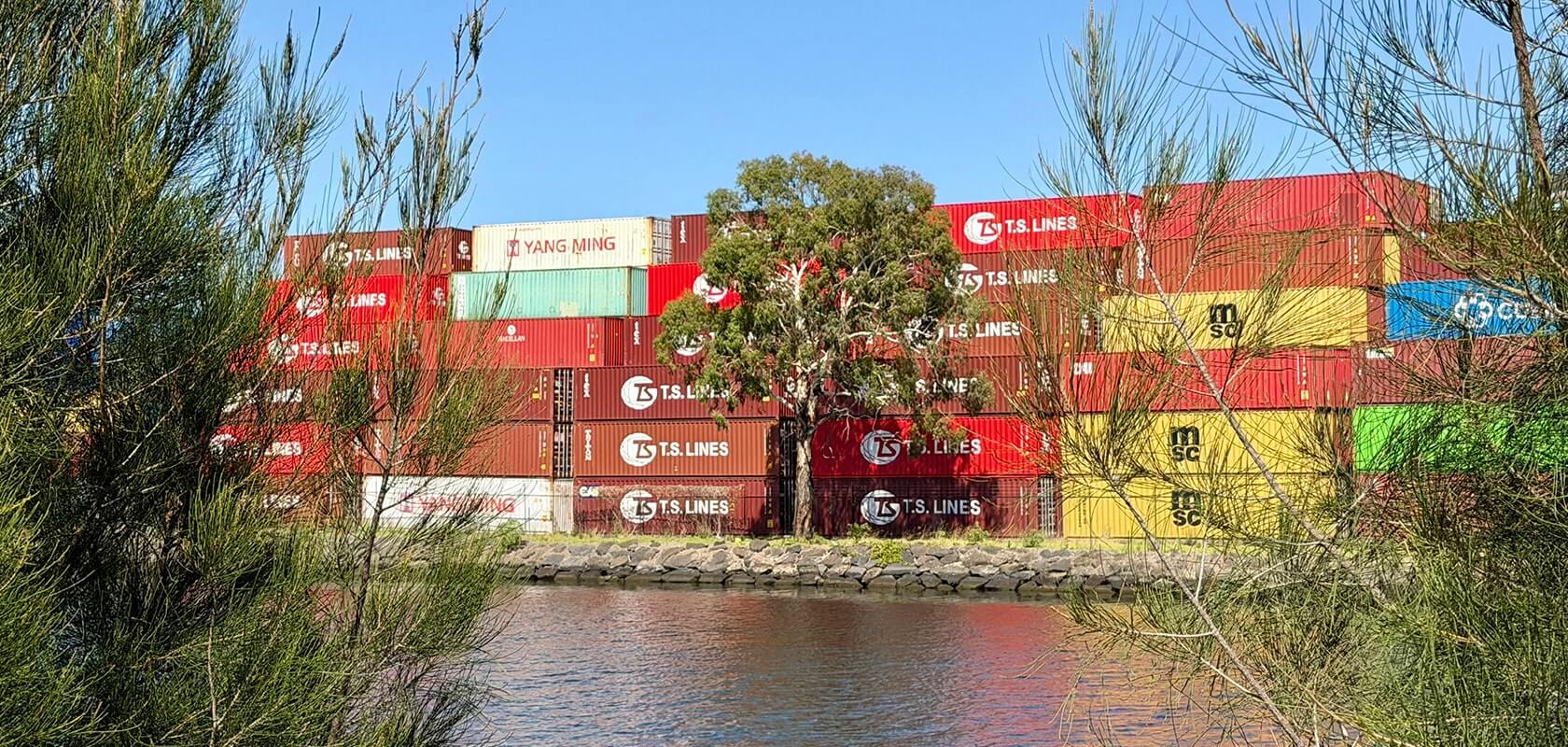
You may be asking yourself at this point whether you should actually call in a 3PL provider or continue to map your logistics in-house. Are there any small companies besides the big players that use 3PL? If you can answer "yes" to the following questions, 3PL can really be worthwhile for you:
Is there growth happening with your brand?
If your order volume is still quite low, so that you can probably still handle your orders yourself in the future, then 3PL is rather less worthwhile for you. In this case, you would not only give up a certain amount of control, but it would also mean additional costs for you. If, on the other hand, you can see gradual growth and there are already initial indications that your logistical resources will soon be exhausted, then a 3PL service provider may be just the thing for you. Incidentally, it is often only through working with a third-party logistics provider that young companies become scalable.
Are you planning to expand?
Since established 3PL providers often have a transnational network of warehouse locations, such logistics outsourcing may well be worthwhile if you plan to enter new markets.
Do you want to optimize your service?
In times of Amazon, eBay & Co. it is very important for online retailers to continue to meet the new standards of the clientele and to be able to keep up on the market. For this, the processes in logistics must be designed very efficiently, which is often very difficult to implement on one's own. This is where 3PL service providers can provide a very good remedy, since on the one hand they are designed to handle a high volume of orders in the shortest possible time and since on the other hand they are probably closer to their customers with their numerous warehouse locations. This can further shorten the delivery time.
3PL companies: How to choose the right one
Once you've come to the conclusion that it might be time for a 3PL provider, it's on to selecting potential candidates. This can be a very difficult one. That's why we're going to show you what's involved in the selection process.
If you have decided to work with a 3PL provider, you should consider the following 5 criteria in particular:
Geographic location: since your 3PL partner should deliver your products to your clientele as quickly as possible, their location is crucial.
Price: another main criterion when choosing a suitable logistics service provider is, of course, the price. So you need to think about how much budget you can spend to outsource areas of your logistics. Factors here include whether the shipment is urgent, where the destination is located, and what goods are involved.
Capacity: it is also important that your logistics partner can adapt to your requirements and respond quickly. Because this is the key to sustainable growth.
Technology: for both warehousing and order preparation and shipping, your prospective 3PL provider should have up-to-date technology and automation capabilities to operate as efficiently as possible.
References: Be sure to also find out about the 3PL service provider's reputation up front: does it demonstrate financial stability? Does he provide efficient service? The references should be excellent.
Incidentally, the top three third party logistics providers worldwide in terms of revenue in 2020 were DHL Supply Chain & Global Forwarding ($28.45 billion), Kuehne + Nagel ($25.79 billion) and DB Schenker ($20.76 billion), according to the Statista study.
Reading tip: How to get to a successful social media marketing strategy in just 6 steps.
Predictive Logistics: How AI is transforming 3PL from reactive to proactive
The future of logistics is no longer reactive, but forward-looking. Thanks to predictive logistics, 3PL service providers are turning data into action. By using artificial intelligence (AI) for demand forecasting, you can optimize your inventory even before an order is received. A key focus here is on “smart routing”: AI analyzes global data streams in real time to identify delays in the supply chain at an early stage and automatically reroute shipments via alternative routes. This allows you to proactively avoid bottlenecks in the global supply chain and ensure that you can keep your delivery promises to your customers, even during busy peak seasons.
Re-commerce & circular economy: turning returns into a source of profit
Returns are often seen purely as a cost factor – but this is changing fundamentally thanks to the principle of circularity. In line with the circular economy, modern 3PL service providers are increasingly acting as “refurbishment hubs.” Instead of simply storing or even disposing of returned goods, items are inspected directly at the logistics center, professionally reconditioned (grading), and offered for sale again as “pre-loved” products.
Thanks to seamless integration with Shopify, these items can be immediately relisted in your store as B-stock or second-hand options. This turns a costly return into a sustainable profit center that both protects your margins and supports your sustainability goals.
Green fulfillment: Why your brand is responsible for your 3PL provider's carbon footprint

Sustainability is no longer just a trend, but a clear expectation of your consumers. Your carbon footprint does not end with production, but includes the entire logistics chain. This is where “green fulfillment” comes in: Through distributed warehousing—i.e., the strategic distribution of your inventory across several regional warehouse locations—your 3PL partner massively reduces the distances on the “last mile.”
This not only saves valuable time, but also significantly reduces CO2 emissions per package. As a brand, you are responsible for ensuring that your partner meets these environmental standards and provides you with transparent reports on their sustainability performance.
Shopify Fulfillment: third-party logistics partner of Shopify
If you have a Shopify or a Shopify Plus store, the following 3PL service providers would work best for you, as they integrate seamlessly with your store through an existing app or interface:
Reading tip: Do you already know these 6 Shopify hacks?
Shopify Plus Fulfillment: Shopify Fulfillment API
You can seamlessly organize your fulfillment using Shopify's technological infrastructure by linking your store directly to specialized third-party providers. As listed in the previous section, there are several providers that can be connected via the Shopify Fulfillment API. This user-friendly API is the interface between the Shopify backend and the fulfillment inventory management system. This enables seamless data exchange between both systems, ensuring fast order and shipping processes. This is a major advantage for Shopify Plus merchants, as it allows them to easily keep track of customer, order, and inventory data. Customer satisfaction is guaranteed through transparent tracking and fast processes.
Shopify has already completely switched the system to the Fulfillment Order API. Make sure your logistics provider uses this modern interface so that tracking updates and inventory reconciliation work in real time.
Important for choosing a partner: When selecting your 3PL partner, make sure that their software natively supports this current interface. This is the only way to ensure bidirectional data exchange in real time—not only the export of orders to the warehouse, but also the automatic return of tracking data and inventory levels to your Shopify store.
The importance of timing: The e-commerce action calendar
Successful logistics starts with planning. If you don't keep track of the most important e-commerce promotion days, you risk delivery delays and unhappy customers. A glance at the marketing calendar shows that the year is full of opportunities.
The fourth quarter is particularly crucial. When Cyber Week begins, order numbers rise rapidly. Here are the most important online shopping promotional days you should be aware of:
Singles Day: The world's biggest shopping day in November.
Black Friday: The classic day for massive sales.
Cyber Monday: The grand finale of the discount weekend.
To ensure you are optimally prepared, you should start planning your 2026 marketing calendar now. Your promotional calendar should also include smaller online promotional days and specific discount days. With a well-maintained e-commerce calendar, you can deliver the answer, while your 3PL partner secures the online shopping promotional days in the background with increased capacity.
Shopify Fulfillment Audit: Your 4-step checklist for excellent 3PL services
To ensure that your setup is ready for scaling, you should perform regular audits. Here is your 4-step checklist:
Tech integration: Is your 3PL system natively connected to Shopify to ensure real-time inventory and automated tracking without manual CSV exports?
Scalability: Has your partner proven in the past that they can handle the volume of promotional days such as Black Friday without compromising performance?
Transparency & data: Does the service provider offer you a dashboard for key KPIs such as order accuracy, average pick time, and return rate?
Innovation & sustainability: Does the 3PL already use AI-supported routing and offer solutions for green fulfillment and re-commerce?
Conclusion
 Since the decision for a logistics service provider is an important future decision for your company, you should sufficiently weigh the factors listed above and not simply be tempted by the cheapest offer or the company with the highest turnover. In the best case scenario, you will work with your 3PL partner for several years, which is why they should be a good fit for your company and also be able to react flexibly to future changes.
We are happy to advise you on all questions regarding your online store. Contact us without any obligation.
Frequently Asked Questions about Shopify Fulfillment and 3PL Logistics
What is 3PL?
3PL stands for Third Party Logistics and refers to a specific logistics model. Here, the logistics partner takes over the transport, storage and management. With a fulfillment partner you can easily outsource your logistics.
What does a 3PL Logistics Partner do?
A 3PL logistics partner handles logistics, warehousing, order preparation and goods transportation for companies.
What is the difference between 3PL and 4PL?
The most significant difference between 3PL and 4PL are the services offered. While 3PL partners take care of transport, storage and management, a 4PL partner, on the other hand, takes care of consulting, optimization, control & coordination of 3PL providers.
How do I choose the right Shopify fulfillment partner?
When choosing a partner, merchants should look at criteria such as location, experience, cost, contract length, and integration options. Shopify provides a list of trusted fulfillment partners.
What Shopify 3PL logistics partners are there?
There are a number of third-party logistics partners for Shopify, including Easyship, Shipbob, ShipHero, ShipperHQ, Shippo, Shipstation or Veeqo.
How do I create a fulfillment request in the Shopify Fulfillment API?
Since Shopify no longer operates its own physical warehouses, the process has been switched to the “Fulfillment Order API.” Today, fulfillment requests are no longer sent to Shopify's own network, but directly to the system of your respective 3PL partner. As soon as an order is received, Shopify creates a fulfillment order, which is digitally transmitted to your logistics provider. They confirm receipt, carry out the shipment, and automatically reflect the tracking data back into your Shopify backend. This process allows you to precisely control your inventory across external partners.
How do I find out if Shopify Fulfillment is right for my business?
To determine if Shopify Fulfillment is right for your business, you should evaluate your unique needs and goals. You can also contact Shopify or a fulfillment partner for more information.
