
BFCM came around faster than expected? In this article, we'll give you some tips for marketing campaigns that you can implement even at the last minute!
The biggest shopping days of the year are just around the corner: Black Friday and Cyber Monday. If this promotional weekend has caught you by surprise, this article offers some tips for last-minute measures you can implement to boost your sales on these days.
For most retailers, both in brick-and-mortar stores and e-commerce, Black Friday and Cyber Monday are the most wonderful time of the year. With Black Friday on November 27 and Cyber Monday on November 30, 2026, a weekend awaits us—as it does every year—that finally ushers in the holiday shopping season. The German Retail Federation (HDE) expected €5.8 billion in sales across both promotional days in 2025. That was nearly 2 percent less than the previous year and the first decline since data collection began in 2016. On the platform itself, however, business continues to grow: worldwide, Shopify merchants generated a record $14.6 billion in sales over the 2025 BFCM weekend (+27 percent year-over-year). For merchants in the DACH region, this means: the pie isn't going to get bigger on its own; preparation and a clear offer are what make the difference.
If this sales weekend has come around surprisingly quickly for you, this article will give you a last-minute emergency plan to increase traffic and sales in your online shop in the final weeks with a few promotions and measures. Let's get started.
This post shows Shopify merchants how to prepare for Black Friday (November 27, 2026) and Cyber Monday (November 30, 2026) in just a few weeks. It explains what BFCM stands for, how the two promotional days differ, and provides a timeline leading up to November 30. In addition, it delivers 16 last-minute measures: from social media, newsletters, and retargeting to checkout, customer service, and shipping, all the way to legally compliant discounts and visibility in AI assistants. An FAQ section answers the most common questions.
Table of contents
- BFCM Definition: What are Black Friday and Cyber Monday?
- 2026 Dates: Black Friday, Black Week, and Cyber Monday
- Last-Minute Timeline: What Still Takes Priority Now
- Tip No. 1: Special discounts for social media users & influencer marketing
- Tip No. 2: Increase traffic with sales magnets
- Tip No. 3: Use AI-powered product recommendations
- Tip 4: Re-engage shopping cart abandoners
- Tip No. 5: Polish product pages with customer reviews
- Tip No. 6: Stand out from the discount jungle
- Tip No. 7: Category Christmas gifts
- Tip No. 8: Offer gift certificates for purchase
- Tip No. 9: Black Friday marketing - send out newsletters
- Tip No. 10: Customer service
- Tip no. 11: Offer express shipping options
- Tip No. 12: Integrate countdown timers and live inventory levels
- Tip no. 13: Pop-up windows for special offers
- Tip 14: Flash sales with limited duration
- Tip 15: Legally compliant discount advertising
- Tip 16: Get discovered across AI assistants
- Conclusion: How to make the most of BFCM even at the last minute
If you need help with your Black Friday and Cyber Monday marketing, contact us and we'll be happy to help. Contact us now
BFCM Definition: What are Black Friday and Cyber Monday?
BFCM stands for Black Friday Cyber Monday and refers to the discount weekend following the US holiday Thanksgiving. In German-speaking countries, many retailers start as early as Black Week, and some even in Black November. Black Friday and Cyber Monday are two of the best-known and largest shopping promotional days in the world. They originated in the US, but spread to many other countries due to their popularity.
Quick Insight: What is BFCM?
BFCM stands for Black Friday Cyber Monday. It refers to the discount weekend after Thanksgiving: Black Friday on Friday, Cyber Monday on the following Monday—meaning November 27 and 30 in 2026. For merchants, it marks the kickoff to the holiday shopping season.
Both days have since evolved into a global tradition, with customers worldwide expecting discounts and deals during this time. Many retailers use the opportunity to clear out inventory, boost sales, and capture consumer attention. While Black Friday and Cyber Monday were initially limited to retail, they have expanded into other sectors as well, including travel, technology, and services. These promotional days give consumers the chance to snag bargains, and for retailers, they represent a crucial window in the annual calendar for driving sales and revenue.
Reading tip: You can read background information on Black Friday, Cyber Monday, and the 2026 trends in our article Black Friday & Cyber Monday Tips: How to get your Shopify store ready for 2026.
2026 Dates: Black Friday, Black Week, and Cyber Monday
These are the dates you should have on your calendar. We explain the difference between Black Friday and Cyber Monday in detail in our post Black Friday Tips.
An overview of the 2026 dates:
| Promotion | Date 2026 |
|---|---|
| Thanksgiving (US) | Thursday, November 26 |
| Black Friday | Friday, November 27 |
| Cyber Monday | Monday, November 30 |
| Black Week (usual start) | from Monday, November 23 |
Latori Expert Tip: Plan two waves instead of one: On Black Friday, you capture attention and acquire new customers; on Cyber Monday, you target cart abandoners and existing customers with a differently structured offer. That way, you leverage the exact same preparation twice.
Last-Minute Timeline: What Still Takes Priority Now
Running behind? Then proceed in this order: first the basics, then reach, then the fine-tuning. That way, your preparation won't collide with Black Week. You can find a comprehensive plan with all the details in our post Black Friday Tips.
| When | What to get done |
|---|---|
| Immediately | Check prices and price history (30-day rule), test tracking and cookie consent, define campaign mechanics and discount codes |
| Before Black Week (starting Nov 23) | Test mobile and desktop checkout, set up email automations and Shopify Flow, update product data and inventory levels |
| Black Week (Nov 23–26) | Early access for newsletter subscribers, retargeting for cart abandoners, increase support capacity |
| Nov 27 & Nov 30 | Live monitoring of inventory, ad spend, and customer support |
| Starting December 1 | Evaluate results and communicate the Christmas order deadline |
Latori Expert Tip: Complete a full test purchase at least two weeks before launch—including discount codes, express shipping, and all payment methods. Checkout errors are the most expensive mistakes on peak days.
Tip No. 1: Special discounts for social media users & influencer marketing

You can use your social media and influencer activities in a targeted manner in the short term to significantly increase traffic and sales in your Shopify store during Black Friday and Cyber Monday. Create your own exclusive coupon codes for each platform and share them specifically on channels such as Instagram, Facebook, or Pinterest. Collaborating with influencers and affiliate partners can also increase awareness of your offers in the short term. This allows you to accurately track the most successful channels and convey a sense of exclusivity to your target groups. In addition, you should regularly provide your social media channels with appealing images and posts, ideally planning these in advance so that your promotions remain visible amid the flood of BFCM offers and potential customers become aware of your deals.
Reading tip: In just 6 steps to a social media strategy - we show you how.
Tip No. 2: Increase traffic with sales magnets
 Another tip to significantly strengthen your sales or at least the traffic in the online store for the BFCM weekend is to highlight strong sales magnets and thus attract customers to the store. To do this, look for a few products from your inventory - these can also be actual slow sellers - and discount them very heavily and as much as you can. With these products, profit is not necessarily the goal - of course, you should not sell at a loss either. The mission behind such heavy discounting is that you generate traffic and record leads. You can retarget these contacts at a later date through social media ads or newsletters. It's always easier to get already warm leads to make repeat purchases than to acquire completely new customers. If you additionally make sure that your Shopify product pages also display other products from your store, this can strengthen the upselling effect and you sell products with higher margins in addition to the sales magnet.
Tip No. 3: Use AI-powered product recommendations

Use modern AI solutions to display personalized product recommendations to your customers in real time on your website or in your Shopify store. The algorithms analyze your visitors' behavior—such as products viewed, previous purchases, search queries, or interactions—and compare this data with the behavior of other customers with similar interests. Based on this, products that are particularly relevant to the respective customer can be specifically recommended.
This personalized approach has several advantages: First, it increases the likelihood that visitors will discover and purchase additional products that they might otherwise have overlooked. Second, it increases the average order value, as customers are more likely to purchase matching additions or upsells. In addition, the shopping experience for your customers becomes much more personalized and convenient, which in turn increases customer satisfaction and the likelihood of repeat purchases.
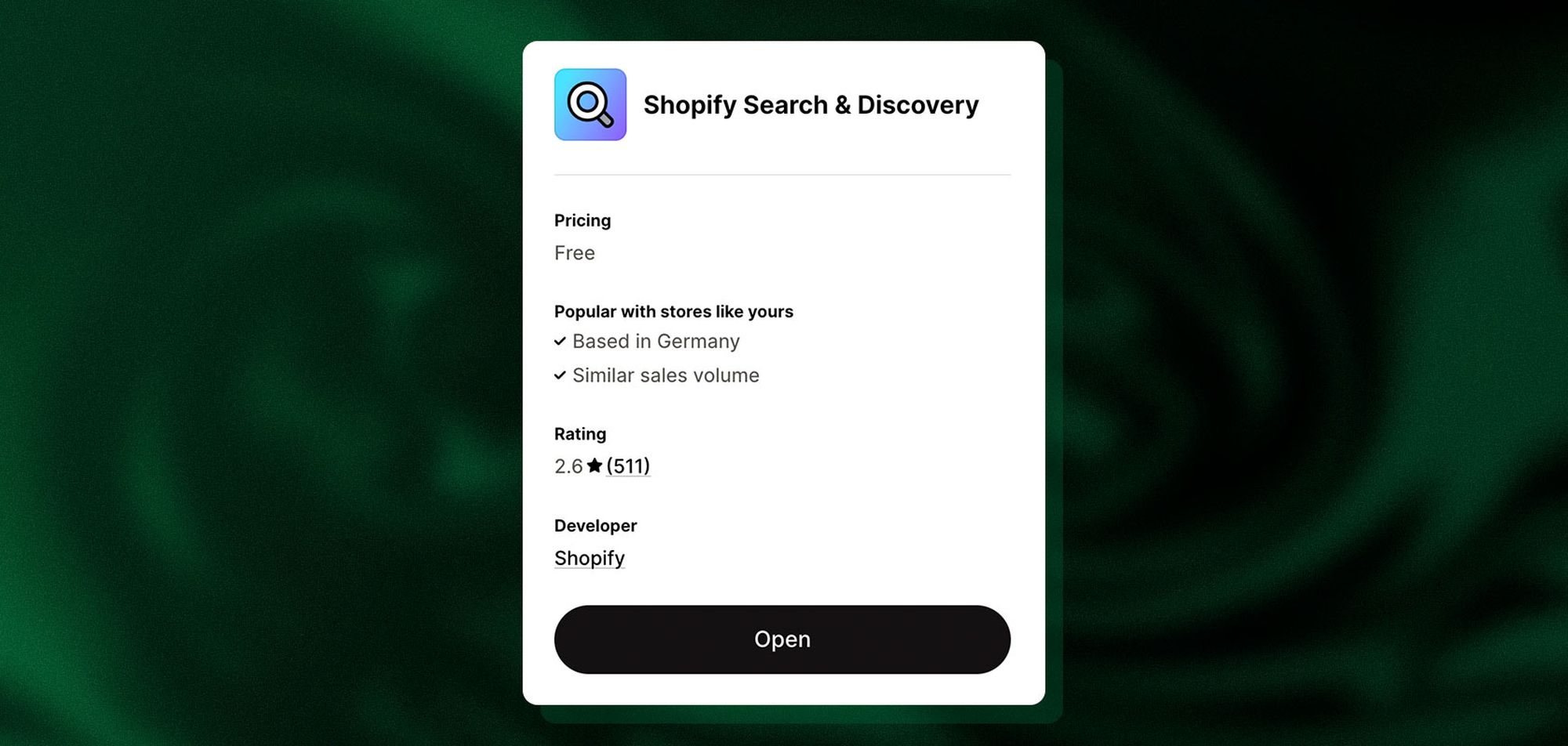
In Shopify, use the Search & Discovery app to control product recommendations and filters. Sidekick, the AI assistant in Shopify admin, and Shopify Magic help you set up product copy, discounts, and campaign drafts much faster. Always check every AI-generated text for accuracy before publishing.
Latori Expert Tip: Focus recommendations on your bestsellers and high-margin products. Only display add-ons in the cart flow if they don't prolong the checkout process.
Tip 4: Re-engage shopping cart abandoners
Have you already set up Facebook Pixel on your Shopify online store? If not, you should definitely do so, because this is the only way you can re-engage people who have visited your site or even purchased products through social ads. To do this, connect your store to Meta via the Facebook & Instagram channel, verify that events like "Add to Cart" and "Purchase" are being received, and obtain the required consent beforehand via your cookie banner. During the BFCM sales campaign, you should run a retargeting campaign for Facebook and/or Instagram that targets all those who have added products to their shopping cart but have not purchased them. Customers know that there are special offers at this time of year and are on the hunt for the best discounts, which is why shopping cart abandonment tends to happen more quickly here. You can win back these potential customers by showing them dynamic ads on Facebook or Instagram for the products they had in their shopping cart. Remind them of your BFCM promotions or even offer a special coupon in your retargeting and draw attention to the urgency of this limited offer. Additionally, activate the automated abandoned checkout email in Shopify.
Quick Insight: What is the Conversions API?
The Conversions API (CAPI) sends purchase and cart data server-side to Meta rather than just through the browser. This means less data is lost due to browser restrictions or ad blockers. In Shopify, you can activate it via the Facebook & Instagram channel.
Reading tip: We show you the do's and don'ts of customer recovery.
Tip No. 5: Polish product pages with customer reviews
 Genuine reviews are immensely important in gaining the trust of your potential customers. Since not everyone takes the time to browse through many pages of reviews, you can support this by integrating two to three customer reviews into the product descriptions of your most popular products. However, you should be sure to obtain the consent of the review providers beforehand in order to be on the safe side legally. Reviews must be authentic: Do not systematically select only positive reviews, and do not use fabricated reviews.
Tip No. 6: Stand out from the discount jungle
BFCM is a real discount battle and online shoppers know that very well. So you need to manage to stand out with your offer. You could do that by offering free shipping on these days - regardless of other discounts - selling exciting product bundles, adding surprise giveaways to every order, or integrating various discounts using a wheel of fortune on your home page. For the latter, you will find suitable apps in the Shopify App Store. Check reviews, pricing, and the impact on page load speed before installing an app, and obtain proper consent for giveaways that require an email address.
In brief: What makes a good Black Friday marketing campaign?
A good campaign consists of five core elements: a clear goal (revenue, new customer acquisition, or inventory clearance), a defined target audience, an offer with an unmistakable benefit, the right channel mix, and per-channel performance measurement. The steepest discount is rarely the deciding factor.
Latori Expert Tip: Calculate every discount tier down to the contribution margin after shipping, payment fees, and returns. Added value—such as free shipping or a free gift above a minimum order value—often protects your margin better than a higher percentage off.
Tip No. 7: Category Christmas gifts
 Many online shoppers take advantage of Black Friday and Cyber Monday discounts to shop for Christmas gifts. Make it easy for your potential customers! With the category "Christmas gifts" or even more specific "Christmas gifts for men", "Christmas gifts for children" etc. you can advertise products that you want to sell and offer your store visitors important assistance, which will be gratefully accepted by many and can lead to more sales. According to an HDE survey, around 54 percent of respondents used Black Friday for Christmas shopping in 2025, with holiday gifts accounting for roughly €1.6 billion in spending across both promotional days.
Tip No. 8: Offer gift certificates for purchase
Have you ever thought about selling coupon cards in your Shopify store? If so, now might be just the right time to do so. Although adding a new feature might be a big step in this short period of time, setting up gift cards doesn't come with any problems because it's easy to implement. Gift certificate sales can be a great way to increase BFCM sales. The best part: Gift cards are available on all Shopify plans and can be redeemed digitally right away, which also eases the pressure of tight delivery windows before Christmas.
Tip No. 9: Black Friday marketing - send out newsletters
 Even though their reputation is often worse than they deserve, newsletters are still one of the best ways to ensure good sales. So you should also make an effort with your email distribution lists and set up a BFCM newsletter to draw attention to your promotions. Again, you can work with an exclusive discount code to later track how many sales came through the newsletter.
A four-step sequence has proven effective: a teaser email before the launch, early access for subscribers one day prior, the main email on Black Friday, and a "last chance" reminder on Cyber Monday. Segment your audience into existing customers, prospective buyers, and cart abandoners, using a dedicated discount code for each segment. This can be implemented with minimal effort using Shopify Email, Shopify Flow, or tools like Klaviyo. Only send emails to contacts with valid consent.
Latori Expert Tip: Reward your subscribers with early access rather than a steeper discount. This incentivizes newsletter sign-ups ahead of BFCM and reduces the pressure on you to slash prices.
The days until Black Friday and Cyber Monday are numbered and you have little preparation time left to set up a sales promotion, so you should start planning right away! Remember to test your online store and especially the checkout process extensively - both on the laptop and mobile, to fix any problems before the (hopefully) big traffic rush and to be able to respond to any questions that may arise. We wish you much success and good sales!
Reading tip: The best newsletter tools in comparison: How to choose the right tool.
Tip No. 10: Customer service

To ensure that customers can get timely help in case of queries, you should increase the availability of your customer service. Setting up a live chat on your website is extremely helpful in this regard. Customers can communicate directly with a support representative in real time to resolve their queries. Make sure that the live chat is easy to find and use. Support times can also make a difference here.
Effective and responsive customer support during Black Friday and Cyber Monday can help boost customer confidence and ultimately increase the success of your e-commerce business during this important sales period.
Reading tip: Newsletter and support via WhatsApp? Read all about WhatsApp marketing here.
Tip no. 11: Offer express shipping options
Entice last-minute shoppers by offering special express shipping options that are especially attractive when time is of the essence. Communicate clearly on your website and in marketing materials by what date and time customers need to order to ensure their goods arrive in time for holidays or special events. Use prominent notices or countdown timers to emphasise the last time to order.
In addition, you could offer free or discounted express delivery as an incentive for particularly impatient customers. This not only increases the conversion rate, but also helps to attract customers who postpone their purchase until the last moment. Also, make sure that these options are clearly described in the shipping conditions and FAQ pages to avoid misunderstandings.
Tip No. 12: Integrate countdown timers and live inventory levels
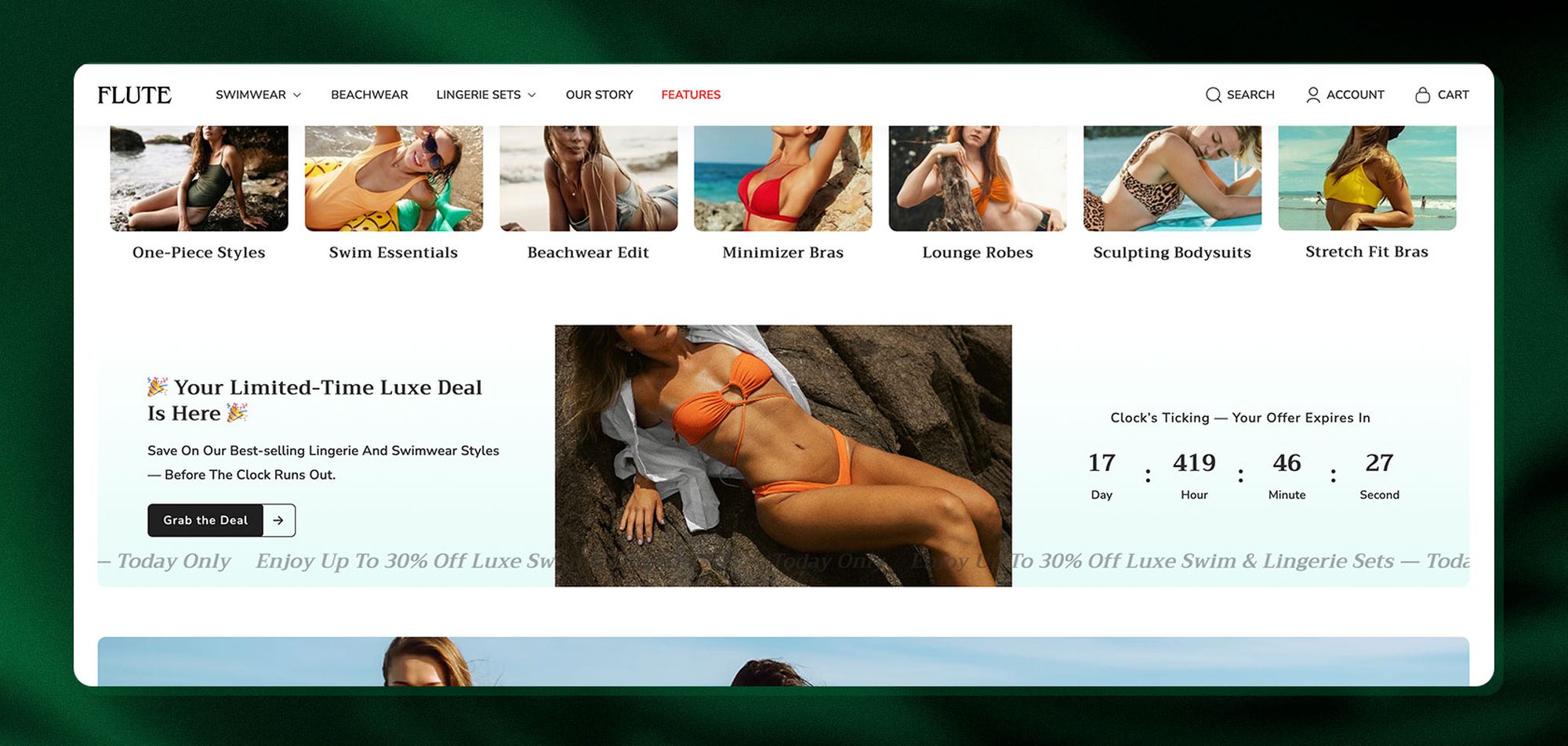
Use countdown timers on your product pages or throughout your store to create urgency and FOMO (fear of missing out). They show how long offers are still available or when customers need to order to secure discounts or fast delivery. This visual representation of time pressure increases the willingness to buy, reduces decision procrastination, and can be used flexibly for discount campaigns, flash sales, or last-chance purchases. Urgency only works as long as it's genuine. A countdown must reflect an actual promotional deadline, and stock counters must display real inventory levels. Timers that reset after expiring or fabricated remaining stock figures are considered misleading and can result in legal warnings (Abmahnungen).
Latori Expert Tip: Tie countdown timers directly to fixed promotional periods in your Shopify discount settings (start and end dates). That way, the displayed timer and the actual end of the promotion will automatically stay in sync.
In addition, you can display inventory in real time (“Only 3 items left”). Such elements create a sense of urgency and motivate customers to make their purchase decision immediately. This psychological reinforcement of purchasing is particularly effective during BFCM week. With apps such as Hey!Scarcity Low Stock Counter or Essential Countdown Timer Bar, you can easily and inexpensively integrate these features into your shop.

Tip no. 13: Pop-up windows for special offers
Use pop-ups to show visitors attractive discounts or exclusive offers directly on your website. These visually appealing windows can appear on different pages during the visit and are a great way to grab users' attention immediately. For example, you can highlight special discounts for first-time buyers, limited-time offers or information on upcoming sales promotions.
Pop-ups can help speed up the customer's decision-making process and motivate them to complete a purchase before the offer expires. By targeting new visitors, you increase the chance that they will browse your shop and ultimately make a purchase. To further increase the effectiveness of pop-ups, you can design them to respond to specific user actions, such as leaving the page or lingering on a particular product. Use only one pop-up per visit and ensure it doesn't obstruct content on mobile devices. For newsletter sign-ups via pop-ups, you must obtain explicit consent—ideally via double opt-in.
Tip 14: Flash sales with limited duration
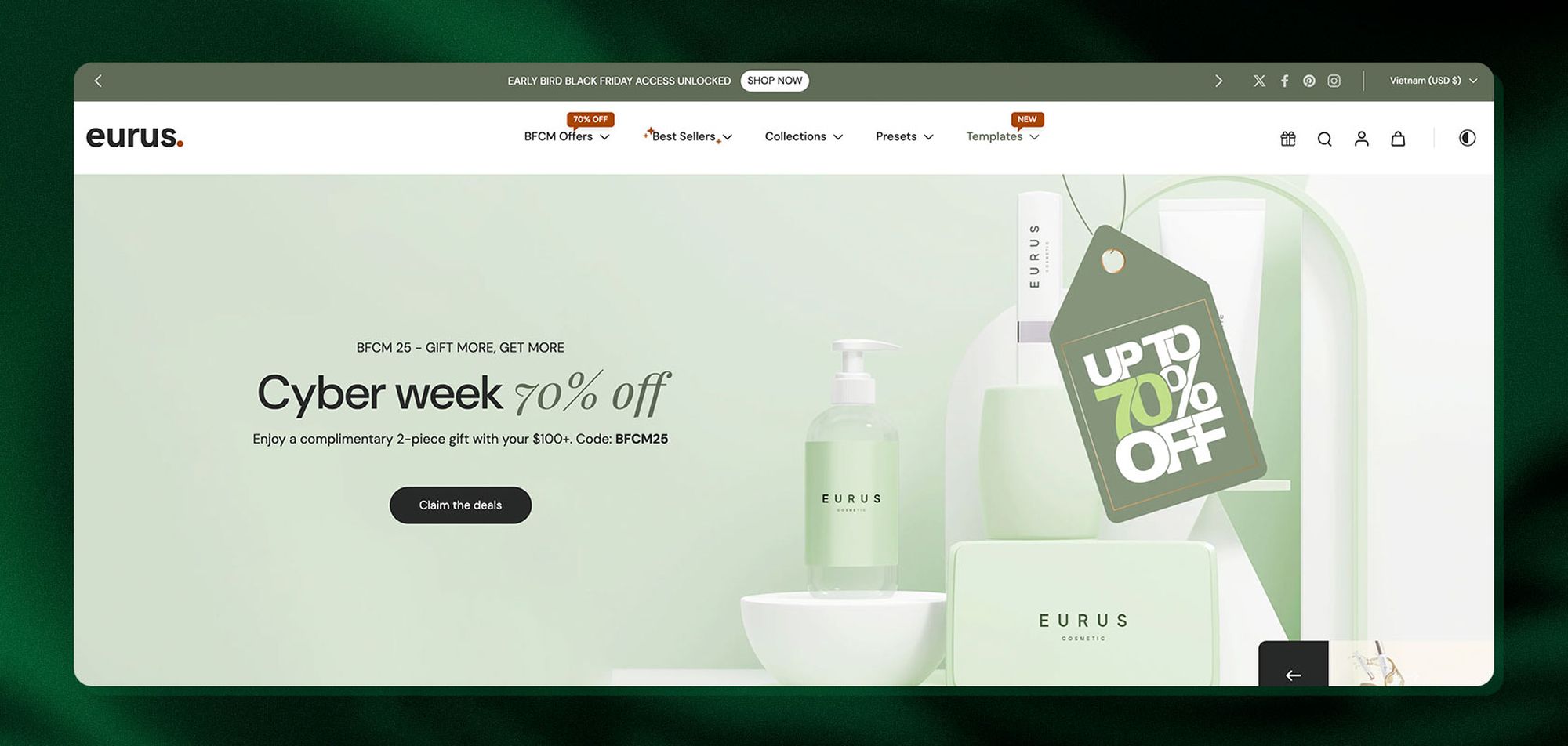
Set up short-term, heavily discounted flash sales that are only available for a few hours. Clearly communicate the time limit on all channels, for example through banners on your website or social media posts. Flash sales create a sense of exclusivity and urgency, prompting hesitant customers to buy more quickly.
Tip 15: Legally compliant discount advertising
Black Friday is prime season for cease-and-desist warnings: anyone advertising with strikethrough prices or percentage discounts must comply with the Price Indication Ordinance (PAngV). This also applies to your ads, newsletters, and social media posts.
Quick Insight: What is the 30-day rule?
For any price reduction, you must indicate the lowest total price offered within the last 30 days prior to the reduction (Section 11 PAngV). The discount must be calculated based on this reference price, not on an inflated original price or an MSRP.
The 30-day rule is only one piece of the puzzle. Review these three areas separately:
Reference price: For price reductions, the lowest price of the last 30 days applies. This obligation does not end with the promotion: in 2025, the German Center for Combating Unfair Competition (Wettbewerbszentrale) issued a warning to a retailer who advertised with strikethrough prices after Black Week without stating the 30-day lowest price—which encompassed Black Week itself. Do not raise prices shortly before the promotion just to show steeper discounts.
Discount claims: Percentage claims such as "Save 30%" must reference this benchmark price, not an MSRP. For claims like "Today only" or "X percent off for one week," the start and end of the promotion must be clearly identifiable.
Urgency: Countdowns and stock indicators must be genuine (see Tip 12). This is a distinct matter under competition law and not part of the pricing rule itself.
Latori Expert Tip: Document your prices and promotional periods before launch, for example by exporting them from Shopify admin. Have your discount communications legally reviewed. This article does not replace legal advice.
Reading tip: Learn everything about the 30-day rule, strikethrough pricing, and how to implement them in your store in our article Price Indication Ordinance (PAngV): What Shopify Merchants Need to Keep in Mind.
Tip 16: Get discovered across AI assistants
More and more product searches are starting in AI assistants rather than through traditional search engines. With Agentic Storefronts, Shopify makes your products discoverable across AI channels such as ChatGPT, Google AI Mode and Gemini, Microsoft Copilot, and Meta. For eligible stores, this feature is active by default; you can manage the channels in your Shopify admin under "Sales channels" > "Agentic." Shopify introduced this feature in its Winter ’26 Edition.
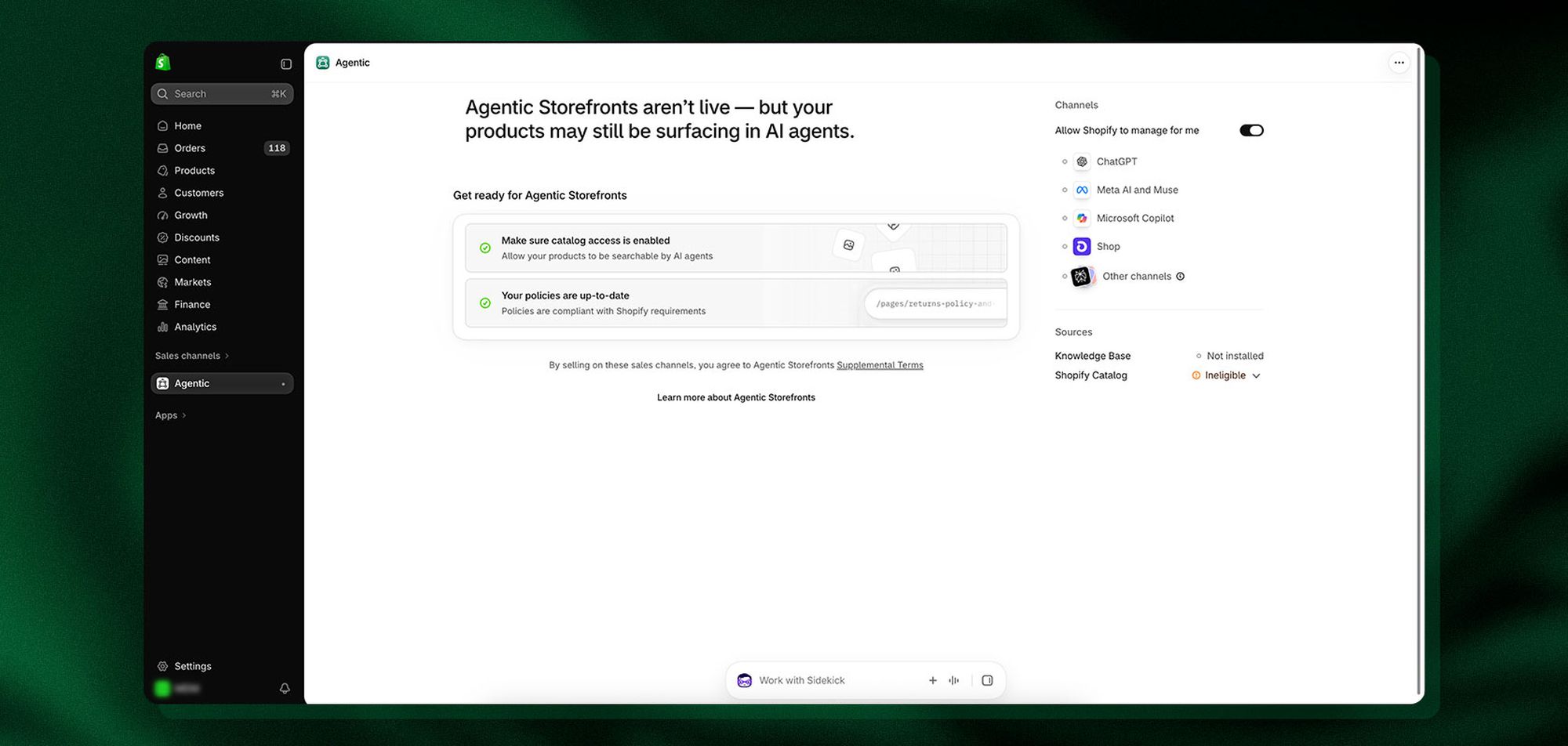
Quick Insight: What are Agentic Storefronts?
Agentic Storefronts are a Shopify feature that allows AI assistants to retrieve product data from your store and recommend your products within conversations. From your Shopify admin, you control which AI channels feature your products. The specific channels and checkout options available depend on your store and your market.
According to Shopify, availability and feature scope vary depending on the AI channel, store, and market. With ChatGPT, for instance, the purchase takes place in your own store's checkout, whereas with Google AI Mode, Gemini, Copilot, and Meta, direct checkout within the AI channel is also possible if enabled. Run through this quick checklist:
Eligibility: Is the "Agentic" section visible under "Sales channels," and have you accepted the Terms of Service for Agentic Storefronts?
Channels: Which AI channels are active for your store, and is Direct Checkout turned on or off?
Product data: Are your titles, descriptions, variants, GTINs, and images complete?
Pricing and inventory: Do your promotional prices and stock availability match your store?
High-quality product data is the prerequisite for AI systems to present your products accurately. However, it does not guarantee a recommendation.
Latori Expert Tip: Clean up your product data before BFCM, paying special attention to inventory levels and promotional prices. Outdated or contradictory information in AI responses quickly leads to incorrect pricing and disappointed customers.
Reading tip: We explain how your product data reaches AI channels via the Shopify Catalog in our article Shopify Catalog.
Conclusion: How to make the most of BFCM even at the last minute
Black Friday on November 27 and Cyber Monday on November 30, 2026, can be effectively planned for even in a stagnant market if you set the right priorities early on. First, secure the fundamentals: legally compliant price indications, clean tracking, and a thoroughly tested checkout. Build your strongest channels on top of that—especially email marketing with early access and cart abandonment retargeting. Stand out from the sea of discounts with distinct added value, such as bundles, free shipping, or gift cards, and leverage urgency only with genuine promotional periods. Maintaining well-curated product data will also boost your visibility across AI assistants.
The most important rule for the final weeks: It is better to execute a few measures cleanly than many halfway. Pick the four to five recommendations from these 16 tips that best suit your store, your margins, and your target audience.
Do you need support with the implementation of measures in your Shopify store? Feel free to contact us.
Frequently Asked Questions about Black Friday and Cyber Monday
When is Black Friday?
Black Friday always takes place one day after Thanksgiving in America. In 2026, Black Friday falls on November 27.
When is Cyber Monday?
Cyber Monday always takes place on the first Monday after Thanksgiving in America. This means that it always takes place three days after Black Friday. This year, Cyber Monday takes place on November 30, 2026.
What actions can I take for my BFCM marketing?
There are some marketing actions you can take:
You can offer special discounts for social media users
You can increase traffic with sales magnets
Re-engage shoppers who abandon their carts
Use AI product recommendations
Integrate customer feedback on product pages
Make sure you stand out from the discount jungle
Set up a category for Christmas gifts
Offer gift vouchers
Send newsletters to draw customers' attention to your offers
Offer express shipping and a clear order cutoff time
Use countdown timers, pop-ups, and flash sales, but strictly with genuine time frames
Promote discounts in legal compliance with Section 11 PAngV
Make your products discoverable across AI assistants
Which Shopify features help with BFCM?
Helpful tools include Shopify Email and Shopify Flow for marketing campaigns, Search & Discovery for product recommendations, Sidekick and Shopify Magic for faster copywriting and store configuration, as well as Agentic Storefronts for visibility across AI assistants (where available for your store).
Which BFCM strategies work best in 2026?
Successful campaigns focus on a clear value proposition rather than an outright discount war, strong email segmentation, clean tracking, genuine urgency, and a friction-free checkout. Since the German market has recently stagnated according to HDE forecasts, differentiating yourself through customer service and added value is well worth it.
What can I still take care of for Black Friday at the last minute?
Check your prices and the 30-day rule, test your tracking and checkout, plan segmented email campaigns, set up abandoned cart retargeting, and prepare your customer support and fulfillment for higher order volumes.
